
Calcium carbonate supplies calcium to both animal feed and human food, but the two grades follow different rules. Feed grade calcium carbonate prioritizes nutritional value and cost for livestock. Food grade calcium carbonate must meet stricter purity and safety standards for human consumption.
Food grade calcium carbonate is regulated as a food additive. In the European Union it is listed as E 170. EU purity criteria set arsenic at no more than 3 mg/kg, lead at no more than 3 mg/kg, cadmium at no more than 1 mg/kg, and mercury at no more than 0.5 mg/kg. China’s national food safety standard GB 1886.214-2016 requires calcium carbonate content between 98.0% and 100.5% on a dry basis and limits hydrochloric acid insoluble matter to 0.2%.
Feed grade calcium carbonate is regulated under feed additive standards. Its main purpose is to prevent calcium deficiency in poultry, swine, and cattle. Limestone, the natural source of calcium carbonate, supplies up to 70% of the calcium in typical broiler diets. Feed formulations target total dietary calcium levels around 0.9–1.1% for poultry starters and 0.8–1.2% for dairy cows.
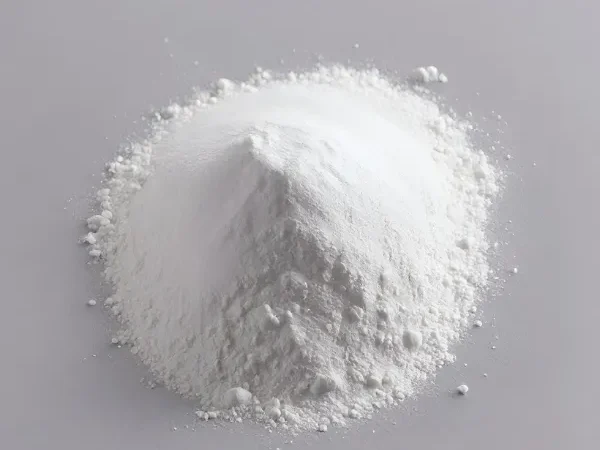
Purity and Heavy Metal Limits
Purity requirements overlap, but food grade is tighter. Both grades typically contain at least 98% calcium carbonate. Food grade, however, must pass tests for heavy metals, barium, and acid-insoluble substances that feed grade does not always require. Food-grade suppliers also face stricter rules on processing aids and contaminants.
Heavy metal limits separate the grades most clearly. EU food-grade specifications cap lead at 3 mg/kg and arsenic at 3 mg/kg. Feed-grade limestone specifications vary by country and supplier, but they generally allow higher heavy metal levels than food grade because the material does not enter the human food chain directly.
Applications in Food
Food manufacturers use calcium carbonate to fortify bread, breakfast cereals, plant-based milk, fruit juices, and nutritional bars. It also works as an anti-caking agent, acidity regulator, and white colorant. The same mineral appears in antacids and calcium supplements.
The Joint FAO/WHO Expert Committee on Food Additives classifies calcium carbonate with an acceptable daily intake of “not limited,” provided it meets established purity specifications. This reflects its long history of safe use in human food.
Applications in Feed
Feed producers add calcium carbonate to support bone development, eggshell quality, and milk production. Layer hen feed typically contains 2–3% limestone powder, while broiler feed contains 1–1.5%. Dairy cattle receive 100–150 grams per cow per day during lactation.
Particle size affects feed performance. Fine limestone powder dissolves quickly and raises blood calcium rapidly. Larger grit particles dissolve slowly and provide a sustained calcium supply, which is useful for laying hens that form eggshells overnight.
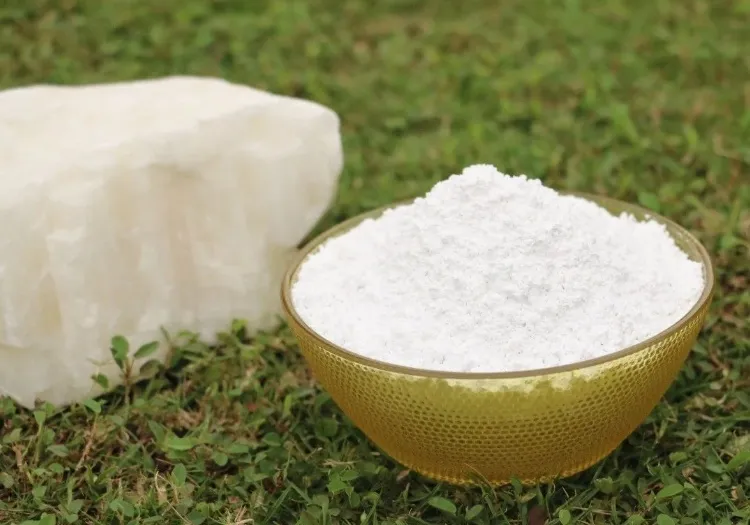
Physical Form and Particle Size
Food-grade calcium carbonate is usually a fine powder with D50 between 1 and 10 μm for fortification and uniform dispersion.[8] This fine size helps it blend into flour, beverages, and powdered products without grittiness.
Feed-grade limestone is sold as fine powder or as grits. Pullet and layer diets often include a mix of fine and coarse particles to balance immediate and long-term calcium availability. Broiler diets rely more on fine powder because the birds grow quickly and need readily available calcium.
Certification and Documentation
Documentation and certification differ between the two grades. Food-grade calcium carbonate requires food additive registration, certificates of analysis for each batch, and compliance with food safety management systems. Feed-grade calcium carbonate requires feed additive approval and may need guarantees on calcium content and contaminant levels.
Price reflects the regulatory burden. Food-grade calcium carbonate costs more than feed grade because of tighter processing, testing, and certification. Feed grade remains economical for high-volume inclusion in compound feed.
Equipment for Producing Both Grades
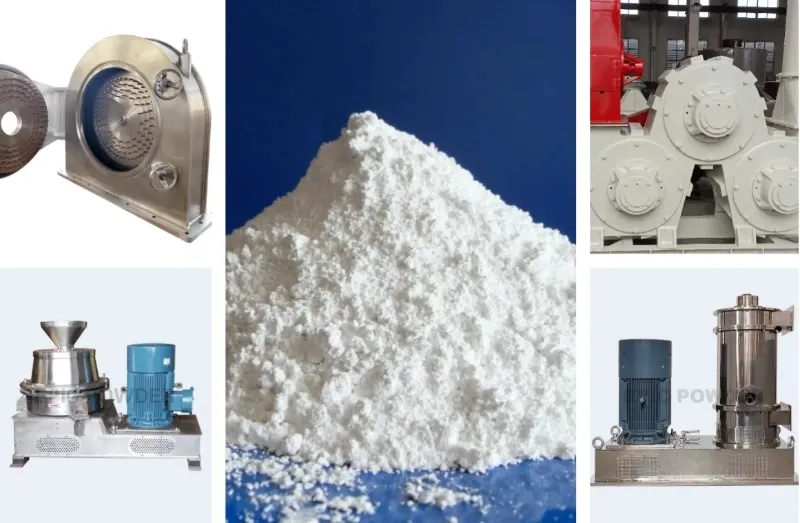
Producing either grade requires controlling particle size and preventing contamination. Feed-grade limestone needs high throughput and adjustable fineness. Food-grade calcium carbonate needs finer grinding, tighter particle distribution, and equipment that meets food safety standards.
Epic Powder Machinery builds roller mills, ball mills and air classifiers for calcium carbonate processing. Vertical roller mills and Raymond mills handle the high-volume grinding of limestone for animal feed. Ring roller mills and ultrafine grinding systems reach D50 1–10 μm for food fortification and supplements.
The classifier separates oversized particles and returns them for regrinding. This closed-loop design keeps the product within specification and reduces variation between batches. For food-grade lines, the equipment can be configured with food-safe contact surfaces and dust collection to limit foreign matter.
The same production principles apply to both grades: select the right raw material, control the grinding parameters, and verify the final product against the target specification. The difference lies in the purity standard the finished powder must meet.
How to Choose the Right Grade
Choosing between the two grades starts with the end use. Any material that contacts human food must meet food-grade standards. Animal feed uses feed-grade calcium carbonate. Using feed grade in food violates food safety law. Using food grade in feed is technically safe but economically wasteful.
Suppliers, feed mills, and food manufacturers all need to verify the grade before shipment. The certificate of analysis, regulatory registration, and intended application determine whether a batch of calcium carbonate is suitable for feed or food.
Epic Powder
Epic Powder designs grinding and classifying systems for minerals, chemicals, food, and pharmaceuticals. With more than 20 years of powder processing experience, we match the right mill to your target particle size and capacity. Tell us about your material and we will recommend a tested solution.

“Thanks for reading. I hope my article helps. Please leave a comment down below. You may also contact EPIC Powder online customer representative Zelda for any further inquiries.”
— Jason Wang, Engineer