
Calcium carbonate is the workhorse filler in two of the biggest products in building materials: wall putty powder and dry-mix mortar. In both, it is the ingredient that decides cost, surface finish, and how easily the mix spreads and sticks. The difference between a good batch and a complaint is rarely the mineral itself. It is the particle size, the whiteness, and how tightly those two are controlled. All of that comes from the grinding and classification equipment behind the powder. At Epic Powder Machinery, we build the mills and classifiers that produce these grades at scale. This guide explains the grades that putty and mortar formulators actually use, and how the right equipment holds those grades steady.
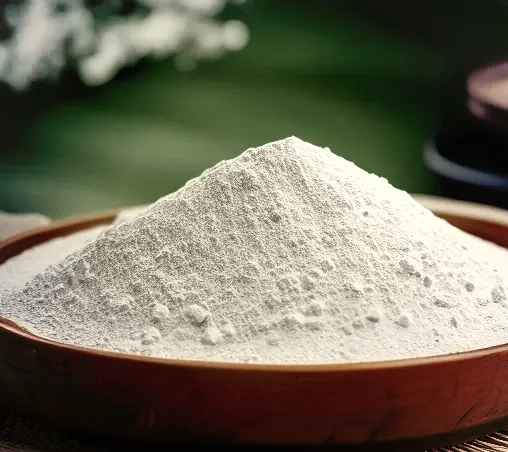
Why calcium carbonate dominates putty and mortar
Putty powder and dry-mix mortar are sold by the bag, mixed on the job site, and judged by ordinary workers the moment the trowel touches the wall. That pressure pushes formulators toward one filler more than any other.
Calcium carbonate does three things at once. It is cheap enough to be the main filler, so it controls the material cost per bag. It is white and bright, which is what gives a finished wall its clean, even tone. And it is chemically stable, so it does not react with cement, lime, gypsum, or latex the way some reactive fillers do. Those three reasons, cost, whiteness, and stability, are why calcium carbonate from 200 to 800 mesh shows up again and again in putty and mortar recipes.
Particle size decides the finish, grade by grade
The grade you pick is set by the product and the finish it has to deliver.
| Application | Typical grade | Typical top size | What the powder brings |
| Basic white-cement putty, interior smooth | 400 to 500 mesh | 25 to 37 μm | low cost, workable thickness, smooth surface |
| Premium / polymer putty, ultra-smooth | 500 to 800 mesh | 18 to 25 μm | finer finish, better coverage, higher gloss |
| Dry-mix mortar filler | 200 to 400 mesh | 45 to 74 μm | packing, workability, pumpability |
| Ultrafine accelerator (tile adhesive, self-leveling) | 1250 to 2500 mesh | 5 to 10 μm | nucleation, strength kick, smooth flow |
Finer grades make a smoother wall but cost more and drag more water out of the mix. Coarser grades spread easily and cost less but leave a rougher surface. The grade has to match the product, and it has to stay the same from bag to bag, because a site worker notices the moment a batch runs thinner or grittier than the last one.
Whiteness, purity, and moisture: the specs that make or break a batch
Particle size is only part of the story. Three other numbers decide whether a batch is accepted or rejected. Whiteness of 90 or above is standard for white-cement putty, and premium grades push toward 95 and higher, because the wall is the product and any grey tint shows up immediately. Purity of at least 98 percent calcium carbonate keeps the powder chemically clean and consistent, with low silica and iron that could dull the color or scratch the surface. Moisture held to about 0.2 to 0.4 percent keeps the powder free-flowing, so it meters evenly through the packing line and does not clump in the bag.
These three numbers do not come free. They are a direct result of the ore you feed and how cleanly the mill and classifier handle it.
One distribution, two jobs: why putty and mortar need a controlled size range
The most useful heavy calcium carbonate for mortar is not a single-size powder. Research on flow and water demand in dry mixes points to a controlled, often bimodal particle size distribution. Coarser particles above 10 microns build the skeleton and give the mix body, while fine particles below 5 microns fill the gaps between them and take part in early hydration. Getting that balance right lowers the water demand and makes the fresh mix spread more easily.
That balance is the real reason grading matters. A mill alone produces a wide, uncontrolled spread of sizes. An air classifier splits that spread and returns off-size material for regrinding, which is how a producer delivers the controlled distribution that putty and mortar formulators depend on.
How Epic Powder Machinery equipment matches the application
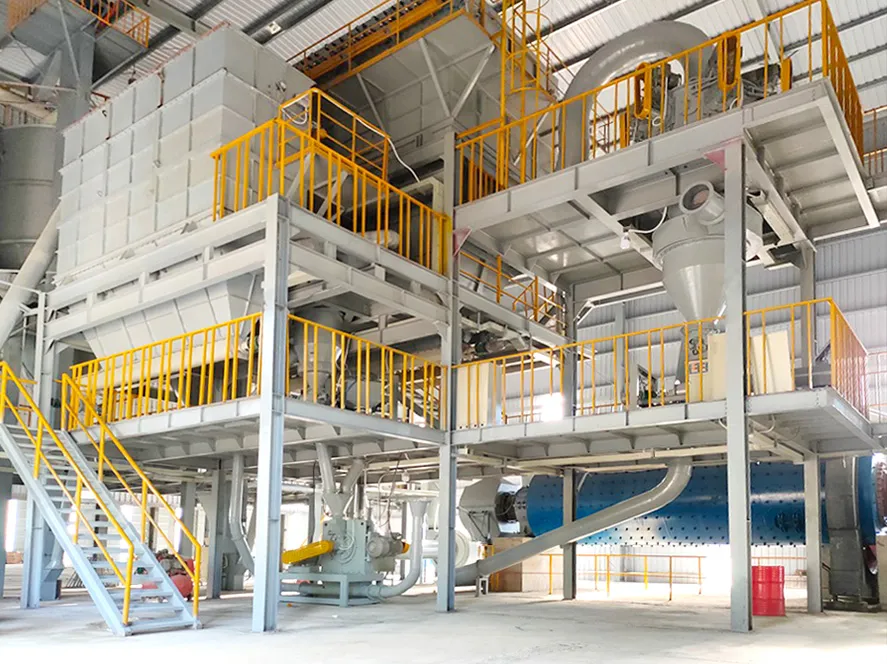
At Epic Powder Machinery, our product line is built around the idea that the right machine depends on the target grade, not the other way around.
Ball mills are the standard route for the high-volume grades that putty and mortar plants consume every day. They grind raw calcium carbonate to the 200 to 800 mesh range efficiently and run reliably at hundreds of tons per day. For basic white-cement putty and standard dry-mix mortar filler, a ball mill paired with a classifier is usually the most economical path.
Air classifiers sit at the center of quality control. Paired with a ball mill, they hold the top cut and keep the particle size distribution tight, so every batch leaves the line within the same D50 and D97 window. That consistency is what prevents a 400-mesh bag from suddenly behaving like a 200-mesh bag halfway through a job.
Pin mills fill the middle ground. They run at high speed with low retention time, which makes them a practical choice for medium-fine grades and for materials that are sensitive to heat or moisture. In plants that need flexibility across several putty grades, a pin mill with classification can switch ranges faster than a large ball mill line.
Application and Solution
| Application | Target grade | Epic Powder Machinery solution | What it controls |
| Basic white-cement putty | 400 to 500 mesh | Ball mill + air classifier | cost, throughput, D97 top cut |
| Premium / polymer putty | 500 to 800 mesh | Ball mill + air classifier, or pin mill + classifier | surface finish, whiteness, tight PSD |
| Dry-mix mortar filler | 200 to 400 mesh | Ball mill + air classifier | packing, workability, batch consistency |
| Ultrafine accelerator (SLC / CTA) | 1250 to 2500 mesh | Jet mill | cleanliness, high whiteness, ultrafine D50 |
The point is not that one machine does everything. It is that the production line has to be matched to the grade, and the grade has to be matched to the product.
Why batch-to-batch consistency is the real product
A building materials plant cannot slow the packing line to retune for powder drift. The whiteness, the top cut, and the moisture content have to stay inside spec from the first shift to the last, and from Monday through Friday. That consistency is a function of three things: stable ore feed, a mill that holds its grinding point, and a classifier that refuses to let off-size material through.
This is where equipment design shows up in the P&L. A line that drifts forces formulators to overdesign recipes, add extra additives, or reject out-of-spec lots. A line that holds spec lets them run thinner margins, tighter recipes, and fewer complaints.
A buyer’s checklist for calcium carbonate in putty and mortar
Three checks cover most purchasing decisions.
Grade and top size matched to your product. Basic putty runs 400 to 500 mesh, premium putty 500 to 800 mesh, and mortar filler 200 to 400 mesh. Confirm the mesh and the micron top cut together.
Whiteness, purity, and moisture held inside your specification, delivered as a certificate with every lot, not a one-time sample.
Consistency across runs from the same mill and classifier setup, so the mix behaves the same on Monday as it did last month. This is a function of the equipment, not luck with the ore.
The real question is total delivered cost per ton of finished product, and whether the powder stays inside spec from the first bag to the last.
Talk to Epic Powder Machinery about your line
At Epic Powder, we offer a wide range of equipment models and tailor solutions to meet your specific needs. Our team has more than 20 years experience in various powders processing. Epic Powder is specialized in fine powder processing technology for mineral industry, chemical industry, food industry, pharama industry, etc. If you are producing or upgrading calcium carbonate powder for putty or dry-mix mortar, send us your target mesh, whiteness, and output. We will match the right combination of ball mill, classifier, jet mill, or pin mill to your grade and build a line that holds the spec run after run.

“Thanks for reading. I hope my article helps. Please leave a comment down below. You may also contact EPIC Powder online customer representative Zelda for any further inquiries.”
— Jason Wang, Engineer