epicpowder

calcium carbonate

Calcium Carbonate Classification and Grades and How to Choose the Right Grade for Your Application

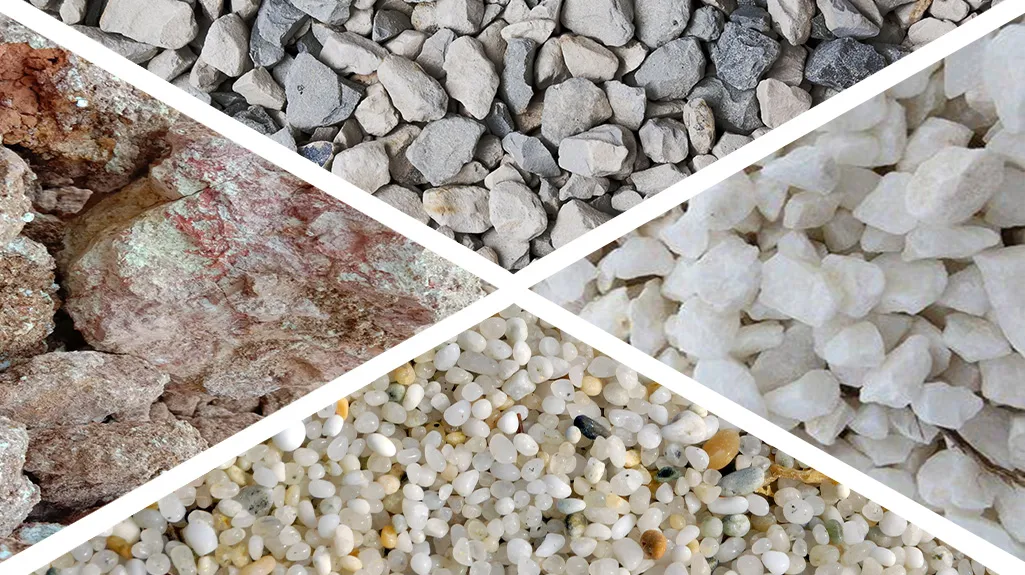
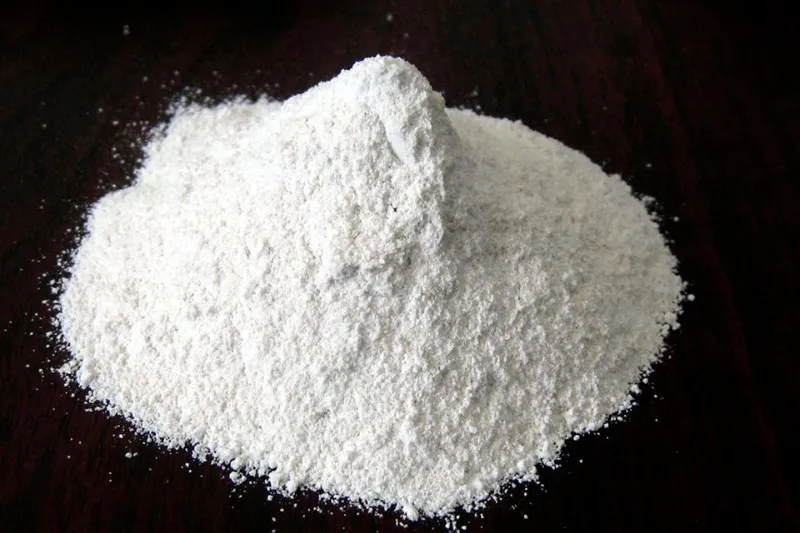
Calcium carbonate (CaCO3) is the most widely used industrial mineral filler in the world. It can be consumed in paper, plastics, paints, adhesives and construction materials at hundreds of millions of tonnes per year. Despite this ubiquity, calcium carbonate encompasses a wide range of distinct materials with very different properties and price points. Ground calcium […]

Calcium Carbonate Classification and Grades and How to Choose the Right Grade for Your Application Read More »

PETG_

How to Achieve an Orange Peel Surface on PETG 3D Prints — The Role of Calcium Carbonate Fillers

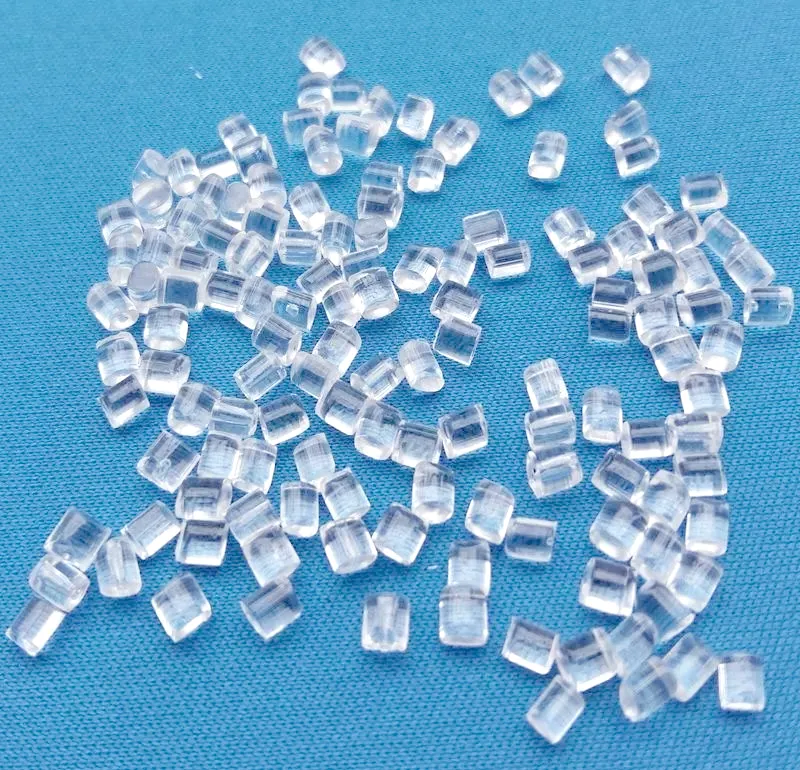
A growing number of 3D printing customers ask the same question: can we engineer a matte, orange-peel-like texture on PETG prints — and can calcium carbonate powder help us get there? The answer is yes, but the science behind it is richer than it first appears. This article explores how surface gloss in PETG (a polymer

How to Achieve an Orange Peel Surface on PETG 3D Prints — The Role of Calcium Carbonate Fillers Read More »

air classifier

Ceramic Powder Mixing Equipment: A Complete Guide to Dry and Wet Mixing Processes, Parameters, and Equipment Selection

Mixing is a pre-forming step in ceramic production that is easy to underestimate. The mixing step comes after raw material grinding and before forming (pressing, extrusion, or tape casting). Its output is a homogeneous blend of ceramic powder, sintering aids, dopants, and binders. This directly determines the consistency and performance of everything downstream. Non-uniform mixing

Ceramic Powder Mixing Equipment: A Complete Guide to Dry and Wet Mixing Processes, Parameters, and Equipment Selection Read More »

Powder Fillers

Modified Calcium Carbonate Technologies and High-Performance Powder Coating Equipment for Plastics & Rubber

Modified calcium carbonate has evolved from a simple filler into an essential functional additive across the plastics and rubber industries. From PVC pipes and PE agricultural films to automotive bumpers and electronic enclosures, surface‑modified, composite‑modified, and nano‑modified calcium carbonate grades deliver precisely tailored performance at a fraction of the cost of virgin polymers. But formulation

Modified Calcium Carbonate Technologies and High-Performance Powder Coating Equipment for Plastics & Rubber Read More »

calcium-carbonate-air-classifier-mill-

Why ACM is replacing Raymond Mill for High-End Calcium Carbonate Processing?

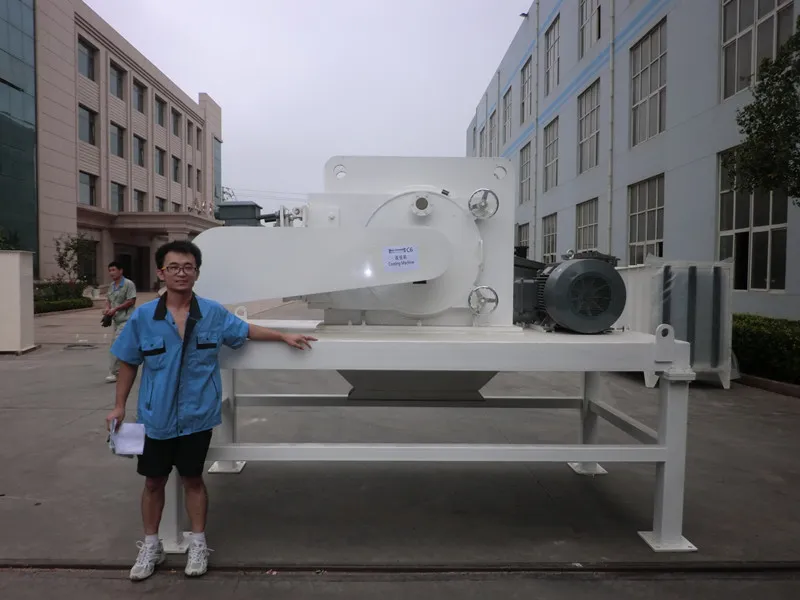
The case for upgrading from a Raymond mill to an air classifier mill is not universal. It depends entirely on which calcium carbonate grades you are producing and which markets you are serving. For coarse construction-grade GCC at 75-180 microns, a Raymond mill is still a reasonable choice. For fine-grade GCC at D50 5-20 microns

Why ACM is replacing Raymond Mill for High-End Calcium Carbonate Processing? Read More »

GCC-classification-equipment

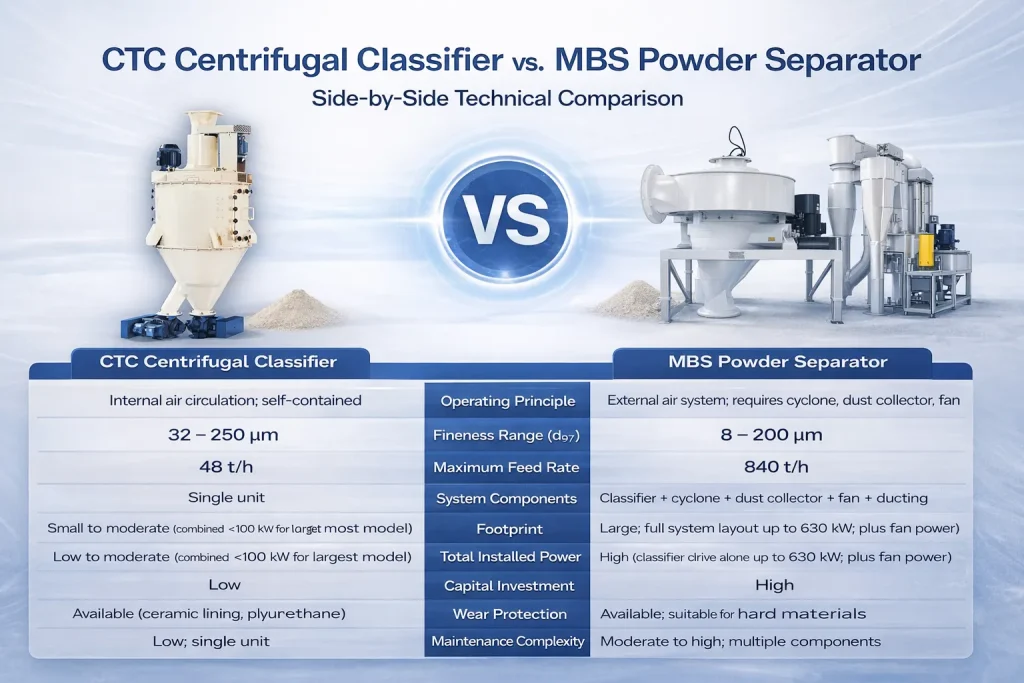
CTC vs MBS Classifier for GCC: Which One Matches Your Calcium Carbonate Production Goals?

Many GCC producers struggle with the same problem: their existing equipment can no longer meet customer demands for finer particle sizes, yet upgrading to a full system seems costly and complex. If this sounds familiar, understanding the difference between CTC and MBS classifiers is your first step toward a solution. Ground calcium carbonate is one

CTC vs MBS Classifier for GCC: Which One Matches Your Calcium Carbonate Production Goals? Read More »

air classifier GCC

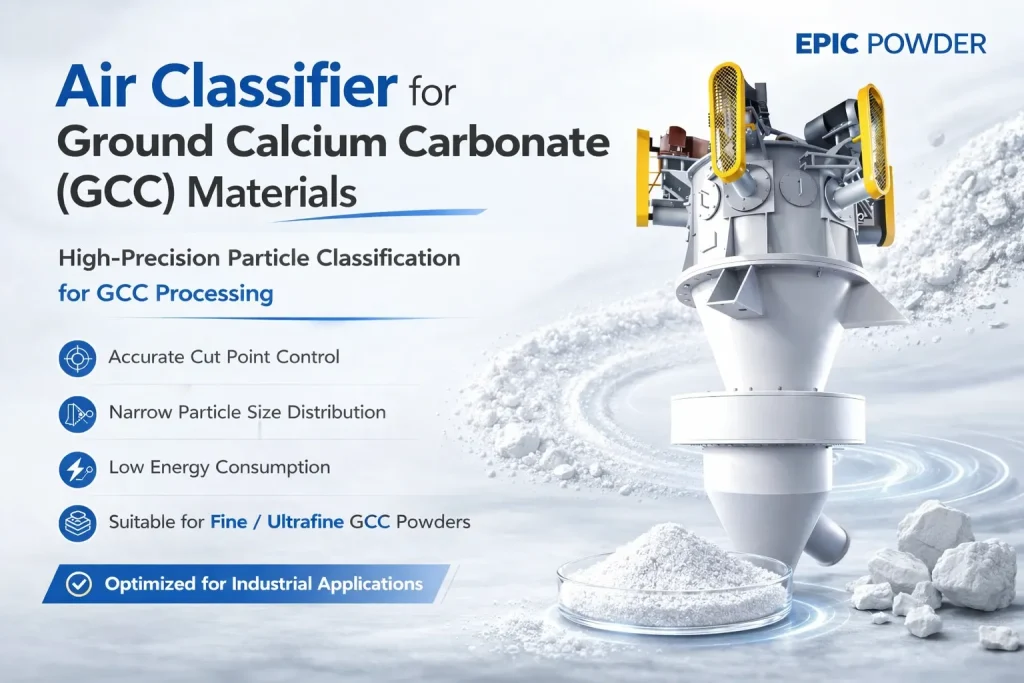
Precision Air Classifiers for GCC Production: Why Classification Determines Product Grade More Than Grinding Does

Most GCC producers focus their attention on the mill — the ball mill motor rating, the grinding media, the liner material. The classifier gets less attention. However it is the classifier that actually defines the particle size distribution of the product. The mill produces a broad range of particle sizes. The classifier is what decides

Precision Air Classifiers for GCC Production: Why Classification Determines Product Grade More Than Grinding Does Read More »

pin-mill

Calcium Carbonate Surface Modification with a Pin Mill: Process, Parameters, and What the Numbers Mean

Unmodified calcium carbonate has a hydrophilic surface. Plastics, rubber, and cable compounds are hydrophobic. Put an unmodified CaCO3 filler into a polymer matrix and the two materials resist each other: poor dispersion, reduced tensile strength, weak interfacial adhesion between filler and matrix. The compound performs worse than unfilled polymer in several critical properties. Surface modification

Calcium Carbonate Surface Modification with a Pin Mill: Process, Parameters, and What the Numbers Mean Read More »

calcium-carbonate-is-used-in-plastic-film

Application of High-Performance Calcium Carbonate in Plastic Films

Plastic films primarily refer to thin materials made from base resins such as PP, PVC, PE, PET, PA. These films are widely used in various flexible packaging applications or as laminating layers in paper-plastic composites. They play an essential role across numerous industries, including packaging, electronics, pharmaceuticals, chemicals, and food products. Calcium Carbonate (CaCO₃) is

Application of High-Performance Calcium Carbonate in Plastic Films Read More »