
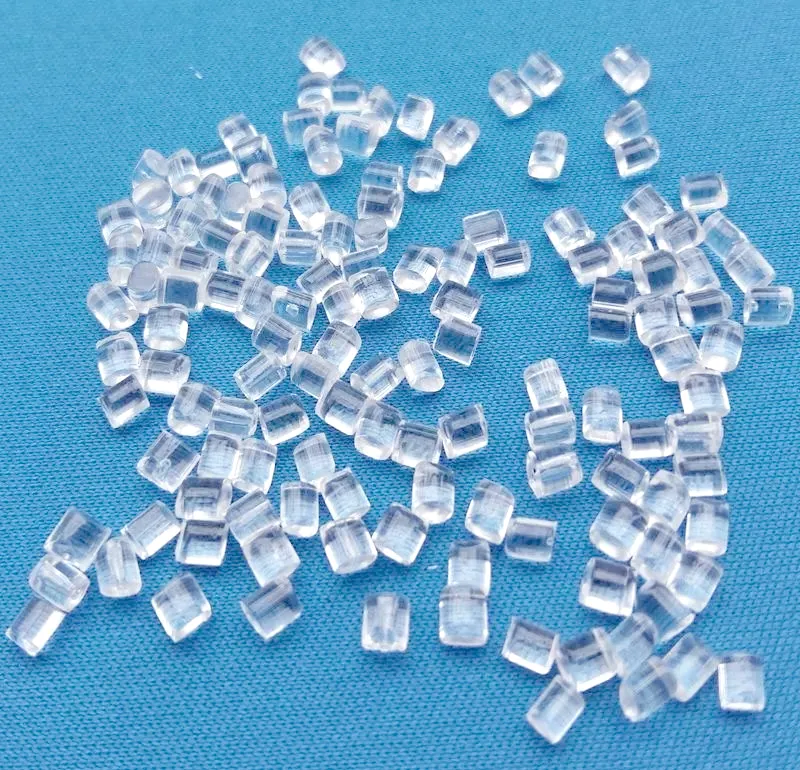
A growing number of 3D printing customers ask the same question: can we engineer a matte, orange-peel-like texture on PETG prints — and can calcium carbonate powder help us get there? The answer is yes, but the science behind it is richer than it first appears. This article explores how surface gloss in PETG (a polymer normally known for its high-gloss finish) is controlled at the microstructural level, and how the right calcium carbonate fillers can shift it toward a controlled matte or orange-peel surface texture.
Key insight: Surface gloss is not a coating property — it is a microstructure property. Controlling it starts with controlling the filler.
1. The Core Principle: Structure Determines Surface Properties
In materials science, the macroscopic properties you see and measure — including surface gloss — are direct expressions of the microscopic structure underneath. This principle, sometimes stated as “structure determines performance,” is the foundation for engineering surface finish in polymer composites.
Material structure operates at two levels that interact with each other:
- Continuous phase structure — the polymer matrix itself, which sets the primary material properties
- Dispersed phase structure — the filler particles distributed within the matrix, which interact with the polymer’s surface interface
From extensive industrial experience, the dispersed phase — the filler — has its greatest effect on material properties two microstructural levels below the surface. For surface gloss specifically, what happens at the polymer-filler interface during solidification is what determines the final texture.
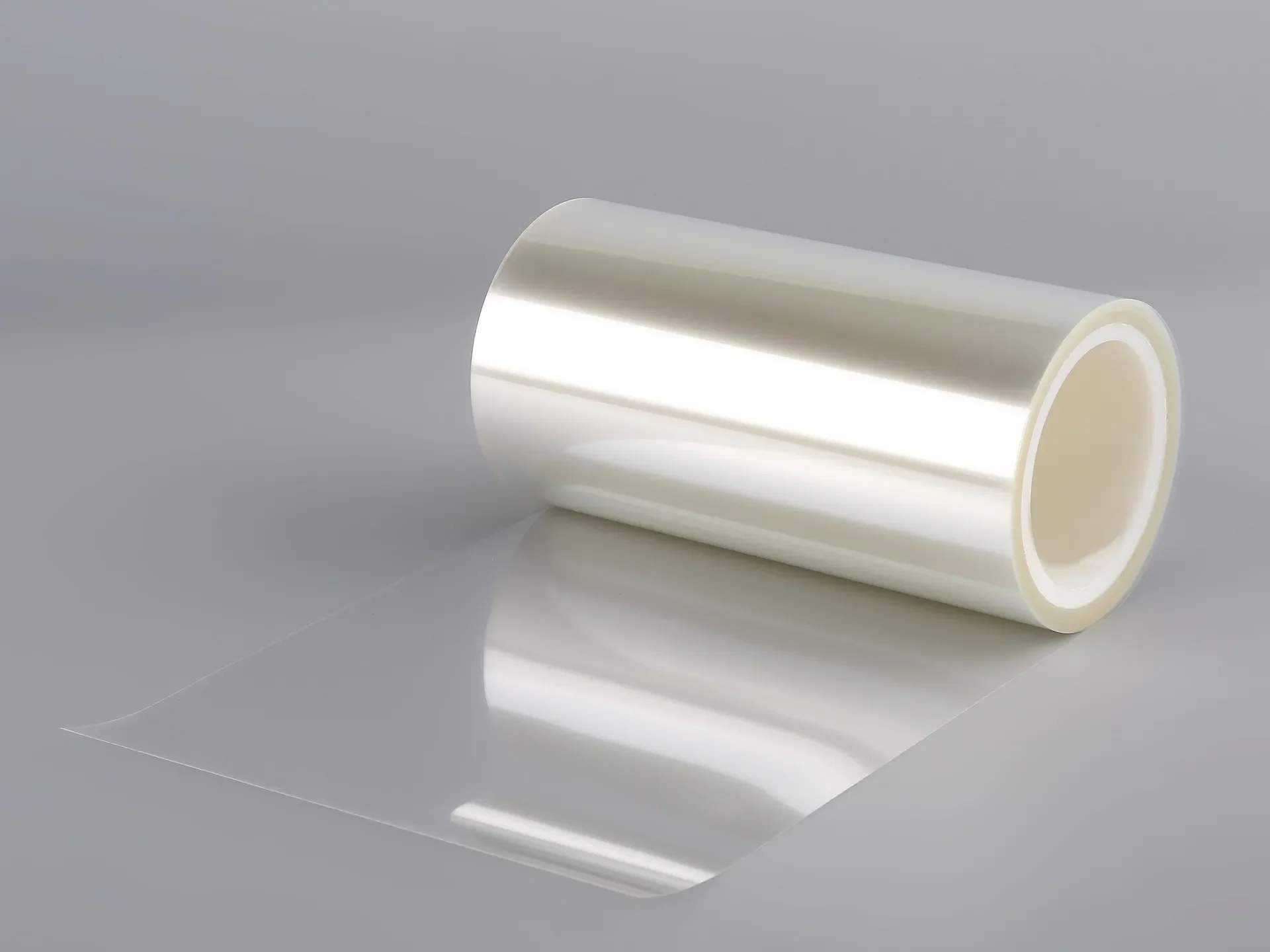
2. Lessons from PVC: How Microstructure Lowers Gloss
PVC processing offers a valuable reference point. Unlike PETG, PVC products typically exhibit moderate gloss — and understanding why reveals the mechanisms that can be applied to engineer surface texture in other polymers.
Granular Structure and Thermal Mismatch
Suspension-grade PVC exists in a granular structure. During extrusion or injection moulding, these granules form a layered melt structure — some granules melt fully, others retain solid cores. After the part cools and solidifies, the surface contains two distinct phases:
- Unmelted solid cores — granules that were not fully plasticised during processing
- A surface molten layer — fully melted polymer that solidified at the surface
These two phases have significantly different thermal shrinkage coefficients. As the material cools, the mismatch creates micro-contraction patterns: localised depressions form around the solid particle boundaries, and irregular shrinkage patterns appear across the melt zone. The result is a micro-convex-concave surface topography — and lower gloss.
The Chemistry Behind It
At the molecular level, the chloroethane groups in PVC polymer chains polarise the electron cloud, introducing Lewis acid-base characteristics alongside van der Waals forces. This limits the electron transport efficiency of the polymer and makes uniform cooling across the material cross-section difficult to achieve — particularly at greater part thicknesses. The result reinforces the surface unevenness generated by the thermal mismatch described above.
Takeaway: Low gloss in PVC is not accidental — it arises from a predictable combination of granular microstructure and thermal shrinkage mismatch during solidification. The same logic can be applied deliberately to PETG.
3. Why PETG Is Naturally High-Gloss — and How to Change It
PETG (polyethylene terephthalate glycol) behaves very differently from PVC at the molecular level. Its chemical architecture — large conjugated structures formed by benzene rings and carboxylic acid groups — provides two properties that produce its characteristic high-gloss surface:
- High molecular rigidity and regular chain alignment — the polymer solidifies into an ordered, smooth surface
- Excellent electron conductivity — enables uniform heat dissipation during cooling, minimising thermal gradients
Together, these properties mean that unmodified PETG solidifies into a consistently smooth, glossy surface with very little micro-topography. To create an orange-peel texture, this ordered solidification must be disrupted.
Two Strategies for Reducing Gloss in PETG
- Add a partially incompatible elastomer — rubber or elastomer particles with limited compatibility introduce irregular microstructures at the dispersed-phase interface, disrupting the regular alignment of the PETG matrix
- Add a precisely engineered calcium carbonate filler — the filler interacts with the polymer-surface interface during solidification, creating controlled micro-topography
For industrial 3D printing filament production, calcium carbonate is the more practical and scalable option — particularly when particle size, morphology, and surface chemistry are precisely controlled.
4. Can Calcium Carbonate Powder Affect 3D Printing Surface Gloss?
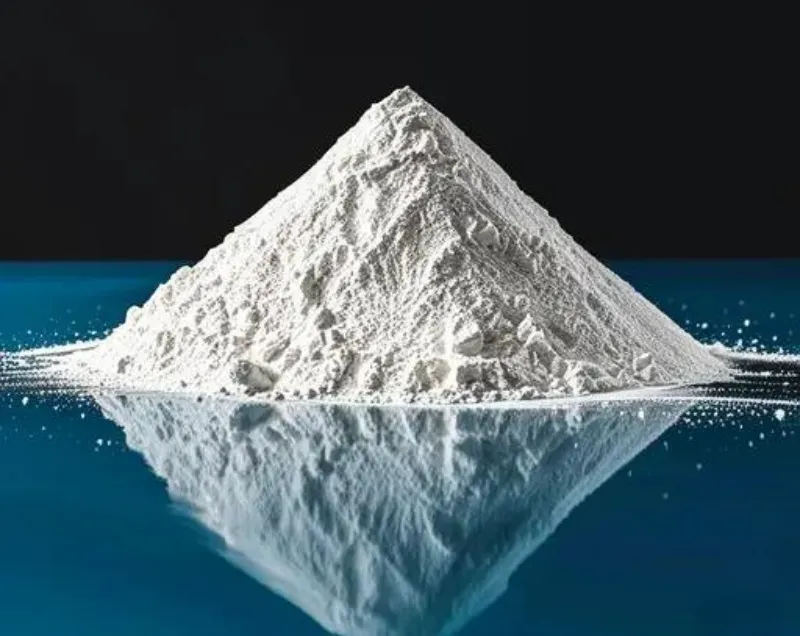
Yes — definitively. This is confirmed both by materials science theory and by practical production experience. Even ground calcium carbonate (GCC) with more than 80% of particles below 2 microns produces measurably lower gloss in injection-moulded PVC — and this effect transfers to PETG when the filler is correctly selected and processed.
The mechanism is the same as described above: calcium carbonate particles at the polymer surface create micro-scale topography during solidification. The size, shape, surface chemistry, and distribution of those particles determines whether the effect is subtle or dramatic — and whether it produces a clean matte finish or a controlled orange-peel texture.
5. GCC vs PCC: Choosing the Right Calcium Carbonate for Your Application
Not all calcium carbonate is equivalent. The two primary forms — ground calcium carbonate (GCC) and precipitated calcium carbonate (PCC) — behave very differently in polymer systems, and selecting the wrong type is one of the most common formulation mistakes.
| Property | GCC (Ground Calcium Carbonate) | PCC (Precipitated Calcium Carbonate) |
| Surface interaction | Low | High |
| Melt viscosity impact | Low — maintains good flow | High — increases viscosity significantly |
| Fluidity | High | Low |
| Filler loading capacity | High | Limited |
| Oil absorption | Low | High — problematic in adhesives |
| Ultra-fine capability | Achievable via air classification | Inherently fine (nano-scale available) |
| Best use case | High-loading, processability-critical applications | Reinforcement, surface area-critical applications |
The Critical Rule for Polymer Processing
In polymer processing, successful part formation always comes first. Filler selection must prioritise processability — a filler that delivers ideal surface gloss but creates extrusion difficulties is not a viable solution.
This is why GCC — with its low viscosity impact and high fluidity — is typically the preferred starting point for PETG 3D printing filament applications. PCC can offer reinforcement benefits but must be used cautiously, as it significantly increases melt viscosity, which can cause extrusion instability in filament production.
6. How Epic Powder Machinery Enables Precise Surface Gloss Control
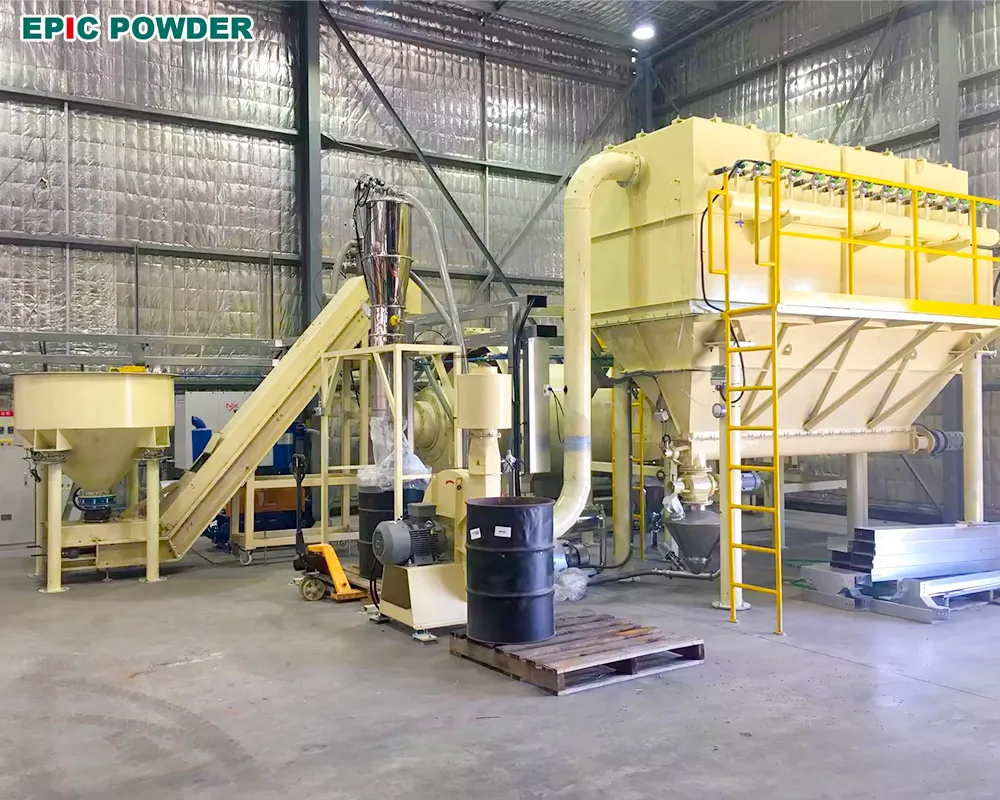
Epic Powder Machinery specialises in the ultra-fine processing and surface modification of non-metallic minerals, including calcium carbonate. Our air classification and surface coating technologies give customers precise control over the three variables that determine how calcium carbonate affects surface gloss:
- Particle size and size distribution — controls the scale of surface micro-topography
- Particle morphology — rhombohedral, scalenohedral, and needle-shaped particles interact differently with the polymer matrix
- Surface chemistry — stearic acid and other coating agents modify the polymer-filler interface interaction
This three-variable control is what makes it possible to dial in a specific surface finish — from high-gloss to a consistent matte to a defined orange-peel texture — rather than accepting whatever the unmodified filler delivers.
Epic Powder Machinery specialises in the ultra-fine processing and surface modification of non-metallic minerals, including calcium carbonate. Our air classification and surface coating technologies give customers precise control over the three variables that determine how calcium carbonate affects surface gloss:
- Particle size and size distribution — controls the scale of surface micro-topography
- Particle morphology — rhombohedral, scalenohedral, and needle-shaped particles interact differently with the polymer matrix
- Surface chemistry — stearic acid and other coating agents modify the polymer-filler interface interaction
This three-variable control is what makes it possible to dial in a specific surface finish — from high-gloss to a consistent matte to a defined orange-peel texture — rather than accepting whatever the unmodified filler delivers.
Modular Particle Engineering
The future of calcium carbonate in polymer composites lies in this kind of approach: classifying different particle structures, mapping them to specific performance outcomes, and redesigning particle architecture for targeted applications. Rather than selecting a commodity filler and hoping for the right result, manufacturers can work with Epic Powder to engineer calcium carbonate with a defined particle structure — assembled precisely for the surface finish they need.
7. Key Takeaways for Formulators and Product Developers
• Surface gloss in PETG is determined by microstructure during solidification — not by post-processing coatings
• Calcium carbonate fillers can reliably reduce surface gloss and create orange-peel texture when particle properties are correctly engineered
• GCC is generally preferred over PCC in PETG/3D printing applications due to its lower melt viscosity impact and high processability
• Particle size, morphology, and surface chemistry must all be controlled — changing one changes the outcome
• Air classification is the critical enabling technology for producing calcium carbonate with the consistent ultra-fine particle size distribution required for surface finish control
Epic Powder Machinery
Epic Powder Machinery has over 20 years of experience in ultra-fine powder processing for non-metallic minerals. We design and manufacture ball mills, air classifiers, and surface modification systems used by polymer compounders, filament producers, and specialty chemical manufacturers worldwide.
Our calcium carbonate processing solutions — from ultra-fine air classification to stearic acid surface coating — give customers the precise particle engineering capability needed to achieve defined surface finishes in PETG, PVC, and other polymer systems.
Contact Epic Powder Machinery for expert technical consultation on calcium carbonate fillers, particle size engineering, and surface modification for polymer composites.

“Thanks for reading. I hope my article helps. Please leave a comment down below. You may also contact EPIC Powder online customer representative Zelda for any further inquiries.”
— Jason Wang, Engineer