
Mixing is a pre-forming step in ceramic production that is easy to underestimate. The mixing step comes after raw material grinding and before forming (pressing, extrusion, or tape casting). Its output is a homogeneous blend of ceramic powder, sintering aids, dopants, and binders. This directly determines the consistency and performance of everything downstream. Non-uniform mixing means non-uniform sintering, which means property variation across a batch or across a product.
There are two fundamentally different mixing approaches for ceramic powders: dry mixing and wet mixing. They differ in equipment, process parameters, achievable homogeneity, and applicability. Choosing the wrong approach for a specific ceramic system is a common source of performance problems that get misattributed to powder quality or sintering conditions.
This guide covers the main equipment types for each approach, the key process parameters that determine mixing quality, and how the particle size of the feed powder — set in the grinding step before mixing — affects what the mixing step can achieve.
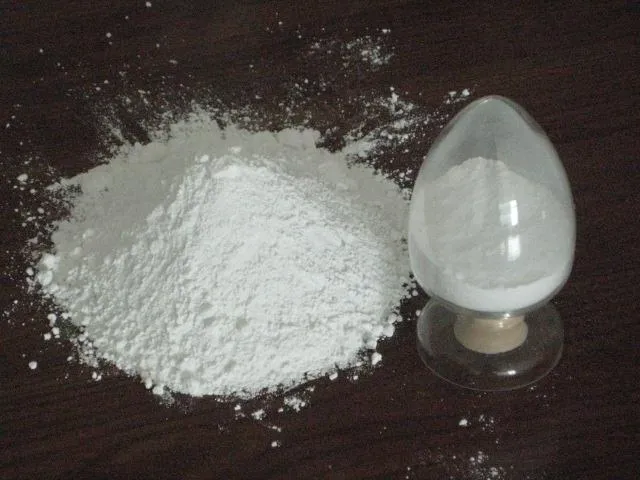
Dry Mixing Equipment
Dry mixing is used for ceramic systems where wet processing is impractical, where the required homogeneity is achievable without a liquid medium, or where the formulation includes heat-sensitive or moisture-reactive components. The three main equipment types for dry ceramic mixing are V-blenders, three-dimensional mixers, and high-speed mixers.
| Equipment | Working Principle | Best Application |
| V-Blender | V-shaped container rotates around a horizontal axis. Powder splits and recombines continuously — convective mixing with low shear. Gentle; minimal particle damage; long mixing time. | Initial blending of main components and sintering aids where particle shape must be preserved. Suitable for large batches with good-flowability powders. |
| Three-Dimensional Mixer | Container moves, rotates, and tumbles simultaneously in multiple directions, creating strong turbulent and diffusive motion. No dead zones; short mixing time; high uniformity. | Formulations requiring very high uniformity — electronic ceramic powders, multi-component structural ceramic blends. Final homogenisation step before binder addition. |
| High-Speed Mixer | High-speed rotating impeller or blades create intense shear and convection. Very fast; high efficiency; but generates heat and can cause agglomeration in fine powders. | Semi-dry mixing when a small amount of liquid binder or surface modifier needs to be distributed. Also used for simultaneous dry surface coating during mixing. |
Dry Mixing Limitations
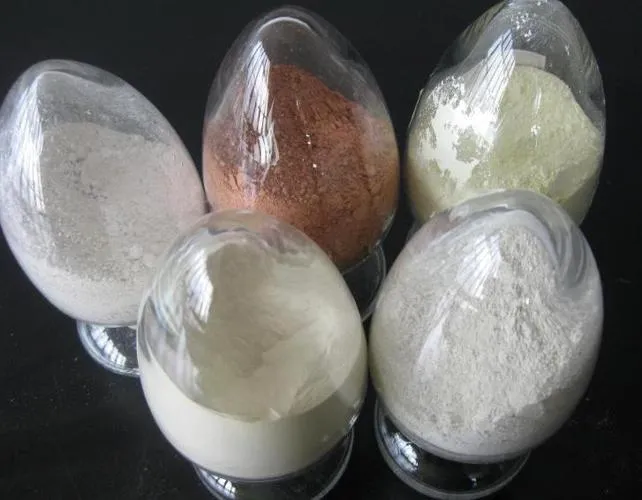
Dry mixing achieves good macro-scale uniformity so the bulk composition is consistent. But it cannot achieve the molecular or atomic-level uniformity that high-performance electronic ceramics require. In a dry-mixed blend of alumina and a small amount of MgO sintering aid, the MgO particles are distributed among the alumina particles but are not in intimate contact with every alumina surface. In the sintering furnace, this means MgO must diffuse across grain boundaries to reach and pin alumina grain boundaries. It’s a process that requires sufficient temperature and time, and is never perfectly uniform.
Wet ball milling, described in the next section, addresses this by co-grinding the components in a liquid medium, which distributes sintering aid atoms at the particle surface level rather than between particles.
Wet Mixing Equipment
Wet mixing in a liquid medium is the standard process for high-performance electronic ceramics and any application. It’s where compositional uniformity at the sub-micron scale is required. The liquid medium allows particles to be individually dispersed and distributed. Ieliminates electrostatic agglomeration, and enables the use of chemical dispersants that maintain uniform particle distribution throughout the mixing period.
Ball Mill (Rolling and Vibrating)
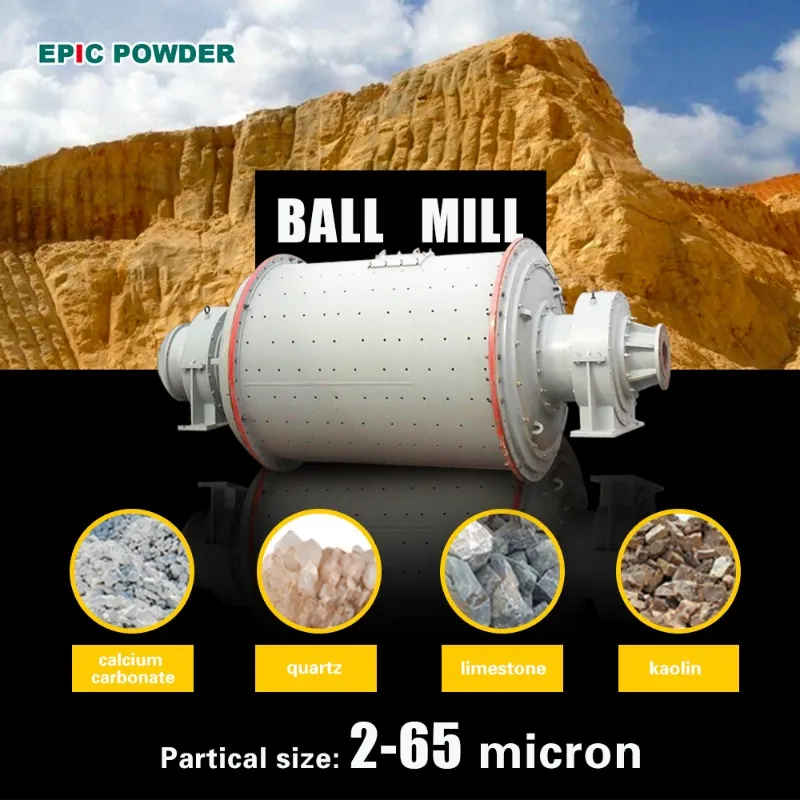
The ball mill is the core wet mixing equipment for most ceramic powder systems. Powder, grinding media (typically yttria-stabilised zirconia balls, 3-20 mm diameter), and a dispersion medium are loaded into a mill jar. The jar rotates (rolling ball mill) or vibrates (vibrating ball mill), causing the media to impact and attrit the powder. This simultaneously achieves size reduction, agglomerate breakup, and compositional mixing at the particle level.
The operating speed is critical. For a rolling ball mill, the optimal working speed is 65-85% of the critical speed (Nc), the speed at which centrifugal force would pin the media to the jar wall with no grinding action. Below 65% Nc, impact energy is insufficient; above 85% Nc, the media begin to centrifuge and grinding efficiency drops. Ball-to-powder ratio (media mass to powder mass) is typically 2:1 to 10:1. It’s higher ratios increase grinding and mixing intensity but also energy consumption and media wear.
Wet ball milling times for ceramic powders range from 12 to 72 hours depending on the starting particle size, target degree of mixing, and the hardness of the material. Achieving true molecular-level mixing of dopants and sintering aids — where the additive is uniformly distributed on individual particle surfaces — requires extended milling periods that allow repeated media-particle contact across all particles in the system.
Bead Mill (Stirred Mill)
The bead mill uses a high-speed internal stirrer to drive very small grinding beads (typically 0.1-0.5 mm zirconia beads) in intense, high-frequency motion through the slurry. The dispersion intensity and grinding efficiency are far higher than in a conventional ball mill at equivalent energy input, because the smaller bead size provides far more contact points per unit volume and the stirred configuration maintains consistent bead velocity throughout the chamber.
Bead mills are the standard equipment for sub-micron and nano-scale dispersion — applications like MLCC (multilayer ceramic capacitor) dielectric pastes, where BaTiO3 particle size below 200 nm must be maintained with no hard agglomerates. They are also used for pre-treatment of high-solid-content slurries before tape casting, where a narrow, well-dispersed PSD is critical for defect-free green tape.
Planetary Ball Mill
The planetary ball mill is a high-energy laboratory and small-batch tool. Each jar revolves around a central axis while also spinning on its own axis, generating centrifugal forces that produce high-energy impact and grinding. Mixing and grinding energy is far higher than a conventional rolling ball mill. Planetary ball mills are used for nano-composite powder synthesis, mechanical alloying, and applications requiring the highest achievable mixing uniformity in small volumes — typically research and development or specialty production up to a few kilograms per batch.
Key Process Parameters for Ceramic Powder Mixing
Ball-to-Powder Ratio
For ball mills, the ratio of grinding media mass to powder mass is a primary process variable. Higher ratios (8:1 to 10:1) provide more grinding and mixing action per unit time but increase energy consumption and media wear. Lower ratios (2:1 to 4:1) are gentler and used when size reduction is not the primary objective. When the goal is dispersion and homogenisation of already-fine powder rather than further particle size reduction. The optimal ratio for a specific system is determined experimentally by measuring PSD and composition uniformity as a function of ratio at fixed milling time.
Dispersant Selection and Loading
In wet mixing, a dispersant is added at 0.1-2% by weight of the powder to prevent reagglomeration during milling. The dispersant works by adsorbing onto particle surfaces and creating either electrostatic repulsion or steric hindrance between particles. Without an effective dispersant, particles that are broken apart by the grinding media immediately re-agglomerate, and the mixing achieves little compositional uniformity beyond the macro-scale.
Dispersant selection depends on the powder surface chemistry, the dispersion medium (aqueous or organic), and the downstream process — dispersants must be fully removable during binder burnout without leaving ceramic-performance-damaging residues. For aqueous alumina slurries, ammonium polyacrylate at pH 9-10 is a common choice. For non-aqueous systems with organic media, phosphate ester or fish oil dispersants are commonly used.
Slurry pH and Zeta Potential
In aqueous slurries, the pH determines the surface charge on ceramic particles (the zeta potential). At the isoelectric point — the pH at which zeta potential is zero — particles have no electrostatic repulsion and agglomerate most readily. Maximum dispersion stability occurs when the zeta potential is above approximately +30 mV or below -30 mV. For alumina, the isoelectric point is approximately pH 8-9; for titania, approximately pH 5-6; for zirconia, approximately pH 6-7. Adjusting slurry pH to a value well away from the isoelectric point — combined with an appropriate dispersant — maximises dispersion stability and mixing uniformity.
Addition Sequence for Multi-Component Formulations
When mixing formulations containing trace amounts of dopants or sintering aids (0.1-2% of the total powder mass), the addition sequence matters. Direct addition of trace components to the main powder creates statistical distribution problems: because the trace component particles are so few relative to the main powder particles, uniform mixing requires an impractically large number of contacts.
The standard approach is stage-wise pre-mixing: the trace component is first mixed with a small fraction of the main powder (10-20% by weight) in a separate high-intensity mixing step to create a concentrated pre-mix with intimate contact between the trace component and main powder particles. This concentrated pre-mix is then added to the remaining main powder for final blending. The concentrated pre-mix distributes more uniformly in the final blending step than the raw trace component would.
Critical Parameter Ranges for Ceramic Wet Ball Milling
• Ball-to-powder ratio: 2:1 to 10:1 by mass — lower for dispersion only, higher for simultaneous size reduction
• Working speed: 65-85% of critical speed (Nc) for rolling ball mills
• Media size: 3-20 mm for ball mills (larger for coarser input, smaller for finer target); 0.1-0.5 mm for bead mills
• Media material: Yttria-stabilised zirconia (YSZ) — high hardness, low wear, low contamination for most ceramics
• Milling time: 12-72 hours for wet ball milling; determined by target PSD and compositional uniformity
• Dispersant loading: 0.1-2% by powder weight; optimise by measuring zeta potential and slurry viscosity
• Slurry pH: Set well away from isoelectric point; measure zeta potential to confirm adequate stability
• Solid content: Optimise for best fluidity and grinding efficiency — typically 30-55 vol% for ball milling
How Pre-Grinding Particle Size Affects Mixing Quality
A mixing step can only work with what the grinding step delivers. If the ceramic powder feed entering the mixer has a wide particle size distribution, high agglomerate content, or inconsistent surface area, the mixing process will produce non-uniform results regardless of how well the mixing equipment is configured.
Three feed powder characteristics most directly affect mixing outcome. First, particle size and D97: if the main powder and a trace additive have very different particle sizes, they will segregate in dry mixing and the finer component will be selectively retained on grinding media surfaces in wet milling. Matching the D50 and D97 of components before mixing significantly improves uniformity. Second, agglomerate hardness: soft agglomerates can be broken during wet ball milling; hard agglomerates (formed by sintering or chemical bonding) cannot be broken by mixing equipment and will persist as compositional heterogeneities in the final mixed powder. Third, specific surface area: components with very different specific surface areas require different dispersant loadings for stable suspension — a wide surface area distribution across components makes dispersant optimisation difficult.
This is why the grinding step upstream of mixing is as important as the mixing step itself. A ring-roller mill or jet mill that delivers consistent D50, controlled D97, and low agglomerate content to the mixing process sets that process up for success. Variable or poorly controlled grinding output sets it up for failure regardless of mixing equipment quality.
EPIC Powder Machinery Equipment for Ceramic Powder Preparation
EPIC Powder Machinery’s dry grinding and classification equipment is used in the preparation stage of ceramic powder production — producing the controlled particle size feed material that wet mixing and dry mixing processes require.
- Ring-roller mill (SRM series): for calcium carbonate, talc, barite, dolomite, and other non-metallic mineral fillers used in structural ceramics and construction ceramics. Produces D97 from 45 microns (325 mesh) down to 5 microns (2500 mesh) in a single pass with integrated VFD-controlled air classifier. Low iron contamination with high-chromium alloy or ceramic wear parts. Suitable for the functional filler preparation step before dry mixing.
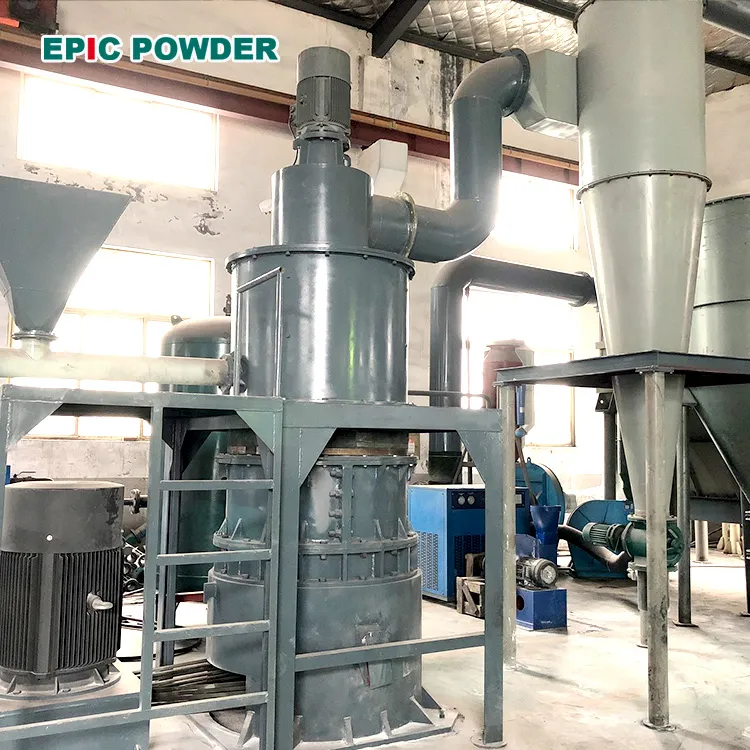
- Fluidised bed jet mill (MQW series): for high-purity alumina, zirconia, silicon carbide, boron nitride, and other technical ceramic powders where metal contamination from grinding media is unacceptable. Particle-on-particle grinding with no media contact — zero metal introduction from the grinding step. Nitrogen atmosphere option for oxidation-sensitive ceramics. Produces D50 from 0.5 to 15 microns with integrated classifier for precise D97 control.
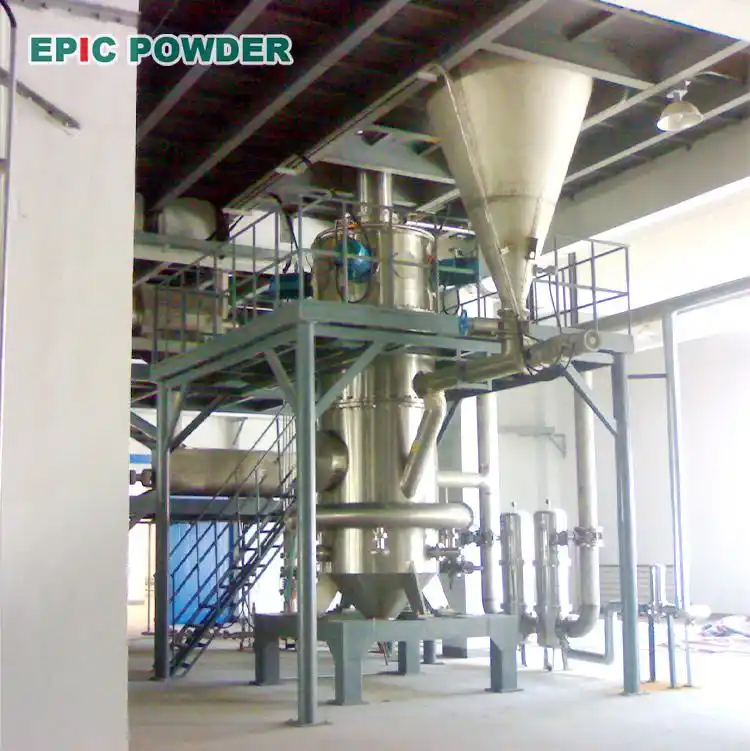
- Air classifier (ITC, MBS, CTC series): for upgrading existing ceramic powder feeds by removing coarse fractions, tightening D97, or separating different particle size grades from a single feed. Particularly useful when the ceramic powder producer needs to serve multiple specifications from one grinding line.
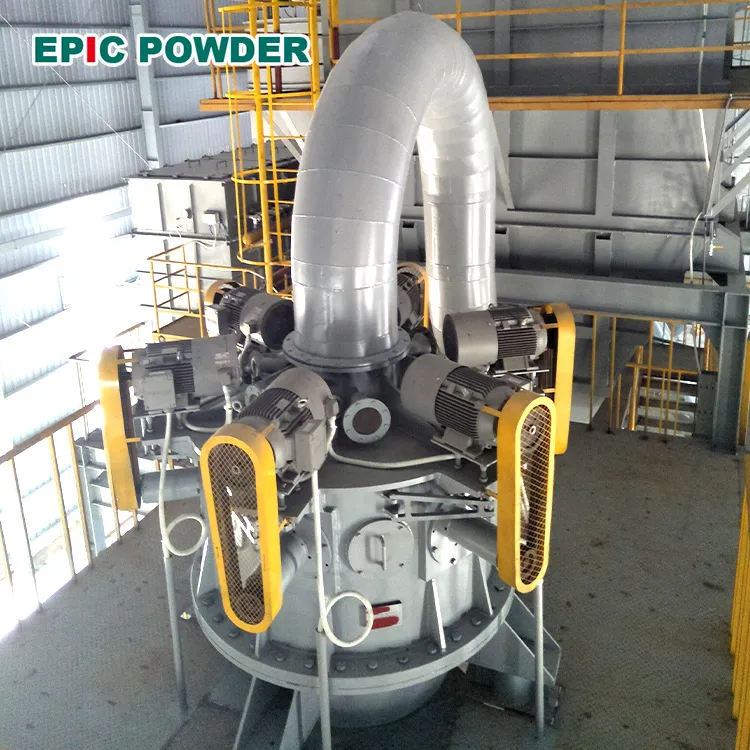
The grinding step does not replace the mixing step. It prepares the feed for it. A ring-roller mill producing consistent D97 10 microns calcium carbonate filler, or a jet mill producing controlled D50 2 microns alumina. It gives the downstream wet ball mill or three-dimensional dry mixer the uniform, dispersion-ready input material that mixing quality depends on.
Preparing Ceramic Powder for Mixing? Start with the Right Particle Size.
EPIC Powder Machinery’s dry grinding and classification equipment is used by ceramic powder producers to prepare feed material. It’s at precisely the right D50 and D97 before the mixing step. Whether that means ring-roller mill for 325-2500 mesh calcium carbonate, or jet mill for high-purity electronic ceramic powders.
Tell us your ceramic material, target D50 before mixing, production volume, and contamination constraints, and we will recommend the right grinding configuration.
Request a Free Process Consultation: www.nonmetallic-ore.com/contact
Explore Our Ceramic Powder Grinding Equipment: www.nonmetallic-ore.com
Epic Powder
At Epic Powder, we offer a wide range of equipment models and tailor solutions to meet your specific needs. Our team has more than 20 years experience in various powders processing. Epic Powder is specialized in fine powder processing technology for mineral industry, chemical industry, food industry, pharama industry, etc. Contact us today for a free consultation and customized solutions!

“Thanks for reading. I hope my article helps. Please leave a comment down below. You may also contact EPIC Powder online customer representative Zelda for any further inquiries.”
— Emily Chen, Engineer