
Calcium carbonate is one of the most widely used mineral fillers in the coatings industry, valued for its low cost, abundance, and versatility. Available in several forms — Ground Calcium Carbonate (GCC), Precipitated Calcium Carbonate (PCC), and increasingly ultrafine and nano calcium carbonate — it serves double duty in architectural paints, industrial coatings, and anti-corrosion systems by simultaneously improving two critical performance metrics: weatherability and stain resistance.
This article breaks down the mechanisms behind both improvements, compares the performance of different calcium carbonate grades, and introduces the grinding equipment that makes high-quality coating-grade calcium carbonate possible.
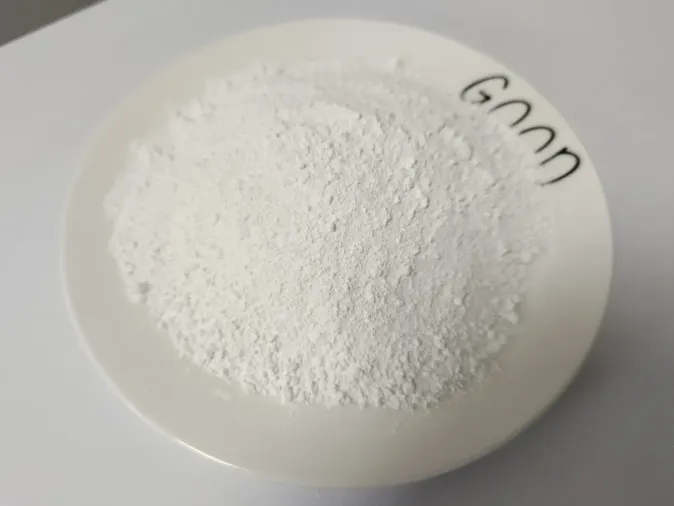
How Calcium Carbonate Improves Coating Weatherability
Weatherability failure in exterior coatings typically manifests as UV-induced resin degradation, film chalking, gloss loss, yellowing, cracking, and powdering. Calcium carbonate addresses these failure modes through three synergistic mechanisms: dense physical filling, optical UV stabilization, and chemical pH buffering.
Dense Filling Reduces Film Porosity and Blocks Moisture Ingress
Pure resin films inevitably contain microscopic capillary pores that allow rainwater, moisture vapor, oxygen, and acid rain to penetrate into the coating interior. This penetration hydrolyzes the resin binder, corrodes the substrate, and accelerates aging. Calcium carbonate particles fill these microscopic voids, producing a denser and smoother coating surface.
Ultrafine calcium carbonate particles — with sizes matched to the interstitial spaces in the resin matrix — stack tightly and dramatically reduce film porosity. The resulting dense barrier layer limits the penetration of water, acids, alkalis, and atmospheric corrosive agents, slowing resin hydrolysis and delaying blistering and peeling. In latex paint formulations, ultrafine calcium carbonate (particle size below 5μm) can reduce coating surface roughness to under 0.3μm, significantly improving light reflection uniformity and achieving a 60° gloss reading above 80.
UV Scattering Slows Resin Photodegradation
Organic resins such as acrylics, polyurethanes, and alkyds absorb UV radiation and undergo chain scission, leading to chalking and gloss loss. While calcium carbonate itself has weak UV absorption, it exerts a strong light-scattering effect:
Micron- and nano-scale CaCO₃ particles dispersed uniformly throughout the film refract and scatter the majority of incident UV radiation, reducing the UV energy that reaches the resin binder.
This slows photo-oxidative chain scission, mitigating outdoor chalking, gloss loss, and color fading.
When combined with titanium dioxide, calcium carbonate provides synergistic light-blocking, allowing formulators to reduce the more expensive TiO₂ dosage while maintaining the overall weathering protection system.
Advanced porous calcium carbonate with pore diameters of 100–300?nm can boost light-scattering efficiency by up to 300%. By adding orientation agents that align platy calcium carbonate particles in parallel, the effective refractive index can reach 2.45, enabling 60–80% replacement of titanium dioxide while meeting the hiding power requirements of premium coatings.
pH Buffering Neutralizes Acid Rain and Atmospheric Pollutants
Calcium carbonate is mildly alkaline and possesses acid-base buffering capacity. When acid rain and industrial sulfur dioxide deposit on the coating surface, CaCO₃ preferentially neutralizes these acidic species, protecting the resin from acid corrosion. This prevents the gloss loss, spotting, and pinholing that would otherwise result from acid etching, thereby extending outdoor service life.
Rigid Filler Reinforces Film Mechanical Strength Against Cracking
As a rigid inorganic filler, calcium carbonate increases film hardness and tensile modulus. Under outdoor thermal cycling, wind exposure, and solar radiation, pure soft resins are prone to brittle cracking. Dispersed calcium carbonate particles distribute internal stress, reducing the risk of film cracking and delamination. This maintains a complete, continuous protective film over the long term — indirectly sustaining weatherability throughout the coating’s service life.
How Calcium Carbonate Improves Stain Resistance
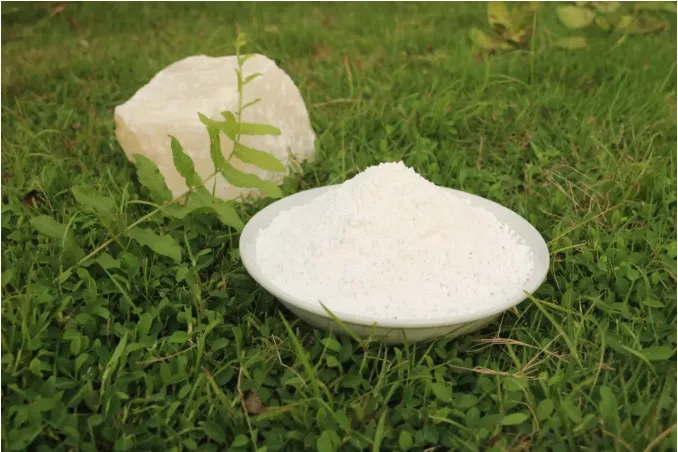
The core logic of stain resistance is straightforward: reduce surface porosity, increase surface hardness, optimize surface microstructure, and minimize contaminant adhesion. Calcium carbonate contributes to all four aspects.
Filling Micropores Prevents Stain Embedding
Surface micropores are the primary sites for stain adsorption. Oil, dust, ink, and mold spores penetrate into these pores and become difficult to wipe away. Ultrafine calcium carbonate fills the interstices between resin molecules, producing a smoother, denser film with minimal porosity. Stains remain on the surface rather than penetrating the interior, and a damp cloth can easily remove them — significantly improving scrub resistance and stain ratings.
Higher Surface Hardness Resists Scratches and Dirt Accumulation
Pure resin films are relatively soft; friction from outdoor dust and sand produces fine scratches whose grooves trap dirt, making the surface increasingly dirty over time. Calcium carbonate’s rigid inorganic particles raise the Mohs hardness of the film, reducing the formation of fine surface scratches and eliminating the micro-grooves that harbor dirt. Dust and powder no longer become embedded in the surface, and rainwater can provide a self-cleaning effect.
Controlled Surface Roughness Lowers Contaminant Adhesion
Properly graded calcium carbonate particle size distributions create a low-adhesion micro-surface. A smooth, dense film reduces the contact area with dust and organic contaminants, weakening molecular adhesion forces. When rainwater wets the surface, water spreads more easily and carries away contaminants — enhancing the hydrophobic, easy-clean effect.
Inhibiting Film Tackiness Reduces Dust Adhesion
Low-quality resins tend to soften and become tacky under high temperatures or prolonged sun exposure, causing outdoor dust to stick firmly to the film surface. Calcium carbonate raises the glass transition temperature (Tg) of the coating, reducing the tendency to soften and become tacky at elevated temperatures — addressing dust adhesion at its root.
Performance Differences: GCC vs PCC vs Nano Calcium Carbonate
Not all calcium carbonate grades perform equally in coatings. The three main categories differ significantly in their contribution to weatherability and stain resistance:
| Type | Particle Characteristics | Weatherability Contribution | Stain Resistance Contribution | Typical Applications |
| Nano Calcium Carbonate | Extremely fine particle size; highest packing density | Greatest improvement in weatherability; enhances film flexibility to resist cracking | Maximum stain resistance improvement; densest surface finish | Premium exterior wall paints, waterborne industrial topcoats |
| Ultrafine PCC | Controlled crystal morphology (spindle, cubic); excellent dispersibility | Good weatherability; smooth, uniform film formation | Outstanding scrub and stain resistance | Interior stain-resistant paints |
| GCC (Ground Calcium Carbonate) | Low cost, high loading capacity; coarser particle size | Provides dense barrier function; basic weatherability reinforcement | Stain resistance decreases if fineness is insufficient | Primer coats, economical exterior paints |
Formulation Guidelines for Optimal Performance
Proper dispersion is critical. Calcium carbonate must be thoroughly dispersed with appropriate dispersants. Particle agglomeration creates voids that reduce both weatherability and stain resistance.
Use in combination with other additives. For outdoor weathering systems, pair calcium carbonate with light stabilizers and titanium dioxide. Calcium carbonate serves as a synergistic light-scattering filler.
Control the addition level. Excessive calcium carbonate reduces film flexibility and can cause outdoor cracking, actually weakening weatherability. In exterior coatings, total calcium carbonate filler loading typically ranges from 20% to 45%.
Surface-modified calcium carbonate performs better. Surface-activated grades have improved compatibility with the resin matrix, form denser films, and deliver superior water resistance and stain resistance compared to unmodified grades.
Key takeaway: Weatherability relies on a multi-layer protection logic — a dense barrier layer blocks water, oxygen, and acid rain; light scattering slows resin chalking and degradation; rigid filler reinforcement resists thermal cracking; and alkaline components neutralize atmospheric acid corrosion. Stain resistance is achieved by filling micro-pores to prevent stain embedding, increasing surface hardness to eliminate scratch-trapped dirt, lowering interfacial adhesion forces, and inhibiting film tackiness — delivering long-lasting, easy-clean performance.
EPIC Powder: Your Calcium Carbonate Grinding Equipment Partner
The performance advantages described above depend fundamentally on the quality of the calcium carbonate powder — and that quality is determined by the grinding and classification equipment used to produce it. EPIC Powder Machinery, based in Qingdao, China, brings over 20 years of expertise in ultrafine powder processing and offers a complete range of calcium carbonate grinding solutions tailored to coating-industry specifications.
Ball Mill and Classifier Production Line
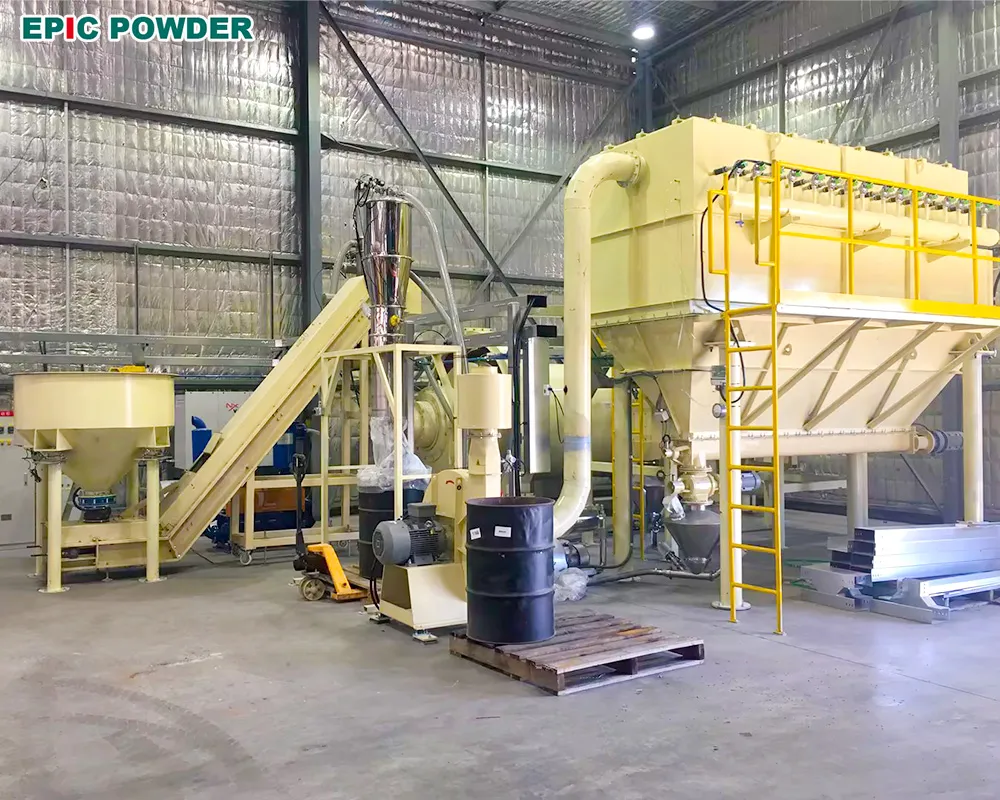
This is the workhorse for large-scale coating-grade calcium carbonate production. The system pairs an optimized ball mill (length-to-diameter ratio engineered for ideal fine-particle yield) with a German-technology turbine classifier — available in vertical and horizontal configurations. Key advantages include:
- Flexible particle size control (D97: 5–75 µm) to match different coating grade requirements
- Optimized grinding chamber design with high-alumina ceramic liners to preserve product whiteness
- NG rotor classifier design for improved accuracy and reduced energy consumption
- Closed-circuit operation that avoids over-grinding and maximizes yield
- Automated control system for consistent, repeatable product quality
Production capacities range from small-scale models (1.5 m cylinder diameter, 75 kW) to large industrial lines (2.4 m diameter, 400 kW), supporting outputs from hundreds of kilograms to several tons per hour.
Ring Roller Mill
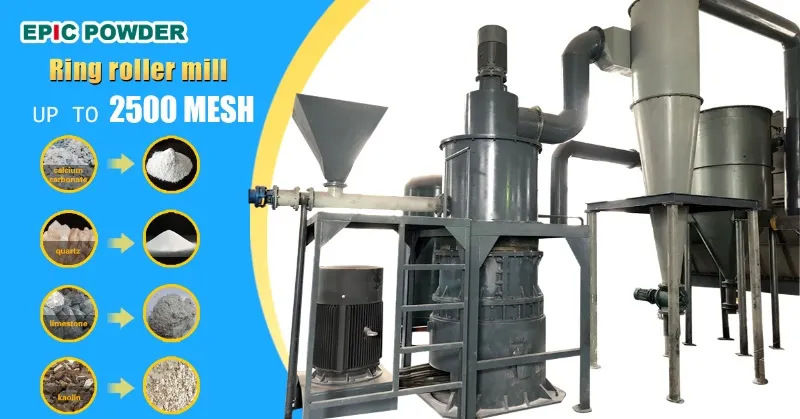
For manufacturers seeking efficient dry grinding of GCC, the ring roller mill produces powders with D97 from 3 to 8 µm (up to 2500 mesh), making it ideal for producing ultrafine calcium carbonate for premium coating formulations. Advantages include:
- Adjustable particle size to meet different coating specifications
- Favorable particle size distribution and product stability
- Lower energy consumption compared to jet milling for equivalent fineness
- Wide applicability across calcite, marble, limestone, and chalk feedstocks
Jet Mill for Ultra-High-Purity Calcium Carbonate
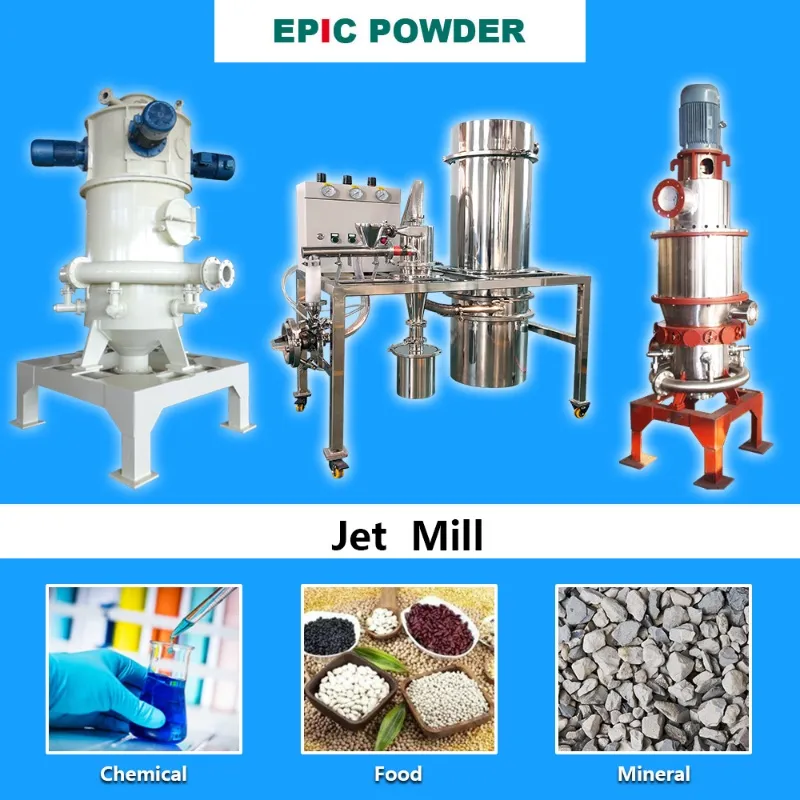
When coatings demand the highest purity and finest particle sizes (D97: 3–10 µm), the fluidized bed jet mill provides contamination-free grinding using compressed air. With no moving parts in the grinding chamber, the jet mill is the preferred choice for nano-grade and ultra-high-whiteness calcium carbonate used in top-tier exterior coatings.
Powder Surface Modification Equipment
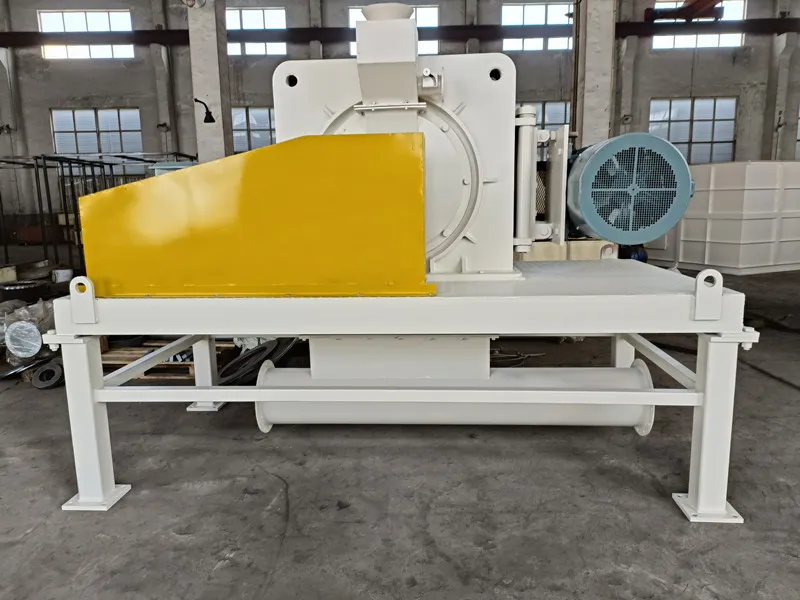
As noted in the formulation guidelines above, surface-modified calcium carbonate delivers significantly better performance in coatings. EPIC Powder offers four types of coating/modification equipment to produce activated calcium carbonate with improved dispersibility and resin compatibility:
1. Turbo Mill for high-efficiency powder coating
2. Cell Mill for continuous surface modification
3. Pin Mill for precise coating application
4. Three-Roller Coating Machine for heavy-duty modification
These systems apply stearic acid or coupling agents to the calcium carbonate surface, improving hydrophobicity and compatibility with organic resin systems — directly translating to the denser films and better stain resistance discussed earlier.
Air Classifier

EPIC’s ITC series horizontal multi-stage air classifiers operate in closed-loop configurations with ball mills to precisely separate calcium carbonate into narrow particle size fractions. This ensures that coating manufacturers receive powder with the consistent fineness and particle distribution needed to achieve the dense film packing, UV scattering, and stain-resistant properties described in this article.
Integrated Production Lines for Coating-Grade Calcium Carbonate
EPIC Powder designs complete turnkey production lines that combine grinding, classification, and surface modification into a single integrated system. These lines have been deployed worldwide — including a 5 t/h ultrafine grinding, classifying, and modification production line in Vietnam, and a 1200-mesh ball mill and classifier plant in Libya — demonstrating proven capability to produce coating-grade calcium carbonate at industrial scale.
Each project begins with raw material analysis and laboratory testing, followed by customized equipment selection and process design. EPIC’s engineering team provides full support from equipment manufacturing through installation, commissioning, and operator training.
Need High-Quality Calcium Carbonate Grinding Equipment?
Whether you are producing GCC for economical primers or nano calcium carbonate for premium exterior coatings, EPIC Powder has the grinding, classification, and modification technology to meet your specifications. With 20+ years of experience and installations in 160+ countries, we deliver reliable, energy-efficient solutions tailored to your coating-grade calcium carbonate needs.
Epic Powder
About EPIC Powder Machinery: Located in Qingdao, China, EPIC Powder Machinery is a leading manufacturer of ultrafine grinding, classifying, and powder coating equipment for non-metallic minerals. With over 20 years of industry experience, EPIC serves customers in 160+ countries across the calcium carbonate, barite, kaolin, and dolomite processing industries. For inquiries, contact [email protected] or call +86-15762272120.

“Thanks for reading. I hope my article helps. Please leave a comment down below. You may also contact EPIC Powder online customer representative Zelda for any further inquiries.”
— Emily Chen, Engineer