
If you’re aiming to produce calcium carbonate powder with an air classifier mill, you’ve just tapped into one of the smartest routes to achieving ultrafine, high-purity results. Getting that perfect particle size isn’t just about grinding—it’s about mastering precise airflow and classifier control. In this guide, you’ll discover exactly how the air classifier mill transforms raw calcium carbonate into ultrafine, consistent powder that meets today’s toughest industry specs. Ready to upgrade your process and boost quality?
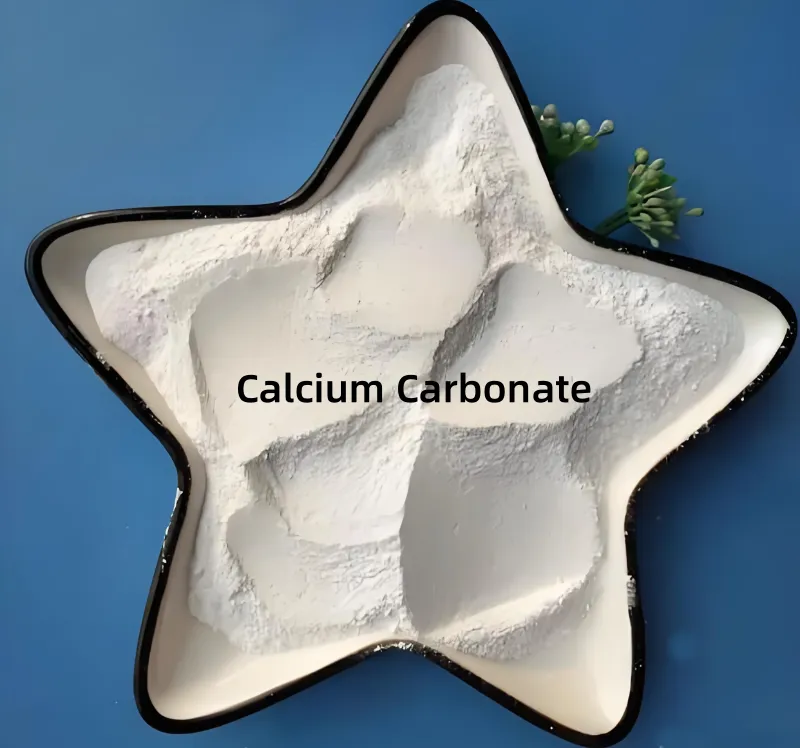
Demystifying Ultrafine CaCO₃ and the Air Classifier Mill
What is Ultrafine Calcium Carbonate Powder?
Ultrafine calcium carbonate powder (CaCO₃) refers to calcium carbonate particles ground to extremely small sizes, typically below 10 micrometers (µm). This fine particle size boosts surface area, enhances reactivity, and improves performance in applications like plastics, coatings, and pharmaceuticals.
| Specification | Typical Range |
|---|---|
| Particle Size (D50) | 15 µm |
| Particle Size (D97) | < 10 µm |
| Purity | ≥ 98% CaCO₃ |
| Specific Surface Area | 1 – 20 m²/g (depending on grade) |
| Bulk Density | 0.5 – 0.9 g/cm³ |
Ultrafine CaCO₃ powders are prized for uniform particle distribution and high purity, directly affecting product quality and end-use performance.
Why the Air Classifier Mill is the Ideal Tool for Ultrafine Grinding
Air classifier mills combine grinding and air classification in one integrated system, making them perfect for producing ultrafine CaCO₃ powder. Key advantages include:
- Precise particle size control: Air classifiers separate fine particles from coarse ones, achieving tight distributions.
- Consistent product quality: The continuous airflow removes oversized particles, ensuring uniformity.
- No overgrinding: The system prevents heat buildup and particle damage.
- Energy efficiency: Grinding is optimized, reducing operational costs.
- Scalability: Suitable for both pilot scale and large-scale production.
The air classifier mill produces ultrafine CaCO₃ that meets stringent global market demands for quality and performance, making it the industry’s go-to choice for high-grade calcium carbonate powder production.
Critical Questions Before You Start Production
Q1: Can I Use Any Type of Raw Calcium Carbonate with This Mill?
Not all raw calcium carbonate powders are the same when using an air classifier mill. While the mill is versatile, the starting material’s quality and form make a big difference. Typically, natural ground calcium carbonate (GCC) and precipitated calcium carbonate (PCC) both work well, but impurities or excessive moisture in the raw CaCO₃ can cause clogging or uneven grinding. For best results, use clean, dry, and properly sized feedstock. This ensures smooth milling, consistent output, and cuts down on maintenance needs.
Q2: How Do I Control the Final Particle Size Distribution?
Controlling particle size distribution with an air classifier mill is straightforward but depends on a few key settings:
- Classifier speed: Higher speeds produce finer powders by separating out larger particles more effectively.
- Grinding pressure: Adjusting the mill’s pressure changes how aggressively the calcium carbonate is ground.
- Feed rate: Slower feed rates give more time for pulverizing, resulting in finer powder.
- Airflow settings: Proper airflow helps carry and classify particles correctly, creating a tight size range.
By fine-tuning these parameters, you can consistently hit the target particle sizes—whether you need ultrafine CaCO₃ with a D97 under 10µm or a specific distribution for your product’s demands. This level of control is why the air classifier mill is preferred for producing high-quality calcium carbonate powder globally.
The Epic Advantages: Benefits of Our Air Classifying Milling Process
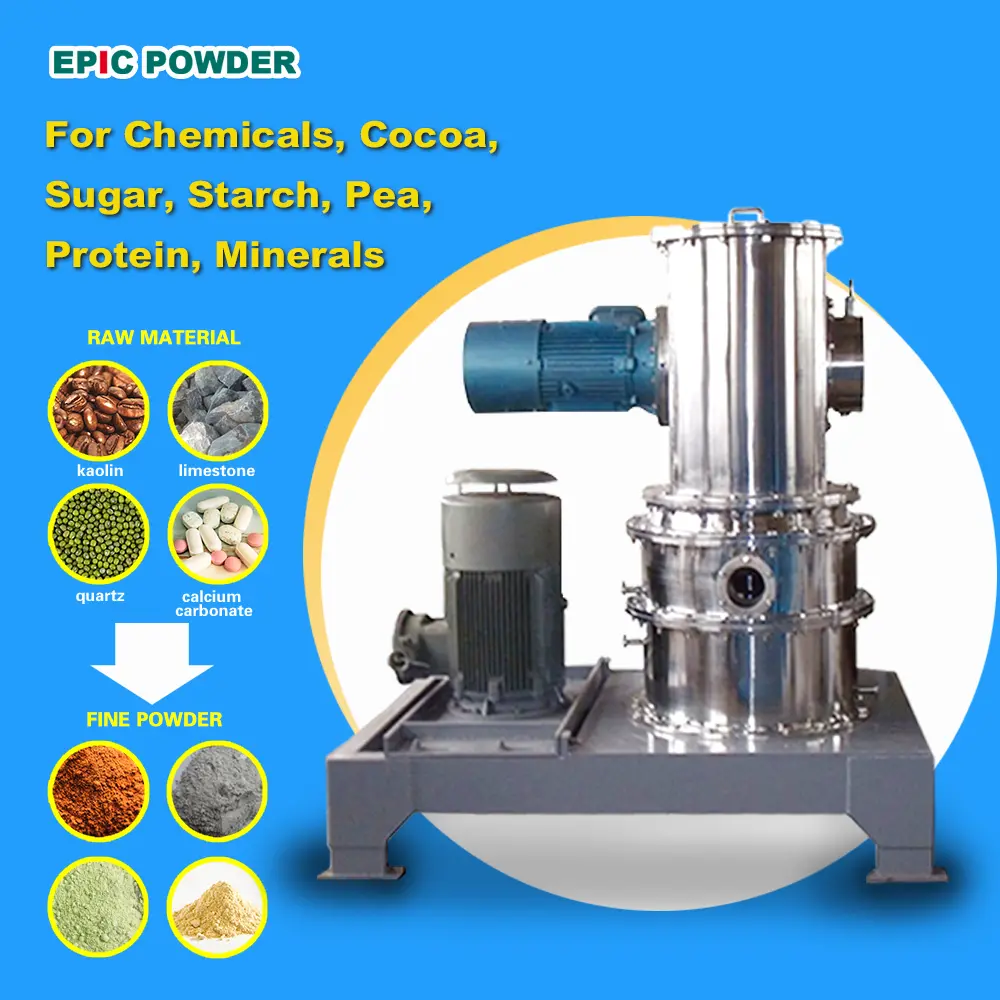
Unmatched Product Quality: Precision, Purity, and Consistency
Producing calcium carbonate powder with an air classifier mill guarantees top-notch quality. Here’s why:
- Precision particle sizing: Fine-tune the mill to get exact particle distributions every run.
- High purity: The closed system limits contamination for purer CaCO₃ powder.
- Consistent results: No batch-to-batch surprises—uniform powder quality assured.
- Ideal for applications needing strict specs like coatings, plastics, and pharma.
| Feature | Benefit |
|---|---|
| Precise particle control | Consistent finish and performance |
| Minimal impurities | Enhanced quality and safety |
| Stable output | Meets tight industry standards |
Operational Excellence: Energy Efficiency and Scalability
The air classifying milling process is built for smooth, efficient operation:
- Energy-saving design: Uses air classification instead of screens, reducing power use.
- Low wear and maintenance: Durable parts cut downtime and costs.
- Easy scale-up: Modular setups fit small labs or large industrial plants alike.
- Environmental friendly: No water or chemical additives needed, minimizing waste.
| Advantage | Impact |
|---|---|
| Lower energy consumption | Reduced operating costs |
| Scalable process | Grows with your business |
| Reduced maintenance | Higher uptime and reliability |
With these advantages, our air classifier mill stands out for producing superior ultrafine calcium carbonate powder—efficiently, cleanly, and reliably.
The Epic’s Step-by-Step Guide
Step 1: Raw Material Preparation and Pre-Treatment
Start with high-quality calcium carbonate raw material. It’s crucial to remove moisture and any impurities before milling. Use drying techniques and simple screening to ensure consistent feedstock. This pre-treatment step sets the stage for producing a pure, uniform calcium carbonate powder with your air classifier mill.
Step 2: System Configuration & Key Parameter Setting
Configure your air classifier mill according to your target particle size and product specifications. Adjust key parameters like classifier speed, feed rate, and grinding pressure carefully. Proper setup ensures optimal ultrafine grinding and precise control over calcium carbonate powder quality.
Step 3: The Milling & Classifying Cycle in Action
During operation, raw calcium carbonate is ground and simultaneously classified inside the mill. The air classifier separates fine particles from coarser ones, recycling the latter for further milling. This continuous cycle ensures you achieve the desired ultrafine calcium carbonate powder efficiently.
Step 4: In-Process Quality Control Checks
Regularly monitor particle size distribution and purity throughout the milling process. Use quick tests and inline analyzers to keep the product within your set specifications. This step avoids off-grade batches and maintains consistent powder quality every time.
Step 5: Powder Collection, Packaging & Post-Processing
Once the calcium carbonate powder meets specs, collect it carefully to prevent contamination. Packaging should protect from moisture and dust, preserving powder quality during storage and transport. If needed, apply post-processing like surface treatment to enhance product performance for your customers.
Following this proven protocol helps you produce top-grade ultrafine calcium carbonate powder with an air classifier mill—delivering Epic Powder quality every batch, ready for global market demands.
Proven Case
Achieving D97 < 10µm for High-Gloss Polymer Masterbatch
Using the air classifier mill, the client successfully produced ultrafine calcium carbonate powder with a D97 6.5 microns. This precise particle size was key to enhancing the gloss and smoothness of the polymer masterbatch. The mill’s fine tuning allowed for consistent results batch after batch, improving the product’s surface quality without sacrificing purity or performance. This level of control is what makes the air classifier mill the go-to solution for high-gloss polymer applications where uniformity and fine size distribution are non-negotiable.
Epic Powder
Epic Powder is specialized in fine powder processing technology for mineral industry, chemical industry, food industry, pharama industry, etc. Our team has more than 20 years experience in various powders processing.
We are a professional supplier of powder processing projects, especially powder milling, powder classifying, powder dispersing, powder classifying, powder surface treatment and waste recycling. We supply consultancy, testing, project design, machines, commissioning and training.

“Thanks for reading. I hope my article helps. Please leave a comment down below. You may also contact EPIC Powder online customer representative Zelda for any further inquiries.”
— Emily Chen, Senior Engineer