
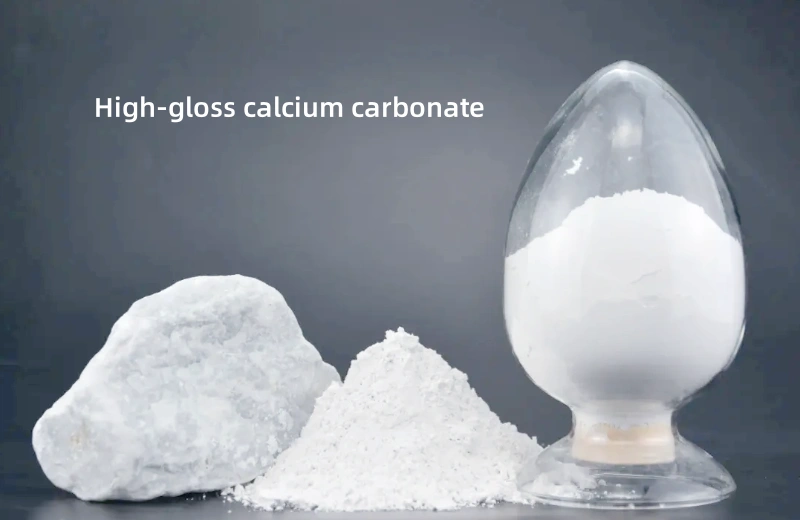
Calcium carbonate is a fundamental inorganic compound and the most widely used filler in industries such as plastics, rubber, and paper. However, not all calcium carbonate is the same. The two primary types – Ground Calcium Carbonate (GCC) and Precipitated Calcium Carbonate (PCC) – are produced through entirely different methods, leading to distinct properties that dictate their ideal applications. At Epic Powder, we believe that understanding these differences is fundamental to choosing the right grinding equipment for calcium carbonate powder production.
Production Processes: Mechanical Grinding vs. Chemical Synthesis
The core distinction lies in how they are made. Precipitated Calcium Carbonate (PCC), which includes light and nano grades, is manufactured chemically. The process begins with limestone, which is calcined, slaked, and then carbonated before being separated, dried, and classified. In contrast, Ground Calcium Carbonate (GCC) is produced through physical means by mechanically crushing and grinding natural minerals like calcite, limestone, or chalk, followed by classification and potential surface modification.
While their chemical composition (CaCO3) is identical, these different production routes create powders with unique characteristics.
Economic and Environmental Considerations
From a mineral economics perspective, several factors influence the choice between GCC and PCC. On a basic level, their production costs are competitive. However, when extended costs like environmental compliance and resource efficiency are factored in, GCC often presents a more economical profile. Environmentally, GCC production is relatively straightforward, with noise being the primary concern and minimal wastewater or air emissions. PCC manufacturing, involving chemical reactions and calcination, deals with a more complex “three-waste” (waste gas, water, and residue) management footprint. Furthermore, GCC allows for more direct and efficient utilization of the mined mineral resource.
A Detailed Comparison of Key Properties
The practical choice between GCC and PCC hinges on specific physical and chemical properties that affect end-product performance.
Taste and Odor
PCC can sometimes retain a slight lime taste due to residual, unreacted calcium oxide, which can be problematic in sensitive applications like food-grade additives. GCC, being a purified natural mineral, is typically odorless and tasteless.
pH Level
GCC is moderately alkaline with a pH typically between 8 and 9. PCC tends to be more alkaline, with a pH ranging from 9 to 10, which can influence formulation stability in some systems.
Particle Morphology and Size
This is a major differentiator. GCC particles are irregular, angular, and have a rough surface texture. Their particle size distribution is generally broader and larger on average, and the crystal shape (e.g., hexagonal for calcite) depends on the source ore. PCC particles are synthetically engineered to be uniform, regular, and have a much narrower size distribution. They can be produced in specific shapes like spindle, cubic, or spherical, making them a more monodisperse powder.
Bulk Density (Settled Volume)
This is a quick industrial test to distinguish the grades. A higher settled volume indicates a lighter, finer product. GCC has a relatively low settled volume (1.1–1.4 mL/g). PCC is much lighter (2.4–2.8 mL/g), and nano precipitated grades are the highest (3.0–4.0 mL/g).
Brightness and Moisture
Due to its chemical synthesis, PCC generally achieves higher brightness (92-95%) compared to GCC (89-93%). GCC typically has a lower and more consistent moisture content (0.2-0.3%) than PCC (0.3-0.8%).
Oil Absorption and Flowability
PCC’s finer, more complex particle structure gives it a significantly higher oil absorption value (60-90 mL/100g) than GCC (40-60 mL/100g). Consequently, PCC can absorb more lubricants and plasticizers in a formulation, often resulting in poorer powder flowability compared to the smoother, larger-particle GCC.
Application and Strategic Choice
GCC is predominantly used as a high-volume, cost-effective extender to reduce material costs in applications like paper, rubber, and plastics where its properties are sufficient. PCC finds use in a broader spectrum of demanding applications—including high-performance plastics, coatings, adhesives, specialty paper, and inks—where its specific brightness, particle shape, and reinforcement capabilities are required.
While the industry trend toward substituting PCC with GCC for economic and environmental reasons is clear, they remain largely complementary. PCC still holds irreplaceable positions in niche, high-performance areas. A deep understanding of these differences is crucial for formulators to strategically implement GCC in a wider range of applications, optimizing both performance and cost. At Epic Powder, we provide the expertise and high-quality GCC products to help you make that transition effectively.
How to Select the Right Grinding Equipment to Achieve Target Fineness for Calcium Carbonate?
Selecting the appropriate grinding equipment for calcium carbonate (particularly Ground Calcium Carbonate/GCC) is crucial to achieving the required performance across various industrial applications. The decision hinges on several core factors: target particle size, production capacity requirements, product purity (such as iron content control), and overall cost considerations.
Below is a detailed breakdown of grinding equipment solutions tailored to different fineness ranges.
I. Core Grinding Equipment Technologies
1. Ball Mill + Classifier System
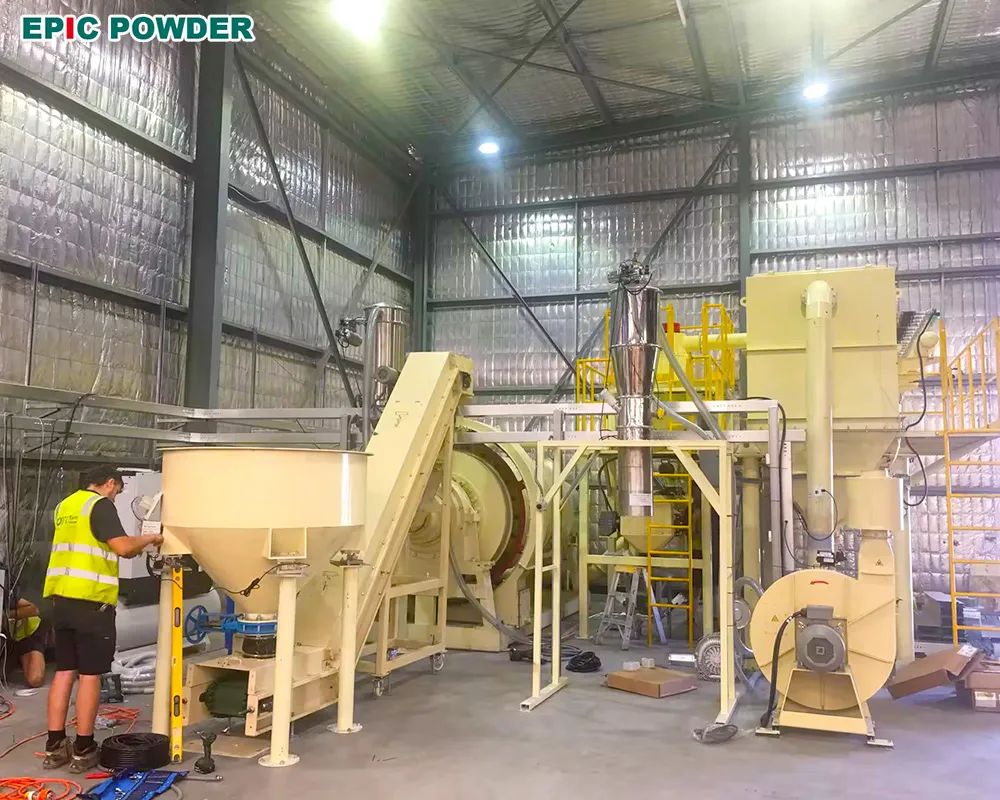
- Target Fineness Range: Primarily 325 to 800 mesh (45μm – 18μm). Can be optimized to produce some 1250 mesh (10μm) product.
- Working Principle: Material is ground via impact and attrition by grinding media (steel or ceramic balls) inside a rotating cylinder. Often configured in a closed circuit with an air classifier to separate fine particles promptly, enhancing efficiency.
- Advantages:
- Mature technology with relatively low capital investment.
- High capacity, stable operation, suitable for large-scale production.
- Highly adaptable to feed particle size.
- Disadvantages:
- Efficiency decreases and energy consumption rises significantly when producing ultra-fine powders.
- Wear of metal media can introduce iron contamination, affecting high-purity applications (can be mitigated using ceramic liners and balls).
- Relatively broad particle size distribution of the product.
- Market Position: The workhorse equipment for producing mainstream, mid-range products like paper fillers, general-purpose plastic, and rubber fillers, offering excellent cost-performance.
2. Vertical Roller Mill
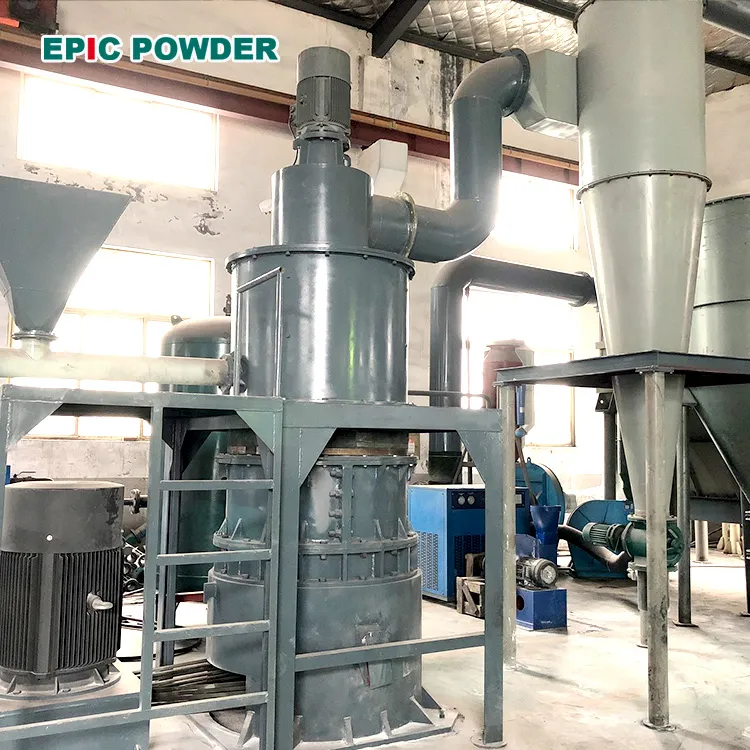
- Target Fineness Range: Its strength lies in the 400 to 1250 mesh (38μm – 10μm) range.
- Working Principle: Material is crushed by compression between grinding rollers and a table. A built-in high-efficiency dynamic classifier enables instant separation. Integrates grinding, drying, and classification.
- Advantages:
- High grinding efficiency; system energy consumption is significantly lower than ball mills.
- Precise particle size control with a narrow distribution, ensuring consistent product quality.
- Compact footprint and high degree of automation.
- Lower risk of iron contamination compared to traditional ball mills.
- Disadvantages:
- Higher equipment investment than ball mill systems.
- Limited capability for producing ultra-fine powders above 2000 mesh.
- Market Position: The modern preferred solution for producing fine and refined powders used in coatings, high-end plastics, sealants, etc., striking an optimal balance between quality and energy efficiency.
3. Ring-Roller Mill
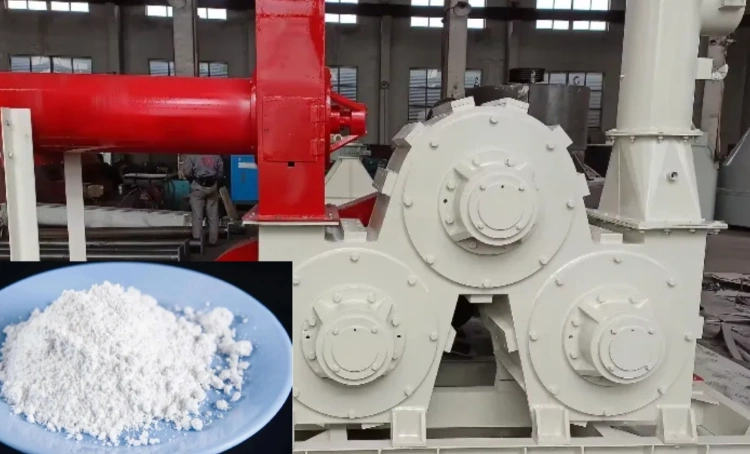
- Target Fineness Range: 80 to 400 mesh (180μm – 38μm).
- Working Principle: Rollers, under centrifugal force, roll against a stationary ring to crush material. A fan conveys the material, and a top-mounted classifier performs separation.
- Advantages: Simple structure, easy operation, low running costs, especially suitable for medium fineness, high-volume production.
- Disadvantages: Difficulty producing ultra-fine (>600 mesh) products; limited range for adjusting product fineness.
- Market Position: A traditional, economical machine for producing coarse and medium powders for fillers, animal feed, etc.
4. Jet Mill
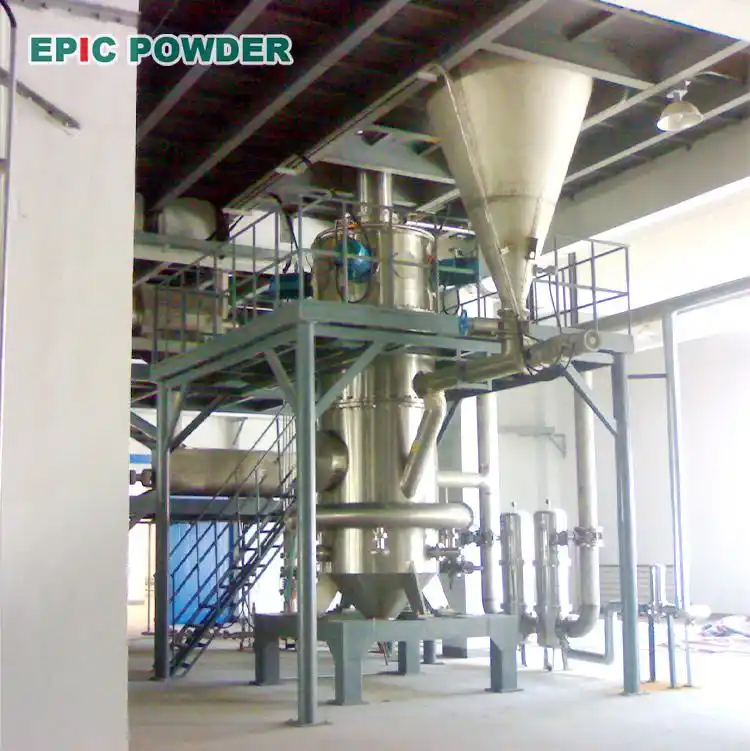
- Target Fineness Range: Above 1250 mesh, down to sub-micron levels (d97 < 10μm, achievable 1-2μm).
- Working Principle: Utilizes high-pressure gas streams to accelerate particles, causing size reduction through inter-particle collision and attrition. Features no mechanical grinding media.
- Advantages:
- Produces extremely fine powders with a very narrow distribution and high purity (no media contamination). Particle surfaces are smooth.
- Suitable for hard materials and high-purity requirements.
- Disadvantages:
- Extremely high energy consumption, multiple times that of mechanical mills.
- Relatively low production capacity; high capital investment.
- Stringent requirements on feed size (typically <100 mesh) and moisture content.
- Market Position: The essential equipment for producing high-value, ultra-fine/activated calcium carbonate used in premium coatings, inks, specialty plastics, cosmetics, and pharmaceuticals.
II. Equipment Selection Roadmap by Target Fineness
| Target Fineness | Typical Applications | Recommended Primary Equipment | Key Considerations |
|---|---|---|---|
| 80-400 Mesh | Plastic masterbatch, floor tiles, animal feed, building materials | Ring-Roller Mill | Lowest cost, high output |
| 325-800 Mesh | Paper, general-purpose plastics, rubber | Ball Mill + Classifier System | Optimal cost-performance, stable capacity |
| 400-1250 Mesh | High-quality paints, sealants, high-end plastics, inks | Vertical Roller Mill | Perfect balance of efficiency, particle control, and cost |
| Above 1250 Mesh (Ultra-fine/Sub-micron) | Premium coatings, inks, specialty functional plastics, cosmetics | Jet Mill | Prioritizes ultimate purity and fineness; accepts higher cost |
III. Key Enhancers: Classification and Surface Modification
- Efficient Classification System: Regardless of the grinding host, pairing it with a dynamic air classifier is essential for producing powders with a narrow distribution and precise top-cut control. It determines the coarsest particle and uniformity of the final product.
- Surface Modification Process: For calcium carbonate used in organic systems like plastics and rubber, integrating a surface modification unit (e.g., a high-speed heating mixer) in-line or post-grinding is the key value-adding step. It enhances compatibility, increases loading capacity, and improves performance.
Conclusion and Recommendations
The choice of equipment should align with your product portfolio strategy:
- If focusing on the mid-range filler market, large vertical roller mills or optimized ball mill-classifier systems are the backbone for ensuring capacity and consistent quality.
- If targeting the high-end functional materials market, investment in jet milling technology, coupled with precision classification and modification systems, is necessary to establish a technical edge and command premium pricing.
- Often, the most economical approach is a staged combination: using a roller mill or ball mill to produce a base powder (e.g., 800 mesh), which is then fed into a jet mill for final refinement. This balances overall cost with product grade.
The final decision should be based on a detailed analysis of market demand, return on investment calculations, and technical validation. Choosing the right grinding solution is the fundamental first step in transforming calcium carbonate from a common filler into a functional material.
Epic Powder
At Epic Powder, we offer a wide range of equipment models and tailor solutions to meet your specific needs. Our team has more than 20 years experience in various powders processing. Epic Powder is specialized in fine powder processing technology for mineral industry, chemical industry, food industry, pharama industry, etc.
Contact us today for a free consultation and customized solutions.

“Thanks for reading. I hope my article helps. Please leave a comment down below. You may also contact EPIC Powder online customer representative Zelda for any further inquiries.”
— Emily Chen, Senior Engineer