
Feldspar powder grinding starts with what the ore body contains. A deposit carries potassium feldspar, sodium feldspar or a plagioclase blend, and that composition decides which grade a buyer will accept. A ceramic glaze asks for alkali oxide and iron below 0.1 percent. A glass batch asks for alumina and a steady sieve residue. Those requirements reach the mill as a short list of numbers, and the mill has to hit them without adding iron of its own. Most of the difficulty in feldspar processing sits in that last condition.
What the Family Contains
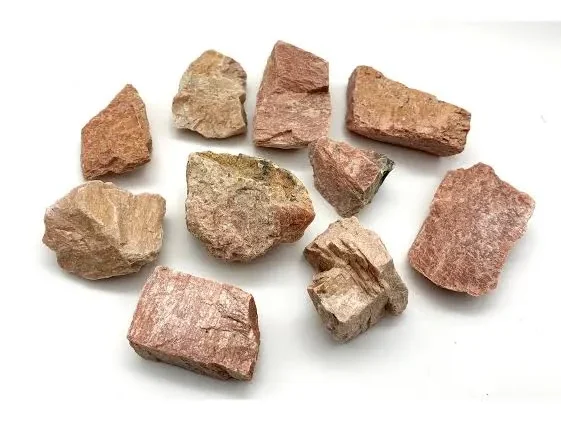
Three members are sold commercially: potassium, sodium and calcium feldspar. The first two sit near KAlSi3O8 and NaAlSi3O8, with a theoretical alkali oxide content around 16 percent. A concentrate leaves the plant at 10 to 12 percent. Calcium feldspar carries CaO in place of the alkali oxides and holds little flux value. Sodium and calcium feldspar form a continuous solid solution series. A natural plagioclase therefore reports an alkali content between the two end members.
Hardness runs 6 to 6.5 on the Mohs scale, and specific gravity runs 2.5 to 2.6. Both are close to quartz, which is why the two minerals often share one circuit. Alkali oxide sets the melting behaviour, and that behaviour decides what the customer can do with the powder. Potassium feldspar melts higher and gives a viscous melt that holds its shape on a vertical surface. Sodium feldspar melts lower and flows freely, which is why it dominates bodies and glass batches.
| Type | Formula | Alkali oxide in concentrate | Melt behaviour | Typical use |
|---|---|---|---|---|
| Potassium feldspar | KAlSi3O8 | K2O around 10 to 12 percent | Higher melting point, viscous melt | Glazes, sanitaryware, enamel |
| Sodium feldspar | NaAlSi3O8 | Na2O around 10 to 12 percent | Lower melting point, fluid melt | Ceramic bodies, glass batches |
| Calcium feldspar | CaAl2Si2O8 | CaO replaces the alkali oxides | Refractory, little flux value | Fillers, special ceramics |
| Plagioclase series | Na to Ca solid solution | Na2O falls as CaO rises | Continuous change along the series | Bulk ceramic and glass batches |
Concentrate figures describe commercial ceramic and glass grades. A specific deposit is governed by its assay, not by the table.
What Each Buyer Measures
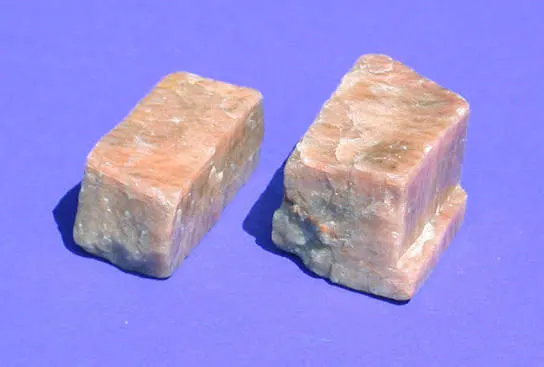
A ceramic body buys feldspar as a flux. Alkali oxide lowers the firing temperature, and the specification sets a floor at 10 percent combined K2O and Na2O. Iron is the constraint on the other side, since Fe2O3 above about 0.3 percent shifts the fired colour of a white body. Body grades run to 200 mesh with a controlled residue, because a coarse grain that survives firing leaves a speck in the tile.
A glaze is stricter on both counts. Iron above about 0.1 percent colours a transparent glaze, and coarse particles leave pinholes and raised specks. Glaze grades therefore run finer, at 325 mesh passing with D97 often between 20 and 30 µm. The fineness has an upper limit as well, since a powder that is too fine dusts in handling and agglomerates in the glaze tank. Fillers for coatings and plastics follow a third logic. Whiteness and oil absorption decide the sale, and particle size sets the gloss.
| Use | Alkali oxide | Fe2O3 | Fineness | What drives the limit |
|---|---|---|---|---|
| Ceramic body | K2O plus Na2O from 10 percent | About 0.3 percent and below | 200 mesh with controlled residue | Flux lowers the firing temperature, iron shifts the fired colour |
| Glaze | From 10 percent | About 0.1 percent and below | 325 mesh passing, D97 about 20 to 30 µm | Coarse grains leave pinholes and specks on the fired surface |
| Glass batch | Al2O3 from 15 percent | About 0.1 percent and below | Coarse, around 40 to 100 mesh | Alumina raises chemical durability, fines dust and segregate |
| Filler | Not the governing figure | About 0.3 percent and below | D97 about 10 to 20 µm | Whiteness and oil absorption set the price |
Limits describe common commercial specifications. The buyer’s own standard and the deposit assay decide the actual figures.
The Iron Problem
Feldspar in the ground is low in iron, usually below 0.3 percent Fe2O3 and often near 0.1 percent. The powder that leaves the mill is frequently higher than the ore. Steel media, liners, hammer tips, chute walls and duct work all wear, and the wear lands in the product. A rise of 0.05 percentage points moves a glaze grade into a body grade, and the price of the whole lot follows.
Iron pickup is verified by assaying feed and product on the same basis. A difference of 0.05 percentage points sits inside the repeatability of some laboratory assays, so both samples need the same preparation and the same instrument.
The first defence is the wearing part. A ball mill lined with alumina ceramic and charged with ceramic media adds almost no iron, and the energy penalty stays modest at coarse grinds. A jet mill removes the problem at the source, since no media touches the powder and the liner can be ceramic. A ring roller mill sits between the two. Wear takes place on the roll and ring surfaces, and iron pickup stays below an impact mill at the same fineness.
Magnetic separation only handles iron that arrives as a liberated particle. It works best once the grind has freed the iron bearing minerals from the feldspar. Fine iron smeared onto a particle surface by a worn ball passes through untouched. A plant can therefore run a strong magnet and still miss the specification. The iron has to be kept out before it reaches the separator.
Associated minerals need the same attention. Mica carries more iron than feldspar and grinds softer, so it concentrates in the fine fraction and lifts the iron figure of the product the customer wants. Quartz is a hardness match and grinds alongside feldspar without separating. A deposit heavy in mica calls for beneficiation ahead of the mill. That flowsheet decision shapes the mill specification.
Three Circuits and Their Limits
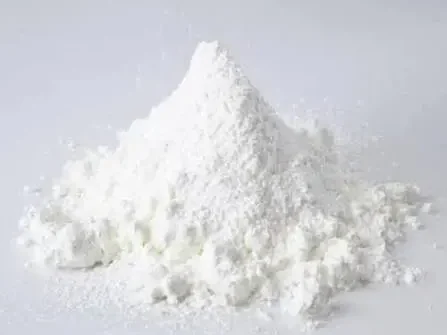
A ball mill in closed circuit with a classifier covers high tonnage and a wide fineness range. The mill reduces, and the classifier pulls finished powder out while returning the coarse. On this line the D97 runs from about 75 µm down to about 5 µm, wide enough to cover body, glass and glaze grades in one setting family. Iron pickup depends almost entirely on lining and media, so a ceramic grade can be engineered in from the start. A centrifugal classifier sets the top cut by rotor speed. One line then serves several glaze and body grades without a rebuild.
A ring roller mill covers 325 to 2000 mesh, which is a D97 from about 45 µm down to about 6.5 µm. Energy per ton sits well below a jet mill at the same cut, so it is the volume route for glaze and filler grades. Iron pickup stays moderate, since wear concentrates on the roll and ring surfaces. A body grade at 200 mesh falls outside this range and belongs to the ball mill circuit.
A dry jet mill holds a D97 from 2 to 45 µm and gives the lowest iron pickup of the three, at the highest energy per ton. That cost is justified when the specification lists a low iron figure or a narrow distribution. Glaze grades and high whiteness fillers are the natural applications. Rotor speed or grinding pressure moves the cut without touching the wear parts, which also suits a plant running several grades.
| Circuit | Fineness reached | Iron pickup | Energy per ton | Fits |
|---|---|---|---|---|
| Ball mill with classifier | D97 about 5 to 75 µm | Set by lining and media | Higher | High tonnage across body, glass and glaze grades |
| Ring roller mill | 325 to 2000 mesh, D97 about 6.5 to 45 µm | Moderate | Low | Volume glaze and filler grades |
| Dry jet mill | D97 2 to 45 µm | Lowest | Highest | Grades with tight iron and narrow distribution limits |
Ranges describe the working range of each machine. A specific material needs a grinding test before the figures become a commitment.

How Fineness Is Set
The 200 mesh figure is an old ceramic convention. It survives because a 75 µm sieve is cheap and every laboratory owns one. A residue on that sieve tells the buyer that no coarse particle will survive into the fired body. Glaze grades move to 325 mesh at 45 µm. The logic is the same at a tighter threshold.
A sieve number alone leaves the top cut undefined, and the top cut is what produces surface defects. Two powders both passing 325 mesh can differ in D97 by a factor of two. The coarser one carries a tail of particles between 30 and 45 µm. Those particles melt late and leave the pinholes that a glaze customer complains about. Naming both sieve residue and D97 gives the mill something it can hold.
Sieve residue comes from a test sieve, while D97 comes from a laser instrument on a dispersed sample. The two figures rest on different methods and cannot be converted into each other, so a specification that quotes one cannot be checked against the other.
The fine end has a cost as well. Particles below about 2 µm raise specific surface area, which drives the demand for glaze suspension agent and the dust load in the plant. A grade finer than the application needs pays for that fineness in chemicals and handling losses. The useful question is the coarsest distribution that still fires clean. That number comes from the customer’s kiln and a firing test.
Five Items to Send
A feldspar circuit is sized from the material and the specification together, and five items cover both. Each one changes a machine dimension or a material of construction. A quotation built without them misses at commissioning.
| Item | What it decides |
|---|---|
| Target use and alkali oxide figure | Whether the deposit fits the grade at all, and the price band |
| Fe2O3 in the feed and the ceiling on the product | Lining and media material, and whether a jet mill is required |
| Target fineness as sieve residue plus D97 | Circuit type, classifier speed and number of stages |
| Feed size, moisture and mica content | Beneficiation step, dryer requirement and mill stability |
| Tonnage and the number of grades per week | Machine size and changeover time the line can absorb |
Send those five and the proposal returns with a circuit layout and an expected curve on your material. It also states the iron pickup the circuit is expected to hold. That figure decides whether the powder still meets the glaze standard after milling.
About EPIC Powder Machinery. We build the circuits used on feldspar and other non-metallic minerals. The range covers ball mills with ceramic or steel lining, ring roller mills for the 325 to 2000 mesh grades and dry jet mills for the finest cuts. Centrifugal classifiers set the top cut on each of them.
Every project begins with a grinding test. The report gives the curve before and after, together with the iron pickup the circuit added. The machine range lists the models and their working ranges, and the surface modification line covers the coated grades used in fillers. Write to [email protected] with the five items above.
Epic Powder
Epic Powder designs grinding and classifying systems for minerals, chemicals, food, and pharmaceuticals. With more than 20 years of powder processing experience, we match the right mill to your target particle size and capacity.

“Thanks for reading. I hope my article helps. Please leave a comment down below. You may also contact EPIC Powder online customer representative Molly for any further inquiries.”
— Emily Chen, Engineer