
Drilling mud carries barite powder as its weighting agent. The mud column holds back formation pressure through the density that barite supplies. Buyers therefore accept barite powder for drilling mud only against API 13A. That specification fixes density, purity, and particle size in one document. The grinding plant inherits those limits directly. Most of them are physical properties that the mill and classifier either hold or break. This article maps each API 13A requirement to the grinding decision behind it. It then describes the circuits that hold the spec at production rate.
What API 13A Asks For
The specification sets five limits that a grinding plant can influence. The table lists them with the process effect behind each one.
| Property | API 13A Limit | Why It Exists |
|---|---|---|
| Specific gravity | Min 4.20 g/cm³ | Carries mud density without excess solids |
| Residue on 75 µm (200 mesh) sieve | Max 3.0% by mass | Coarse grains settle and cause barite sag |
| Particles below 6 µm | Max 30% by volume | Ultrafines raise plastic viscosity and pump load |
| Water-soluble alkaline earth metals | Max 250 mg/kg as calcium | Soluble calcium flocculates the mud system |
| Moisture | Max 1.0% by mass | Wet powder cakes in bags and feeders |
Two of the five limits are particle size limits, and they point in opposite directions. The 75 µm ceiling blocks settling, and the 6 µm ceiling blocks viscosity. The product must be fine enough to suspend and coarse enough to pump at the same time. A plant that chases fineness without watching the floor of the window fails the second limit. A plant that grinds too gently fails the first. Density and soluble metals belong to the ore and its washing. Even they degrade when the mill sheds steel into a low-grade feed.
Why the Window Is a Classification Problem
Most barite ores crush and grind past 200 mesh without much effort. The mineral has a Mohs hardness near 3. The specification is therefore won or lost at the classifier. The two size limits describe a distribution width that the mill alone cannot control. Over-grinding pushes the sub-6 µm fraction upward. Each ton of recycled fines raises mill load and specific energy for no API benefit. Under-grinding leaves coarse grains that a sieve test flags before the shipment leaves the yard.
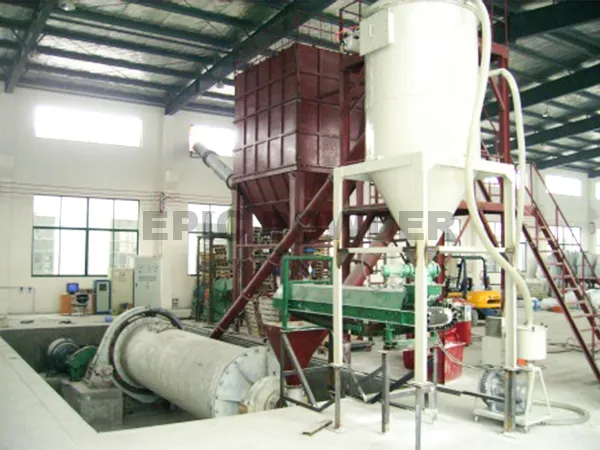
A turbine classifier inside a ball mill circuit solves both edges in the same pass. Wheel speed sets the cut point, and air volume sets the sharpness. The plant walks two settings to hold the distribution between 6 and 75 µm. Our case line for a mineral factory in Guizhou runs exactly this logic on local barite. The classifier holds the 200 mesh ceiling while yield stays above target. The Guizhou barite production line is a useful reference for buyers who need working evidence.
Grinding Circuits That Hold the Window
Two dry circuits cover the API 13A band in practice. A ball mill with a classifier is the base machine for drilling grade. The drilling window between 6 and 75 µm is where a classifying ball circuit holds stable yield. It also delivers that cut at the lowest capital cost per ton. Plants that already own grinding hall infrastructure fit it best. A ring roller mill production line extends the same plant into 325 to 2000 mesh. That range serves chemical and filler grades finer than the drilling spec. Both circuits run dry. Moisture stays under the 1.0% limit as long as the feed is dried ahead of the mill.
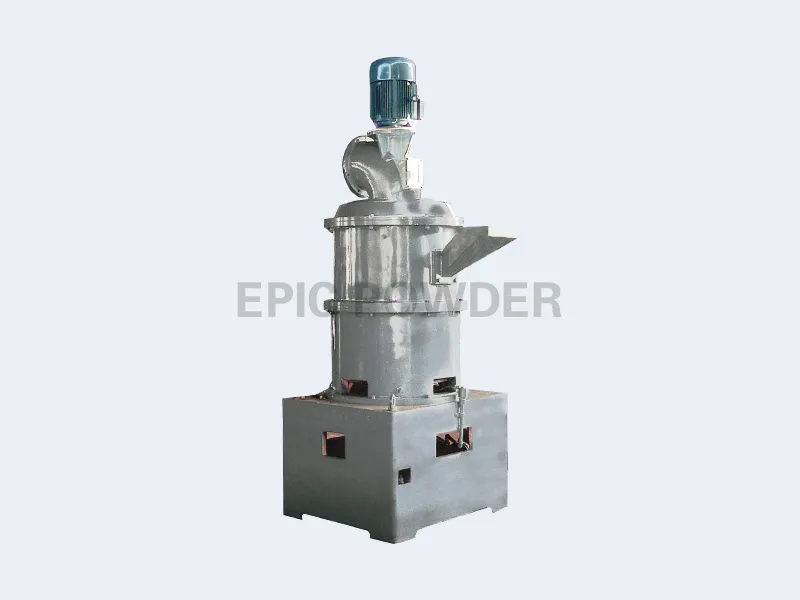
Wear is the second production concern, because the silica that travels with barite is far harder than the mineral itself. Quartz grains in the feed cut through roller shells, rings, and classifier vanes. The shed iron lands in a product whose impurities buyers test. Ceramic or high-chrome contact parts slow that shedding. Magnetic separators ahead of packing lift free iron from the finished powder. Feed moisture also deserves attention, because damp barite packs the classifier and pushes the distribution wide. A drying stage in front of the mill therefore protects the whole window.
Circuit layout decides whether the spec survives a full shift, so the auxiliaries deserve the same attention as the mill. A ring roller circuit needs hot air or a dryer drum when the feed arrives damp from washing. The classifier jams first as moisture climbs. A pulse-jet bag filter keeps the fine barite in the circuit, and the dust it collects is product. A lost bag is therefore a yield loss before it is an emissions problem. Packing lines close the plant, and the 1.0% moisture limit is tested there. Powder that cakes in a jumbo bag fails the spec in the field. Each of these stages is ordinary plant engineering. The API specification still runs through all of them, and a weak link shows up in a rejected container.
What the Trial Must Prove
An API 13A trial runs on the customer ore, and it reports the numbers the specification tests. A full laser distribution matters more than a sieve pass. Two powders with the same 200 mesh residue can differ sharply in their sub-6 µm tail. Specific gravity is measured by pycnometer, and soluble alkaline earth metals are extracted and titrated. The ore itself is therefore confirmed along with the grind. The trial delivers a distribution curve and a gravity number, and both belong in the quotation before tonnage is agreed.
Run the trial at two classifier settings. The pair of curves shows how far the window can stretch on the actual ore. Record yield at each setting as well. A distribution that passes API at low yield is a cost problem waiting to surface. Plants that plan finer chemical grades on the same line should also record a 325 mesh run. Our guide to fine grinding of soft minerals explains how classifier changes carry across mineral systems. The same logic holds for barite. The window, the yield, and the wear rate all respond to the classifier before the mill.
FAQ
Can a ball mill circuit meet API 13A?
Yes, and many plants run it that way. The ball mill grinds past 200 mesh easily, and a turbine classifier holds the 6 µm ceiling by returning ultrafines to the mill. The classifier wheel speed becomes the main control, and the mill load follows it.
Why does over-grinding hurt drilling grade barite?
Fines below 6 µm raise plastic viscosity, and the mud then needs more pump power while carrying less useful density. The API limit of 30% by volume exists for that reason. A plant that holds the distribution near the coarse edge keeps viscosity low and saves grinding energy at the same time.
Does grinding change the specific gravity?
Grinding never changes the mineral density, and a mill cannot rescue a light ore. The 4.20 limit is set by the BaSO4 content of the feed, so ore selection and washing decide it. Steel shed from worn parts adds low-density mass, which drags the measured gravity down over long campaigns.
Epic Powder
Epic Powder designs grinding and classifying systems for minerals, chemicals, food, and pharmaceuticals. With more than 20 years of powder processing experience, we match the right mill to your target particle size and capacity. Tell us about your material and we will recommend a tested solution.

“Thanks for reading. I hope my article helps. Please leave a comment down below. You may also contact EPIC Powder online customer representative Molly for any further inquiries.”
— Written by Emily Chen