
Plastic films primarily refer to thin materials made from base resins such as PP, PVC, PE, PET, PA. These films are widely used in various flexible packaging applications or as laminating layers in paper-plastic composites. They play an essential role across numerous industries, including packaging, electronics, pharmaceuticals, chemicals, and food products. Calcium Carbonate (CaCO₃) is primarily utilized as a filler in plastic films. Its core function is to the reduce raw material costs.
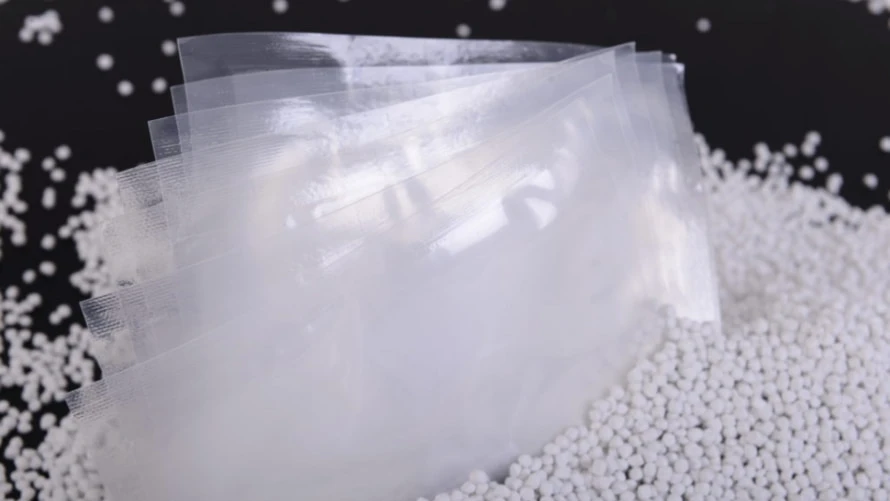
1. Application of Calcium Carbonate in Plastic Films
In addition to cost savings, it can enhance physical properties like increasing rigidity, stiffness, and heat resistance. It improves dimensional stability by reducing film shrinkage during processing and use. It can also optimize processing characteristics by enhancing rheology and improving antiblocking properties, even increase whiteness and opacity. Furthermore, it can contribute to environmental benefits. The addition of calcium carbonate can aid in the degradation of plastic products under specific environmental conditions.
2. Application of Calcium Carbonate in Polyolefin Films
Polyethylene (PE)
PPolyethylene microporous breathable films are a high-value market for calcium carbonate. They are essential in public health, medical supplies, and food packaging.
Researchers like Yuan Guangsheng optimized PE breathable films using calcium carbonate as a pore-forming agent. Increasing the CaCO₃ content from 30% to 50% dramatically boosted film porosity from 27.3% to 47.2%. While tensile strength dropped by 10%, this trade-off significantly enhanced permeability. The study also found that 15% Polyolefin Elastomer (POE) as a toughening agent offered the best performance.
Further research by Zeng Huiwen explored the impact of CaCO₃ particle size. Using 1250-mesh CaCO₃ created an ideal O₂/CO₂ transmission ratio. This resulted in superior freshness preservation. Bananas wrapped in this film stayed green for 22 days with minimal deterioration.
Polyvinyl Chloride (PVC)
Polyvinyl chloride (PVC) is one of the most widely used and highest-volume thermoplastic resins in daily life. It offers numerous advantages, including excellent flame retardancy, electrical insulation, corrosion resistance, and low cost, leading to its widespread use in building materials, profiles, and wires.
However, PVC exhibits significant brittleness during processing and must undergo modifications such as impact resistance enhancement and toughening before use. Adding an appropriate amount of calcium carbonate during the PVC modification process can significantly improve the toughness, rigidity, strength, and heat resistance of the final product, while simultaneously reducing the production cost of the PVC material substantially.
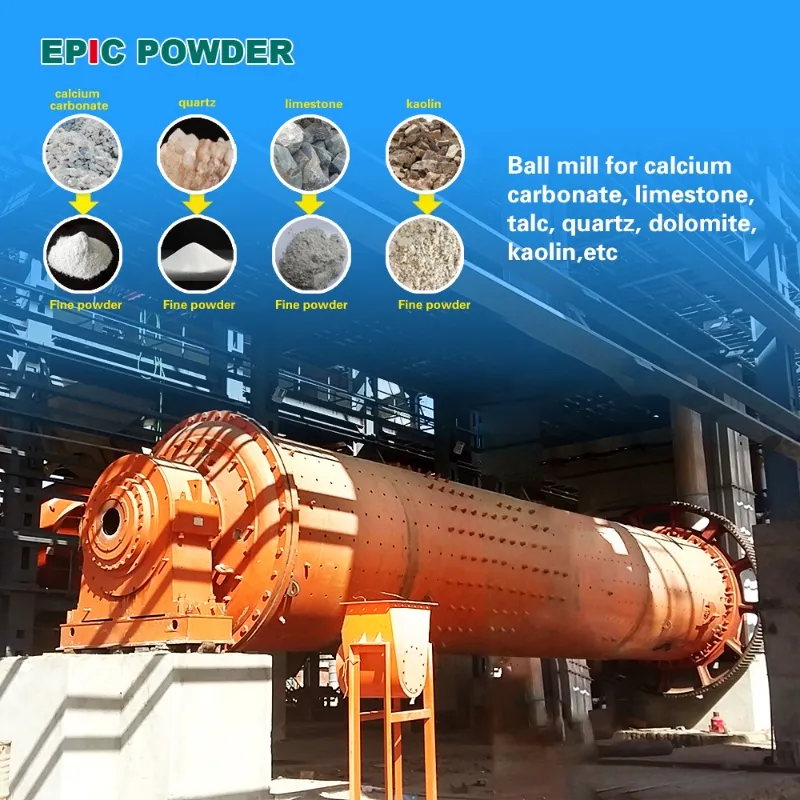
Researchers like Wu Weibin studied two types of ultrafine ground calcium carbonate—GY-716 and GY-716A—produced through dry ball milling. They compared these with three common calcium carbonates used in PVC calandered films: wet-process ultrafine calcium carbonate, nano-calcium carbonate (CCR-1), and precipitated calcium carbonate. The team examined how each of the five materials affected whiteness, tensile strength, heat resistance, and opacity in PVC films.
The findings showed that films made with GY-716 and GY-716A had whiteness and tensile strength that were similar to—or even slightly better than—the three commercially used options. In terms of heat resistance, both GY-716 and GY-716A outperformed the commercial products. Although their opacity was lower than that of wet-process ultrafine calcium carbonate, it was still better than nano-calcium carbonate (CCR-1) and precipitated calcium carbonate. Notably, GY-716A achieved opacity levels close to those of the wet-process ultrafine product.
Polypropylene (PP)
The primary roles of calcium carbonate in polypropylene films are cost reduction, improvement of mechanical properties, and enhancement of dimensional stability.
Researchers like Lei Zubi compared the effects of three inorganic fillers—novel micropowder, talc powder, and calcium carbonate—on the mechanical properties of polypropylene. When the filler loading reached 35 phr, the PP material filled with calcium carbonate exhibited the highest elongation at break, followed by the micropowder-filled PP, with the talc-filled PP showing the lowest value.
Calcium carbonate offers untapped potential for advanced polypropylene (PP) applications. The source of the calcium carbonate ore itself dramatically impacts performance.
Researchers like Ai Qing proved this by testing four ultrafine ground calcium carbonates from different ores in a PP matrix. The results were clear: Calcium carbonate derived from large calcite delivered superior performance. It featured high whiteness, high purity, and uniform particles. Consequently, the PP composite showed better tensile strength and elongation. It also offered higher heat deflection temperature and improved processing fluidity.
However, there were trade-offs. Its impact and flexural strength were slightly lower than composites using carbonate from small calcite or marble.
Table 1: The Effect of Different Calcium Carbonate Ore Sources on the Properties of Polypropylene
| PP+20% CC | Melt Index (g/10min) | Shore Hardness (HD) | Density (g/cm³) | Heat Deflection Temp. (℃) | Tensile Strength (MPa) | Elongation at Break (%) | Flexural Strength (MPa) |
| Large Calcite | 9.06 | 14.12 | 1.017 | 96.8 | 34.68 | 53.85 | 59.21 |
| Marble | 8.03 | 21.12 | 1.029 | 88.6 | 31.9 | 49.91 | 62.74 |
| Small Calcite | 7.64 | 21.76 | 1.060 | 89.2 | 32.37 | 51.46 | 61.23 |
| Dolomite | 8.03 | 20.36 | 1.033 | 96.3 | 30.39 | 28.68 | 59.07 |
Furthermore, different types of calcium carbonate powders—such as nano-calcium carbonate, ground calcium carbonate (GCC), and precipitated calcium carbonate (PCC)—with varying particle sizes, exhibit distinct behaviors when used as modifying fillers in polypropylene. Based on their specific physical and chemical characteristics, each type imparts unique performance influences.
Table 2: Comprehensive Comparison of Different Calcium Carbonate Types in Polypropylene Applications
| Test Item | 1250 Mesh | 2500 Mesh | Wet-Ground CaCO₃ | Precipitated CaCO₃ | Resin T30S | ||||||||
| CaCO₃ Content (%) | 20 | 30 | 40 | 20 | 30 | 40 | 20 | 30 | 40 | 20 | 30 | 40 | |
| Tensile Strength (MPa) | 25 | 24.5 | 20.9 | 26.3 | 24 | 21 | 25.8 | 23.6 | 21.5 | 25.2 | 23.5 | 20.4 | 32.4 |
| Elongation at Break (%) | 832 | 832 | 357 | 734 | 721 | 517 | 604 | 615 | 196 | 726 | 46.3 | 57.1 | / |
| Flexural Strength (MPa) | 36.2 | 36.1 | 38.3 | 36.9 | 32.9 | 29.3 | 36.9 | 35.5 | 36.9 | 39.7 | 37.8 | 36.8 | 36.7 |
| Flexural Modulus (MPa) | 1131 | 1327 | 1487 | 1209 | 1208 | 1374 | 1126 | 1208 | 1404 | 1123 | 1250 | 1266 | 929 |
| Izod Impact Strength (kJ/m²) | 5.3 | 7.9 | 4.8 | 6.1 | 7.2 | 7.1 | 7 | 7.6 | 7.7 | 3.8 | 4.3 | 4.2 | 4.4 |
| Density (g/cm³) | 1.04 | 1.11 | 1.21 | 1.02 | 1.11 | 1.21 | 1.03 | 1.11 | 1.22 | 1.03 | 1.1 | 1.21 | 0.91 |
| Mold Shrinkage (Longitudinal %) | 1.56 | 1.33 | 1.25 | 1.53 | 1.3 | 1.21 | 1.54 | 1.31 | 1.22 | 1.58 | 1.41 | 1.22 | / |
| Mold Shrinkage (Transverse %) | 1.31 | 1.02 | 0.94 | 1.28 | 1.02 | 0.93 | 1.33 | 1.03 | 0.94 | 1.39 | 1.09 | 0.95 | / |
| Heat Deflection Temp. (℃) | 116 | 125 | 126 | 113 | 121 | 130 | 93 | 102 | 122 | 85 | 101 | 108 | 93 |
| Moisture Content (%) | 0.41 | 0.32 | 0.54 | 0.98 | |||||||||
| Market Price | Low | High | Medium | Medium | |||||||||
| Production Environmental Impact | Low | Lower | Medium | High | |||||||||
Frequently Asked Questions (FAQs)
Q1: What is the primary reason for adding calcium carbonate to plastic films?
A1: The primary reason for adding calcium carbonate to plastic films is to reduce production costs by acting as a filler. However, it also provides several functional benefits, including improved rigidity, enhanced heat resistance, better dimensional stability (reduced shrinkage), optimized processing characteristics, increased whiteness and opacity, and potentially aiding in the degradability of the film under specific conditions.
Q2: How does the particle size of calcium carbonate affect its performance in polyethylene (PE) breathable films?
A2: Particle size plays a critical role, especially in PE breathable films where calcium carbonate acts as a pore-forming agent. As the calcium carbonate content increases (e.g., from 30% to 50%), tensile strength may decrease slightly, but porosity increases significantly, leading to much higher film permeability. Additionally, using an optimal mesh size (like 1250 mesh) can improve the film’s gas selectivity (O₂/CO₂ transmission ratio), enhancing its freshness preservation properties.
Epic Powder
At Epic Powder, we offer a wide range of equipment models and tailor solutions to meet your specific needs. Our team has more than 20 years experience in various powders processing. Epic Powder is specialized in fine powder processing technology for mineral industry, chemical industry, food industry, pharama industry, etc.
Contact us today for a free consultation and customized solutions!

“Thanks for reading. I hope my article helps. Please leave a comment down below. You may also contact EPIC Powder online customer representative Zelda for any further inquiries.”
— Emily Chen, Engineer