
The Demand for Precision in Abrasive & Refractory Material Processing
Black SiC Applications: From Advanced Abrasives to Semiconductor Components
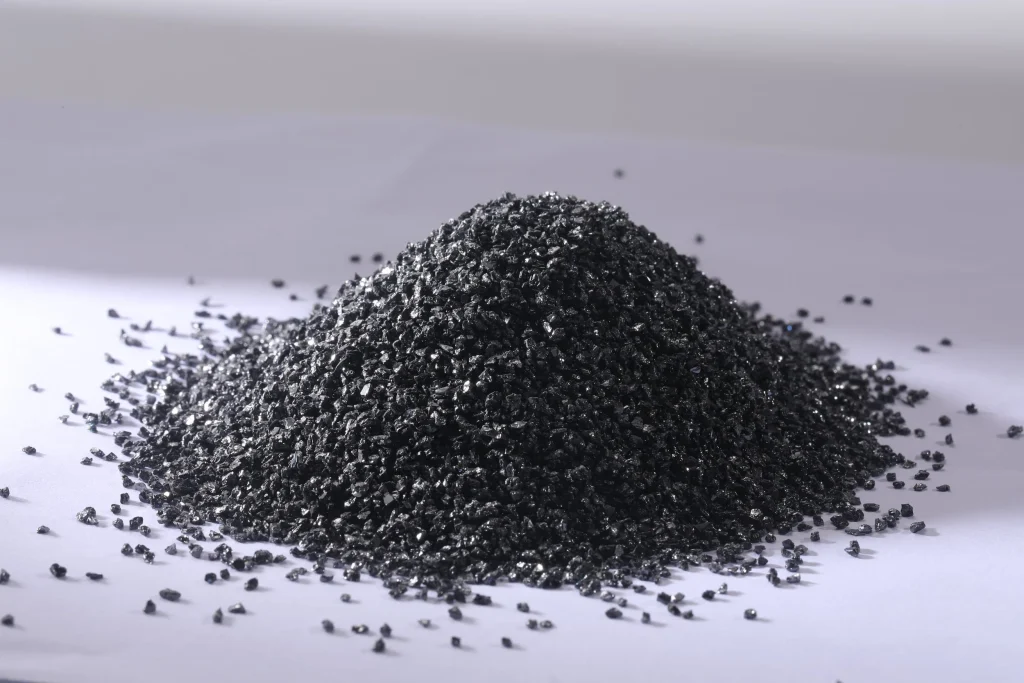
Black silicon carbide (SiC) is a cornerstone material in industries requiring exceptional hardness and thermal stability. Its applications span advanced abrasive tools, high-performance coatings, and refractory linings, as well as emerging uses in semiconductor components and electronics. The diversity of these applications demands powders with highly controlled physical and chemical properties to meet stringent quality standards. In this article, we will also explore why jet mill technology excel in micronizing hard materials like black silicon carbide.
The Critical Role of Precise Particle Size Distribution in Determining Performance
In black SiC processing, precise particle size distribution is paramount. Achieving a consistent D97 value below 10µm ensures enhanced surface area, improved reactivity, and uniform behavior across applications. Particle size impacts sintering efficiency, abrasive action, and coating uniformity, directly influencing the final product’s performance and reliability. Therefore, controlling micronization with advanced technologies, such as jet mill grinding, is essential to meet the evolving demands of the global market.
The Performance Advantages of Ultrafine Black Silicon Carbide Powder (D97 < 10µm)
Enhanced Surface Area and Reactivity for Superior Sintering and Bonding
Ultrafine black silicon carbide powder with a D97 particle size below 10µm offers a significantly increased surface area. This boost in surface area enhances the powder’s chemical reactivity, which is essential for processes like sintering and bonding. The finer particles pack more densely, improving overall material cohesion and strength in final products. This makes ultrafine powders ideal for advanced ceramics and high-performance abrasive applications where reliable bonding is critical.
Consistent Particle Morphology for Uniform Abrasive Performance and Coatings
Maintaining uniform particle shape and size is crucial for abrasive efficiency and coating quality. Ultrafine black SiC powders produced with precise micronization techniques ensure consistent morphology, avoiding irregular particles that can cause uneven wear or poor surface finishes. Such consistency helps manufacturers achieve predictable performance in grinding, polishing, and coating processes, enhancing product quality and operational reliability.
Achieving High Purity: The Importance of Contamination-Free Size Reduction
Purity is a top priority when micronizing hard materials like black silicon carbide. Contaminants introduced during size reduction can degrade both performance and product value. Jet mill technology, favored for black SiC processing, eliminates media wear common in traditional milling, thus preventing contamination. This contamination-free approach preserves the high purity and chemical integrity required in demanding industrial uses, from abrasives to semiconductor components.
For those interested in optimizing abrasive and filler materials further, understanding related equipment such as a horizontal air classifier can be beneficial in controlling particle size distribution and maintaining product quality.
The Optimal Choice: Why Jet Mills Dominate in Hard Material Processing
Wear-Free Grinding: Eliminating Media Contamination for Ultra-High Purity
When it comes to micronizing hard materials like black silicon carbide, avoiding contamination is a top priority. Jet mills operate without any grinding media, meaning there’s no risk of metal or ceramic wear debris mixing into your powder. This wear-free grinding ensures ultra-high purity black silicon carbide, critical for applications where even trace impurities can impact performance and reliability. Without media contamination, the integrity of the powder’s chemical and physical properties remains intact, making jet mills the preferred choice for precision abrasive and refractory processing.
Intrinsic Cooling Effect: Preventing Thermal Stress on Materials and Equipment
One of the standout features of jet mill technology is its intrinsic cooling effect during grinding. As the particles collide and are fluidized by high-velocity gas streams, heat generation is minimized and quickly dissipated. This prevents thermal stress that can alter the crystal structure or introduce defects in the black silicon carbide powder, preserving its consistent particle morphology and high purity. Moreover, cooling protects the mill’s internal components from wear and failure, reducing downtime and maintenance costs in demanding industrial settings.
In-Process Classification: Delivering Tight, Predictable Particle Size Distributions
Jet mills offer integrated in-process classification, allowing real-time control over particle size distribution. This feature is key to producing black silicon carbide powders with a sharp cut-off, such as a D97 less than 10 microns, ensuring the final product meets strict specifications. Controlled classifier tuning means manufacturers can balance yield and fineness without sacrificing throughput, enabling consistent batch-to-batch performance in abrasive and semiconductor applications. This precise size control sets jet milling apart from other grinding methods that struggle with wide or unpredictable particle size ranges.
Performance Validated: The MQW40 Jet Mill for Black SiC Production
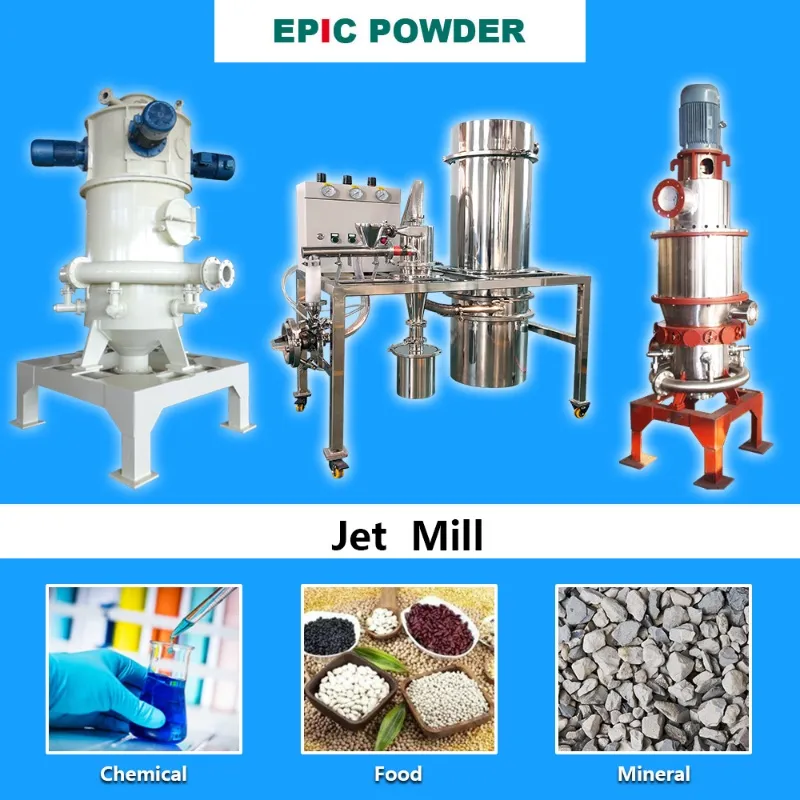
Model Spotlight: Robust Design of the Epic Powder MQW40 Jet Mill for Hard Materials
The Epic Powder MQW40 jet mill stands out for its tough construction designed specifically to handle hard materials like black silicon carbide. Built with wear-resistant components, it ensures long-term durability even under continuous abrasive grinding. This robust design minimizes downtime and maintenance, making it a dependable choice for processing black SiC powders where reliability counts.
Documented Precision: From 400 Mesh Feed to Consistent D97 < 10µm (400 Mesh) Powder
Precision in particle size distribution is critical for black silicon carbide performance. The MQW40 jet mill is precisely engineered to transform 400 mesh feedstock into ultrafine powders with a D97 below 10µm, matching the feed mesh size but at a much finer scale. This tight control over micronization ensures consistent quality, essential for applications requiring uniform particle morphology and high reactivity.
Industrial-Scale Throughput: Reliable Production at 1000 kg/h
Designed for industrial-scale operations, the MQW40 jet mill reliably delivers throughput up to 1000 kg per hour without compromising on particle size uniformity or purity. This high-capacity processing supports large volume, continuous production, perfect for manufacturers who demand both scale and precision. Coupled with advanced system integration capabilities, it provides a seamless solution for efficient, high-volume black SiC micronization.
For equipment details and tailored solutions, explore our range of machines designed for abrasive materials to optimize your production process.
Key Process Parameters and System Optimization
Balancing Feed Rate and Grinding Pressure for Maximum Efficiency and Target Fineness
Getting the right mix of feed rate and grinding pressure is crucial to produce ultrafine black silicon carbide powder efficiently. Too high a feed rate can overload the mill, reducing fineness and increasing wear. Too low slows production and wastes energy. Grinding pressure controls the kinetic energy inside the jet mill – higher pressure means finer particles but increased energy use.
Optimizing these factors helps:
- Achieve target D97 < 10µm consistently
- Maximize throughput without compromising powder quality
- Minimize operational costs by reducing unnecessary energy consumption
Classifier Tuning: The Key to Controlling the Top Cut (D97) and Yield
The internal classifier in the jet mill separates fines from coarser particles, directly controlling particle size distribution. Fine-tuning classifier speed lets you dial in the top cut (D97) precisely to meet product specs and maximize yield.
| Classifier Speed | Effect on D97 | Yield Impact |
|---|---|---|
| Too slow | Larger D97 | Higher yield, less fine powder |
| Too fast | Smaller D97 | Lower yield, finer powder |
| Optimized | Target D97 | Balanced yield and product quality |
Adjusting classifier settings ensures continuous production of highly uniform powder without compromising mass output.
System Integration for High-Volume, Continuous Production
Smooth integration of feed systems, jet mill operation, and powder collection is essential for stable, high-volume production of black SiC ultrafine powder.
Key points include:
- Automated feed control to maintain steady rates
- Real-time monitoring of grinding pressure and classifier speed
- Efficient powder collection with minimal losses
Combining these elements provides consistent D97 control (under 10µm) across long production runs at throughput rates exceeding 1000 kg/h, meeting the demands of industrial-scale abrasive and refractory material processing.
For similar performance optimization strategies, insights on grinding and classification processes can be found in related equipment cases like the grinding and classification process of heavy calcium carbonate powder.
The Epic Powder Advantage: Engineered for Demanding Applications
Built for Durability: Solutions Designed for the Rigors of Abrasive Milling
Epic Powder’s jet mill systems are built tough to handle black silicon carbide’s extreme hardness and abrasive nature. The design focuses on durable components that resist wear, ensuring longer machine life and stable operation with minimal downtime. This durability means consistent micronization without unexpected interruptions, ideal for high-volume abrasive milling.
Maximizing Value: High Yield and Low Operational Cost per Ton
Our systems deliver high yield with precise control over particle size, reducing waste and increasing usable output. Efficient energy use and low maintenance requirements lower operational costs, making micronization of black SiC powder cost-effective at scale.
| Benefit | Description |
|---|---|
| High Yield | Tight particle size control boosts usable output |
| Energy Efficient | Optimized grinding pressure reduces power use |
| Low Maintenance | Wear-resistant design decreases downtime |
| Cost Savings | Operational efficiencies lower cost per ton |
Technical Partnership: From Feasibility Testing to Full-Scale Process Guarantee
We work closely with you from initial feasibility testing through to full production. Our experts tailor the jet mill parameters and process flow to your specific black silicon carbide requirements. This partnership ensures the expected D97 particle size (<10µm) is consistently met and production goals are achieved with reliability.
For seamless integration into your facility, explore system options designed for continuous, high-volume output. Our commitment to your success goes beyond equipment — it’s about delivering guaranteed performance in any demanding application.
To explore related milling technologies tailored for your processing needs, check our insights on roller mill systems and coating machines optimized for abrasive powders.
Common Questions on Black Silicon Carbide Micronization (Q&A)
Jet Mill vs. Attrition Mill for Hard, Abrasive Powders: A Comparison of Purity and Efficiency
When it comes to micronizing hard, abrasive powders like black silicon carbide, jet mills clearly stand out compared to attrition mills. Here’s why:
| Feature | Jet Mill | Attrition Mill |
|---|---|---|
| Purity | No grinding media, so no contamination | Uses grinding media, risk of contamination |
| Wear Resistance | Wear-free due to air collisions | Significant wear on media and liners |
| Particle Size Control | Tight and predictable D97 | Less precise size distribution |
| Heat Generation | Built-in cooling reduces thermal stress | More heat, potential material degradation |
| Throughput | High, suitable for industrial-scale | Lower, often batch processing |
Jet mill technology offers ultra-high purity outputs essential for sensitive applications. The elimination of media contamination and the intrinsic cooling during grinding boost both efficiency and product quality, making it ideal for processing black silicon carbide at scale.
How to Maintain Consistent D97 Specifications in High-Volume Production?
Maintaining a consistent D97 below 10µm across large batches requires careful control of process parameters and system optimization:
- Feed Rate: Balance feed to avoid overload, which can widen particle size distribution.
- Grinding Pressure: Adjust pressure to fine-tune particle size while maintaining throughput.
- Classifier Tuning: Precisely control the classifier speed and settings to achieve the target top cut (D97).
- Regular Equipment Checks: Monitor wear on mill components to prevent unexpected shifts in particle size.
- System Integration: Use continuous monitoring systems and automated adjustments to respond quickly to variations.
By focusing on these key areas, high-volume production lines can produce ultrafine black SiC powder with consistent performance and output.
For deeper insights on optimizing high-volume micronization processes, exploring our portfolio of abrasive milling solutions can be very beneficial.
Epic Powder
At Epic Powder, we offer a wide range of equipment models and tailor solutions to meet your specific needs. Our team has more than 20 years experience in various powders processing. Epic Powder is specialized in fine powder processing technology for mineral industry, chemical industry, food industry, pharama industry, etc.
Contact us today for a free consultation and customized solutions!

“Thanks for reading. I hope my article helps. Please leave a comment down below. You may also contact EPIC Powder online customer representative Zelda for any further inquiries.”
— Emily Chen, Senior Engineer