
Limestone is a carbonate rock composed primarily of calcite (CaCO₃). It serves as a fundamental raw material for cement and construction aggregates, as well as a core raw material for new calcium-based materials such as calcium oxide (quicklime), calcium hydroxide (slaked lime), lightweight calcium carbonate (PCC), and nano-calcium carbonate.
However, the grade of limestone varies significantly depending on the mine. Not all limestone deposits are suitable for producing high-value calcium carbonate products. The chemical composition, impurity content, and mineral structure directly determine its suitability.
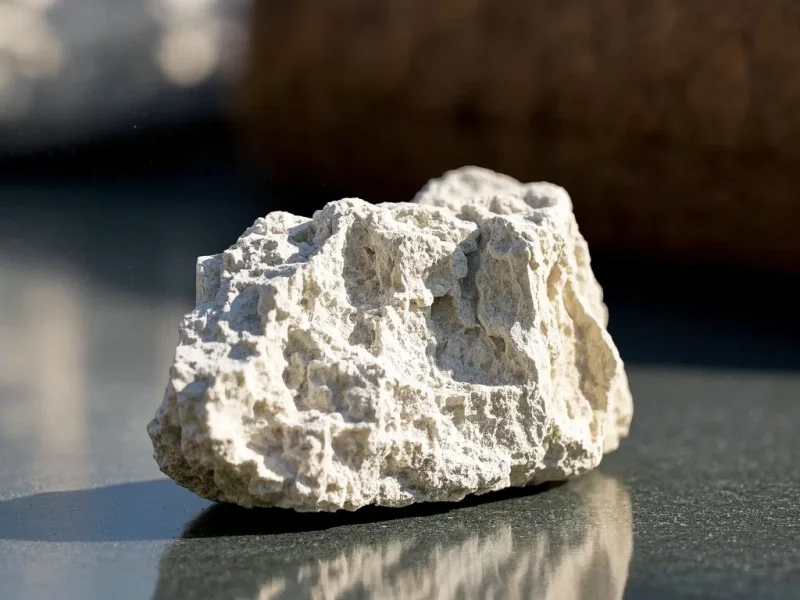
So, what type of limestone is suitable for calcium carbonate production, and what type is more suitable for cement production?
To answer this, Zhi Jiashuang and colleagues collected samples from typical limestone mines across various regions of China and analyzed their mineral characteristics. Based on factors such as CaO content and impurity levels, they identified optimal application areas for different types of limestone.
This comprehensive guide breaks down the key chemical indicators and provides a tiered utilization strategy to help you maximize the value of your limestone resources.
1. CaO Content
The level of CaO content is the most important factor in evaluating limestone grade. Generally, the reactivity of lime is positively correlated with its CaO content—as the CaO content increases, the reactivity index rises accordingly.
The Science Behind It:
When the CaO content is ≤52%, the specific surface area and pore structure of the resulting lime decrease significantly. This reduces its performance in applications requiring high reactivity, such as metallurgical desulfurization agents and hazardous waste disinfectants.
Regional Variations in China:
Due to differences in climate and geological conditions, the CaO requirements vary by region:
- Northern China limestone: CaO ≥ 53%
- Southern China limestone: CaO ≥ 54%
Limestone meeting these thresholds offers the advantage of extending into a high-value product chain, including high-reactivity calcium oxide, lightweight calcium carbonate, and nano-calcium carbonate.
2. MgO Impurities
Magnesium oxide (MgO) is one of the most common harmful impurities in limestone ore. Excessively high MgO content can cause numerous production problems.
The Science Behind It:
During calcination, high-magnesium limestone begins to decompose endothermically in the preheating zone of the kiln. This results in insufficient preheating and a relative delay in the decomposition of calcium carbonate, which not only wastes fuel heat but also significantly increases the under-calcination rate. In cement clinker, excessive MgO forms free periclase, which hydrates slowly and causes volume expansion, leading to poor cement stability.
Industry-Specific Requirements:
| Application | MgO Requirement |
|---|---|
| Cement clinker (building materials) | Generally ≤5.0% |
| Metallurgical lime | ≤1.5% |
| Lightweight calcium carbonate (PCC) | <0.7% |
| Nano-calcium carbonate | <0.4% |
For high-value-added calcium products, the impurity requirements are particularly stringent. High-quality PCC requires MgO <0.7%, while nano-CaCO₃ requires MgO <0.4%.
3. SiO₂ Impurities
Silicon dioxide (SiO₂) poses a serious challenge to the service life of limestone crushers, the capacity of the grinding system, and the quality of the final clinker.
The Science Behind It (The “Volume Expansion” Effect):
High SiO₂ content makes limestone highly abrasive and difficult to grind, causing severe wear on equipment and silo walls. During calcination at 700–800°C, SiO₂ reacts with CaO and MgO to form silicates. Critically, β-2CaO·SiO₂ (density 3.28 g/cm³) transforms into the more stable γ-2CaO·SiO₂ (density 2.79 g/cm³). This transformation results in a volume expansion of approximately 10%, causing the lime to become loose and prone to fragmentation, severely degrading product quality.
General Requirements:
- Limestone for cement clinker production: w(SiO₂) < 4.0%
- For high-value products (high-reactivity CaO, PCC, nano-CaCO₃): SiO₂ ≤ 1%
4. Al₂O₃ Impurities
During calcination, CaO reacts with Al₂O₃ at temperatures between 500 and 900°C.
The Science Behind It:
This reaction forms large amounts of low-melting-point tricalcium aluminate (3CaO·Al₂O₃). These low-melting phases significantly reduce lime reactivity. If large amounts of these compounds form, it becomes easier for a liquid phase to develop, causing the lime to clump and form nodules. This severely impacts kiln production and shortens the service life of both the kiln and its refractory materials.
General Requirements:
- Building materials industry: Al₂O₃ < 2.0%
- High-value calcium-based new materials: Al₂O₃ ≤ 0.4%
5. Fe₂O₃ Impurities
Iron oxide (Fe₂O₃) is particularly critical for calcium carbonate products because it directly affects product color.
The Science Behind It:
CaO reacts with Fe₂O₃ at 800–900°C to produce low-melting-point calcium ferrate salts, which cause the lime to become sticky. Furthermore, CO generated during calcination acts as a reducing agent, converting Fe₂O₃ to easily fusible FeO, which exacerbates lump formation. In PCC and nano-CaCO₃, iron exists primarily as Fe³⁺, which is the main factor causing reduced whiteness.
General Requirements:
- Metallurgical industry (steelmaking flux): Fe₂O₃ < 4%
- Lightweight calcium carbonate (PCC): Fe₂O₃ ≤ 0.5%
- Nano-calcium carbonate: Fe₂O₃ ≤ 0.1%
Low-iron limestone is essential for producing bright white calcium carbonate products used in plastics, coatings, paper, and high-end fillers.
6. Tiered Utilization Strategy
Based on the comprehensive analysis of CaO content and impurity levels, we recommend the following tiered utilization framework:
| Grade | CaO Content | Impurity Characteristics | Recommended Applications |
|---|---|---|---|
| High-Grade | ≥ 54% | High CaO content; impurities (MgO, Fe₂O₃, SiO₂, Al₂O₃) extremely low; phase composition is pure calcium carbonate; uniform structure; trace impurities dispersed as micron-scale specks posing minimal risk to downstream products. | High-reactivity CaO, Lightweight PCC, Nano-CaCO₃ (High-value-added product chain) |
| Medium-Grade | 52% – 54% | Moderate impurity levels; common impurities include quartz (SiO₂) and dolomite [CaMg(CO₃)₂]; impurity phases are distributed in clusters within the structure, with some adverse effects on product performance. | Active calcium oxide, Calcium hydroxide (industrial lime) |
| Low-Grade | < 52% | Lower beneficial components; higher harmful components; impurities typically distributed in dense, flake-like clusters; greater risk to downstream product quality. | Cement clinker, Construction aggregates, Road base materials (Large-scale bulk applications) |
7. Conclusion
Selecting the right limestone for calcium carbonate production requires a thorough understanding of its chemical composition. High CaO content (≥54%) combined with ultra-low levels of MgO (<0.4%), SiO₂ (≤1%), Al₂O₃ (≤0.4%), and Fe₂O₃ (≤0.1%) is essential for producing high-value-added products such as nano-calcium carbonate and lightweight calcium carbonate.
EPIC Powder
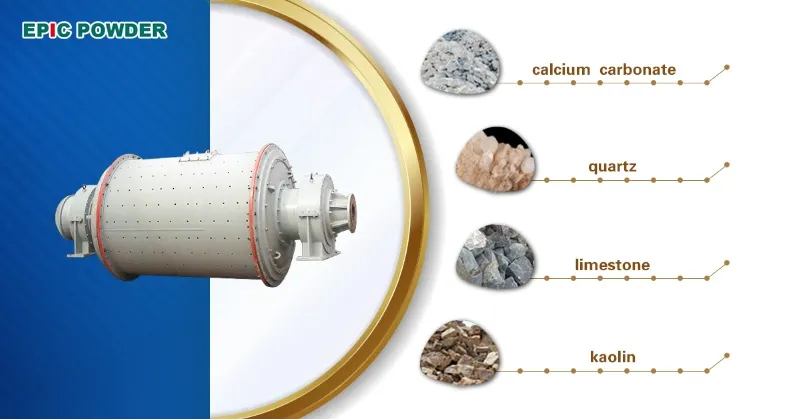
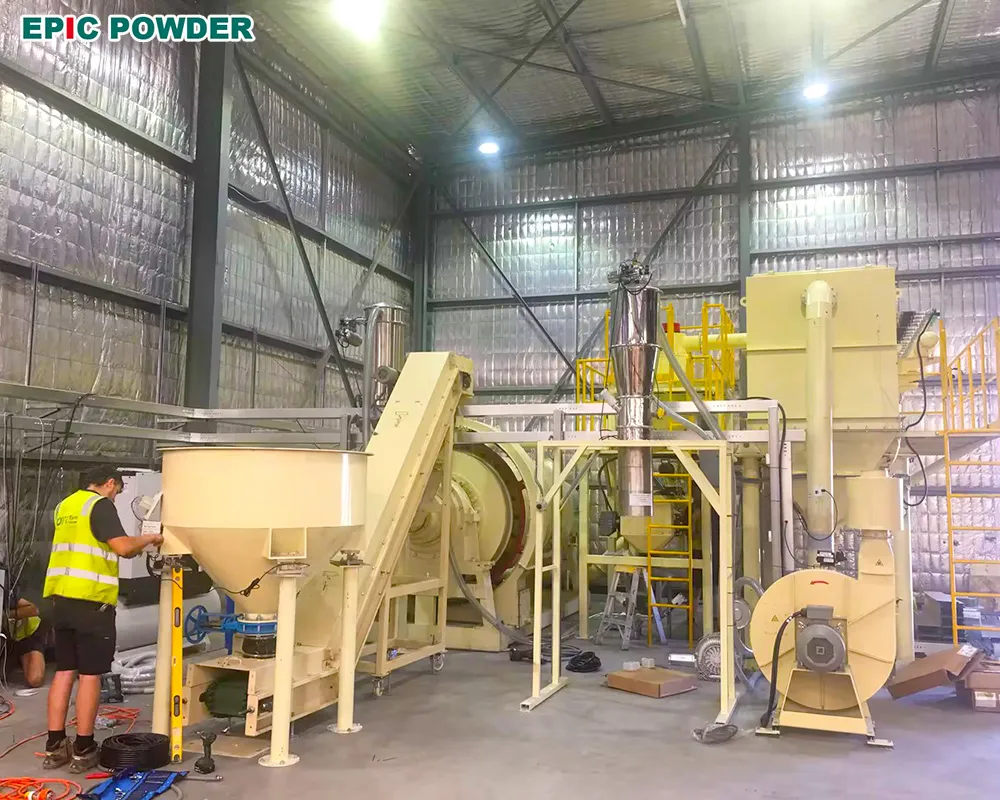
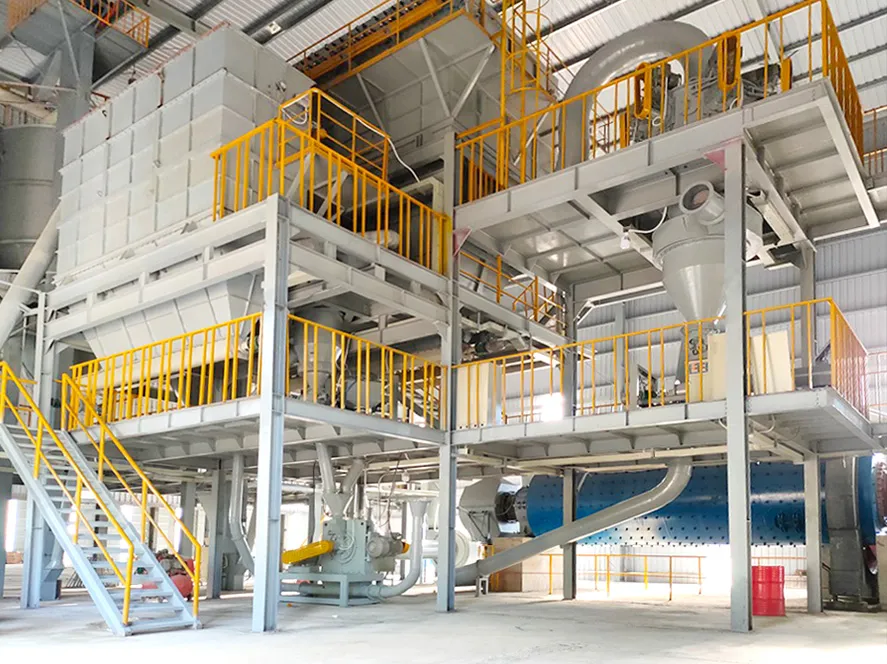
However, high-quality raw materials are only half the equation. Transforming raw limestone into premium powders requires advanced processing technology. With over 20 years of experience in non-metallic ore processing, Epic Powder offers integrated solutions covering grinding, classification, and surface modification.
Ready to optimize your limestone processing line? Contact us today for a free consultation and customized solutions!