
Understanding Diatomaceous Earth and Its Properties
Diatomaceous earth (DE) is a naturally occurring, soft, siliceous sedimentary rock formed from fossilized remains of diatoms—microscopic algae with unique porous shells. Its composition is primarily high-purity silica, often exceeding 80-90%, giving it excellent thermal stability and chemical inertness. This natural porous structure results in an exceptionally large surface area and low bulk density, making DE highly valued across many industrial applications. Grinding diatomaceous earth brings clear benefits especially.
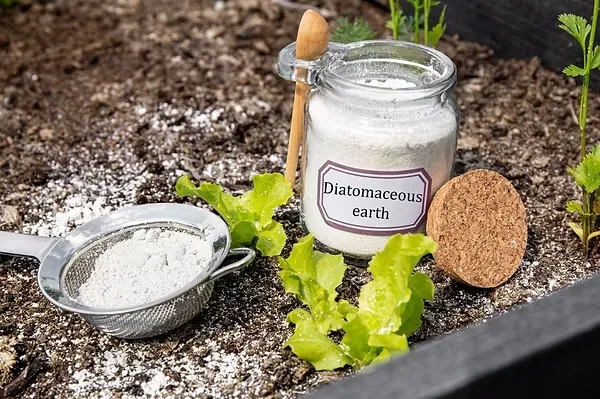
The key physical characteristics of diatomaceous earth include:
- High silica content: Provides strength and durability as a functional filler or filter aid.
- Low density: Ensures lightweight handling and minimal product weight impact.
- Abrasiveness: Requires specialized handling during grinding and processing to prevent material degradation.
Particle size plays a critical role in DE’s performance. Finer particle sizes increase overall surface area and porosity, directly influencing filtration efficiency, chemical reactivity, and performance as fillers. Specifically, reducing particle size from standard 325 mesh (about 45μm) to ultrafine ranges like D50 5.6μm significantly enhances the powder’s functionality by improving permeability, clarity in filtration, and dispersion in composite materials.
Understanding these properties helps processors select the right grinding technology and optimize ultrafine diatomaceous earth grinding for superior quality and application-specific results.
Why Grinding Diatomaceous Earth to Ultrafine Levels (D50 ~5-6μm)?
Grinding diatomaceous earth from standard 325 mesh (about 45μm) down to ultrafine sizes around D50 5.6μm brings clear benefits. This superfine diatomaceous earth powder opens new doors for performance and application.
Benefits of Ultrafine Grinding (Sub-10μm)
- Higher surface area and porosity: Improves absorption and filtration capabilities.
- Better particle packing: Enhances strength and consistency when used as fillers.
- Improved flow and clarity: Critical for advanced filter aids in beverages and pharmaceuticals.
- Enhanced reactivity: Ideal for additives in insulation and building materials.
Enhanced Applications
| Application Area | Benefits of Ultrafine DE (D50 ~5-6μm) |
|---|---|
| Filter Aids | Superior clarity, increased flow rates, finer filtration |
| Paints & Coatings | High-performance fillers improve matte finish and durability |
| Rubber & Plastics | Better dispersion and reinforcement in polymer matrices |
| Building Materials & Insulation | Improved insulation, enhanced strength, and longevity |
Standard vs. Ultrafine Grades: Real-World Performance
- Standard DE (325 mesh): Adequate for routine filtration and filler uses but limited in flow efficiency and surface activity.
- Ultrafine DE (D50 ~5.6μm): Enables higher product quality, efficiency, and premium performance in challenging industrial applications.
Choosing ultrafine diatomaceous earth powder dramatically boosts effectiveness across diverse sectors by leveraging precise particle size control and uniform distribution. For specialized uses, such as advanced filtration, investing in superfine processing is essential.
For more on advanced grinding techniques like air classifier mills, check our detailed overview on ultrafine air classifier technology.
Challenges in Achieving D50 5.6μm
Grinding diatomaceous earth to an ultrafine particle size like D50 5.6μm presents several challenges. First, the material’s natural abrasiveness combined with the fragile diatom structures makes it prone to damage during processing. Over-grinding can easily break down these delicate porous particles, reducing their functionality.
Heat buildup during milling is another concern. Excessive temperatures can affect the physical and chemical properties of diatomite, compromising the purity and performance of the superfine powder. Contamination risk is also higher when using traditional mills, especially those with metal parts in direct contact with the powder.
Many conventional grinding methods struggle to maintain a precise particle size distribution (PSD) at sub-10 micron levels. They either lack the fine control needed or cause yield losses due to excessive fines or coarse particles. Additionally, energy consumption tends to rise significantly when pushing towards ultrafine milling, impacting operational efficiency.
To overcome these obstacles, careful selection of grinding technology is essential, focusing on contamination-free grinding technology and uniform PSD control tailored for diatomaceous earth’s unique properties. For more insights into grinding challenges and solutions, exploring specialized processing equipment for non-metallic minerals can be very useful.
Ideal Grinding Technologies for This Requirement
To grind diatomaceous earth from 325 mesh (around 45μm) down to a superfine D50 of about 5.6μm, you need the right equipment. The most suitable systems are air classifier mills and fluidized bed jet mills. These technologies handle the unique challenges of diatomaceous earth grinding, like its abrasiveness and fragility, while ensuring precise particle size control.
Jet mill technology stands out for several reasons:
- Contamination-free grinding: Since jet mills use high-velocity air streams and have no moving parts in the grinding zone, they avoid metal contamination—a critical factor given diatomaceous earth’s applications in filters and high-purity fillers.
- Precise PSD control: Jet mills allow fine adjustment of particle size distribution (PSD), consistently producing ultrafine diatomaceous earth powder with a sharp, uniform cut at D50 ~5.6μm.
- No heat buildup: The grinding process is largely friction-free, minimizing heat generation and preserving the natural porous structure.
Jet mills achieve this fine particle size by accelerating diatom particles to collide at high speeds inside a grinding chamber. These collisions break down the particles uniformly without damaging their structure too much. The system integrates with advanced air classifiers to separate and recirculate oversized particles, ensuring a narrow particle size distribution (PSD) tailored to your exact specifications.
For more insight on grinding technology options and optimizing ultrafine processing, you can also explore valuable tips in our 10 mineral grinding technology tips, which cover essentials relevant to diatomaceous earth and other non-metallic minerals.
Epic Powder’s Solution: Energy-Efficient Jet Mills for Diatomaceous Earth
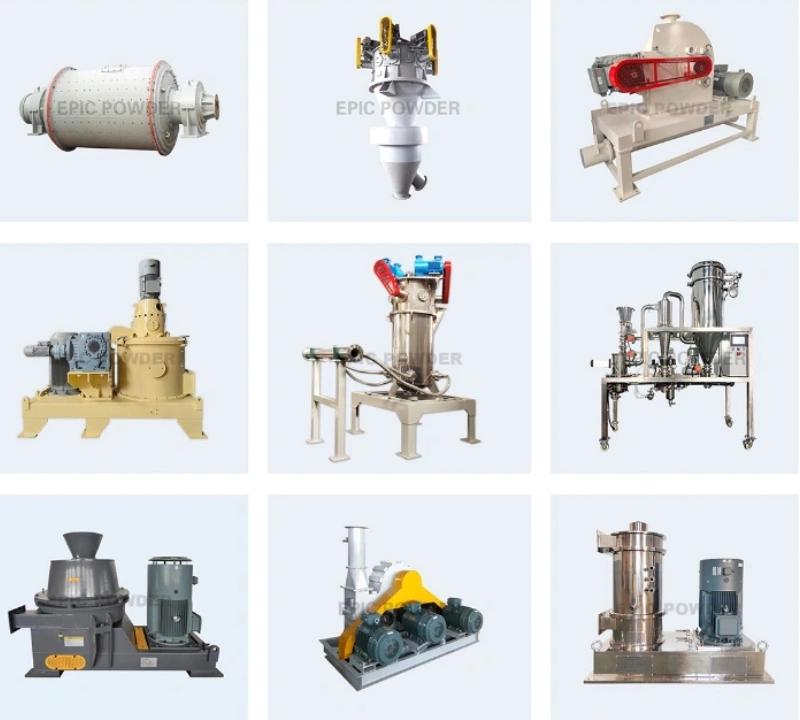
Epic Powder stands out as a leading jet mill manufacturer specializing in ultrafine diatomaceous earth grinding. Our jet mills deliver precise particle size control down to sub-10μm levels, ensuring a consistent D50 particle size of around 5.6μm. Designed with GMP-compliant features, our equipment guarantees contamination-free grinding, preserving the natural porous structure essential for high-performance diatomaceous earth applications.
Key advantages of Epic Powder jet mills include:
- Uniform particle size distribution (PSD) that enhances filter aid efficiency and functional filler performance
- Energy-efficient ultrafine mill operation tailored for high-volume production demands
- Non-metallic mineral jet milling technology to prevent contamination and maintain product purity
- Preservation of natural porosity, vital for maximizing surface area and filtration capabilities
Our proven jet mill systems have successfully processed diatomaceous earth from 325 mesh (45μm) down to superfine powder at D50 5-6μm, meeting and exceeding market expectations for filtration clarity, flow rates, and filler functionality. These case studies illustrate how our precision grinding technology supports diverse industries, from advanced coatings to high-grade filter aids.
For customers seeking reliable, energy-saving, and contamination-free grinding solutions, Epic Powder’s jet mills provide an ideal answer in achieving and maintaining ultrafine diatomaceous earth powder with consistent quality.
To explore more on advanced powder preparation and optimizing milling systems, you might find our comparison of powder preparation methods insightful.
Process Flow for Ultrafine Diatomaceous Earth Production
Producing ultrafine diatomaceous earth powder from 325 mesh (45μm) feed material requires a carefully controlled process to ensure consistent particle size and high quality. Here’s a typical workflow:
1. Feed Preparation
- Start with well-screened and dried diatomaceous earth at 325 mesh to ensure uniform input size.
- Remove any oversized particles or impurities before grinding to protect equipment and improve yield.
2. Grinding and Classification Stages
- Use energy-efficient jet mills or air classifier mills designed specifically for non-metallic mineral superfine powder processing. These mills facilitate contamination-free grinding and precise D50 particle size control around 5.6μm.
- High-speed particle collisions in the jet mill break down the diatomaceous earth while advanced air classifiers separate the ultrafine fraction, ensuring a uniform particle size distribution.
- Continuous monitoring during grinding optimizes energy use and prevents over-grinding or heat buildup, protecting the fragile porous structure of the diatomite.
3. Post-Processing
- The ultrafine powder is typically collected via cyclone separators or bag filters to ensure minimal loss and contamination.
- After grinding, drying may be necessary to control moisture content before packaging.
- Quality assurance includes particle size distribution testing (often by laser diffraction), purity checks, and filtration efficiency analysis.
Tips for Optimizing Yield and Consistency
- Maintain strict control over feed size and moisture to avoid variability in grinding efficiency.
- Regular calibration of air classifiers helps achieve consistent sub-10 micron diatomite powder.
- Use GMP-compliant grinding equipment to reduce contamination risk and meet regulatory standards.
- Monitor mill temperature to prevent thermal damage to diatom structures.
- Implement routine maintenance schedules to ensure equipment reliability and prolong service life.
This streamlined process flow ensures that customers receive ultrapure, precisely milled diatomaceous earth powders with excellent functional properties. For a deeper dive into ultrafine milling equipment, check out our detailed overview of ultrafine air classifier mills and centrifugal classifiers.
Quality Control and Testing for D50 5.6μm
Maintaining strict quality control when grinding diatomaceous earth to a D50 of 5.6μm is crucial for consistent performance. The most reliable method for measuring particle size distribution (PSD) at this ultrafine level is laser diffraction. This technique provides precise, real-time data on particle size uniformity and ensures the superfine diatomaceous earth powder meets the specification for sub-10 micron particle size control.
Low contamination and high purity are essential, especially for applications like filtration and pharmaceuticals. Using contamination-free grinding technology such as jet mills helps minimize metal or external impurities. Routine chemical and microscopic analyses further verify the mineral’s purity and preserve its natural porous structure.
Standards related to filtration efficiency, surface area, and permeability guide quality benchmarks. A narrow and uniform PSD ensures that diatomaceous earth filter aids perform with superior clarity and flow rates. Similarly, functional fillers require consistent particle size and surface properties to enhance coatings or rubber formulations effectively.
For optimized quality, rigorous testing protocols combining laser diffraction measurement with contamination screening support achieving the ideal balance of ultrafine grinding and preserved diatom structure. Such diligence is key to delivering high-grade diatomaceous earth powder tailored for demanding industrial uses.
Applications of Ultrafine Diatomaceous Earth (D50 5.6μm)
Ultrafine diatomaceous earth ground to a precise D50 of around 5.6μm opens up high-performance applications across various industries. One of the most prominent uses is as premium filter aids in beverages, pharmaceuticals, and industrial liquids. At this superfine particle size, diatomaceous earth provides exceptional filtration clarity and flow rates, ensuring purity and efficiency without clogging.
In coatings, ultrafine diatomite serves as an excellent functional filler, enhancing strength while delivering desirable matte effects and improved surface texture. Its fine and uniform particle size distribution helps create smoother finishes and better film formation, making it highly valued in modern paints and powder coatings. For more insights on fillers in coatings, you can explore the application of calcium carbonate in powder coatings, which share similar benefits in surface enhancement.
Additionally, ultrafine diatomaceous earth is a key additive in rubber, plastics, and advanced building materials. It improves mechanical properties, dimensional stability, and durability while maintaining lightweight characteristics. This makes it an ideal choice for manufacturers seeking to boost product quality without sacrificing cost-effectiveness.
Emerging uses continue to grow, particularly in adsorption and catalysis. The naturally high surface area and porous structure of superfine diatomite give it excellent capacity for trapping contaminants, chemicals, and gases, making it a promising material for environmental and chemical processing applications.
By grinding diatomaceous earth to sub-10 micron sizes with precise particle size control, producers can unlock these value-added applications with consistent quality and performance.
Epic Powder

“Thanks for reading. I hope my article helps. Please leave a comment down below. You may also contact EPIC Powder online customer representative Zelda for any further inquiries.”
— Jason Wang, Senior Engineer