
Introduction to Kaolin and Its Industrial Importance
Kaolin, also known as kaolinite clay, is a naturally occurring mineral prized for its unique properties and wide industrial use. This soft, white clay is chemically inert and features a distinctive plate-like structure, making it highly versatile across various applications. With growing demands from high-tech and high-value markets, ultra-fine kaolin powder has become essential. Industries seek finer particles to boost performance, making kaolin grinding machines crucial in producing premium, ultra-fine kaolin suitable for advanced applications.
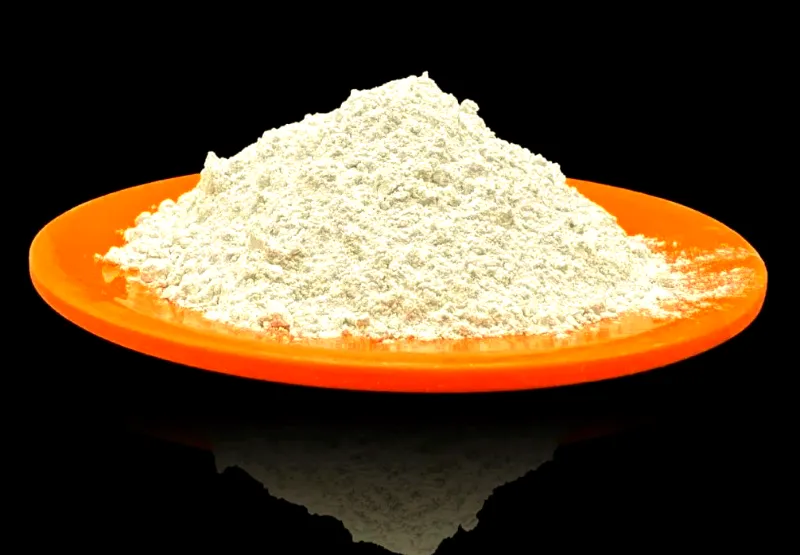
Key properties of kaolin include:
- Brilliant whiteness that enhances product brightness
- Soft texture suitable for fine processing
- Chemical inertness, ensuring stability in formulations
- Plate-like particles that improve texture and coverage
Because of these qualities, kaolin finds major use in industries such as:
- Paper coating and filling: Improves brightness, opacity, and printability
- Ceramics: Provides whiteness and plasticity for fine china and porcelain
- Paints and coatings: Enhances durability and smooth finish
- Rubber and plastics: Acts as a reinforcing filler for strength and flexibility
- Cosmetics and pharmaceuticals: Used for gentleness and purity in skin care and medicines
Why Grinding is Critical in Kaolin Processing
Grinding plays a vital role in kaolin processing because particle size directly affects the material’s performance across industries. Finer kaolin particles enhance paper opacity and brightness, improve smoothness and coverage in cosmetics, and boost the effectiveness of fillers in paints and plastics. Typically, basic kaolin fillers require grinding to around 325 mesh, while ultra-fine kaolin powder used in high-end applications demands a fineness of D97 ≤ 5μm to meet strict quality standards.
Achieving these fine particle sizes is not without challenges. The grinding process must preserve kaolin’s natural whiteness and softness while avoiding contamination, especially from iron or other impurities that can degrade the product’s quality. Efficiency is also key—processing lines need to deliver high output rates consistently without sacrificing purity or particle uniformity. Choosing the right kaolin grinding machine and system ensures both the fineness and quality required for advanced industries such as ceramics, pharmaceuticals, and cosmetics.
For advanced separation and achieving ultra-fine particle distributions, integrating an efficient air classifier system alongside grinding equipment is often necessary. Systems like the HTS series can reliably classify kaolin to meet tight fineness requirements while maintaining productivity and purity. You can learn more about these precision classifiers in our detailed guide on ultra-fine air classifiers.
In , grinding is crucial not just for reducing kaolin particle size, but for tailoring its physical properties to meet demanding industrial standards while managing operational challenges like contamination and throughput.
Overview of Kaolin Grinding Process
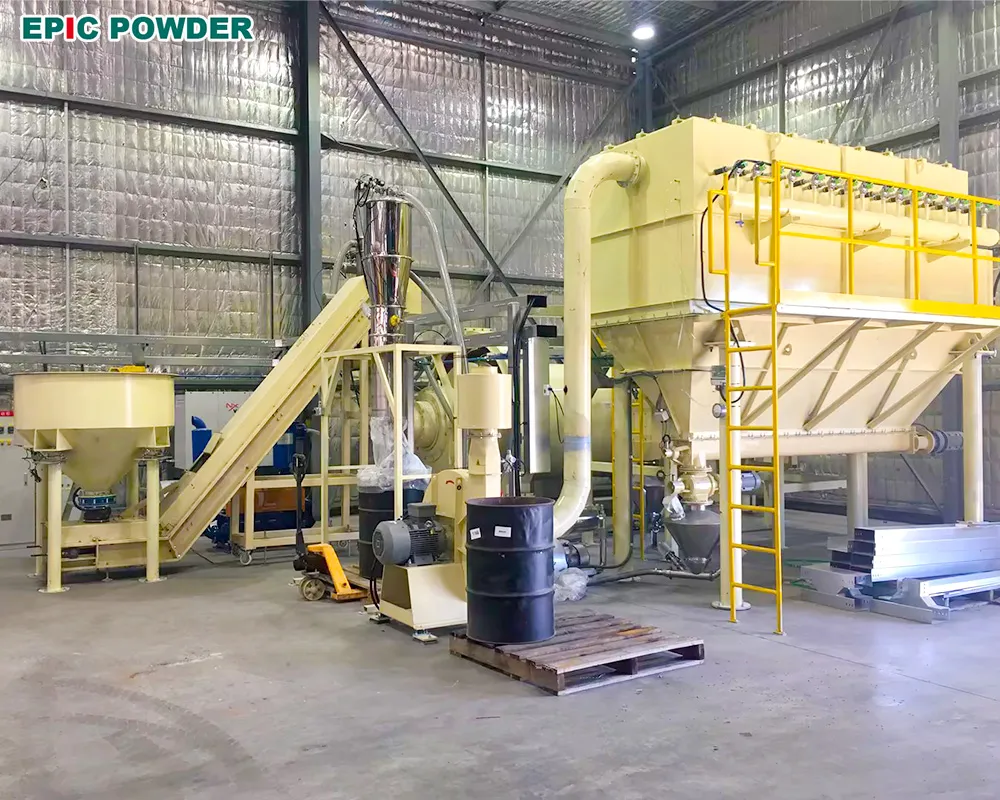
The typical kaolin grinding process follows a clear production flow: crushing → drying → grinding → classification → optional surface modification/coating → packaging. Each step plays a vital role in ensuring the final kaolin powder meets quality standards and industry requirements.
There are two main approaches to processing kaolin: dry grinding and wet grinding. Dry grinding is more energy-efficient and simpler but needs effective dust control systems to prevent pollution. Wet grinding, on the other hand, helps reduce dust and improve particle dispersion but requires additional drying steps afterward. Choosing between dry or wet methods depends on the desired particle size, output capacity, and the end-use application.
For best results, utilizing integrated systems that combine grinding machines with air classifiers and coating equipment improves consistency and efficiency. These systems help maintain precise particle size distribution, optimize throughput, and enable optional kaolin surface modification for enhanced product performance. For more on high-precision classification, the use of advanced vertical air classifiers makes a significant difference in achieving fine kaolin powders.
A well-designed kaolin grinding line ensures steady production of high-purity kaolin powder with controlled particle fineness, essential for applications like paper coating, ceramics, and cosmetics.
Types of Kaolin Grinding Machines: Advantages and Comparisons
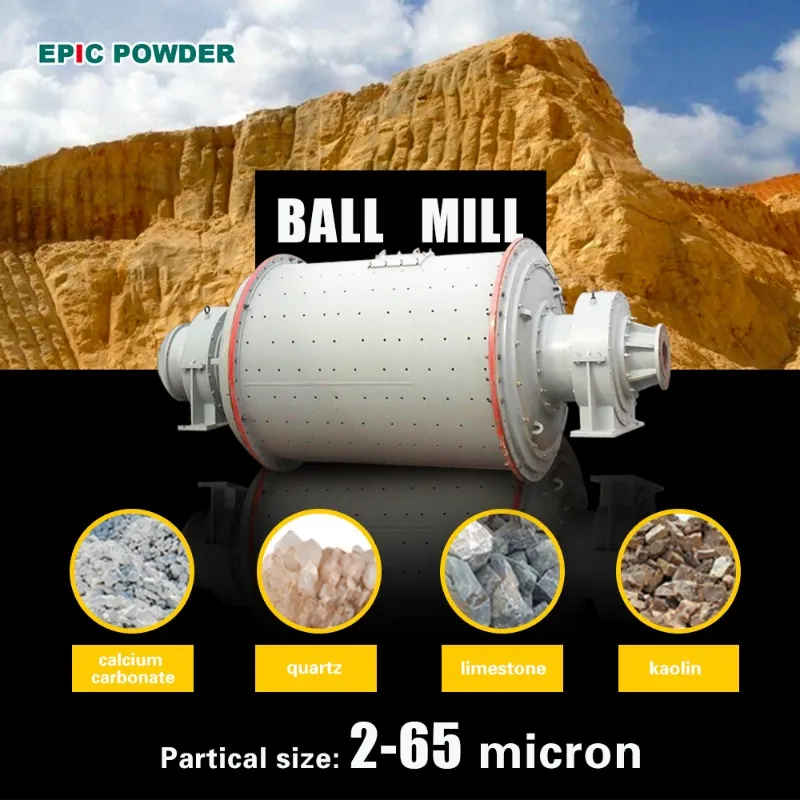
When it comes to kaolin grinding machines, different types suit various production needs and fineness requirements. Here’s a quick overview of popular options along with their key benefits and drawbacks.
| Machine Type | Fineness Range | Output Capacity | Energy Consumption | Maintenance | Key Advantages | Suitability for Kaolin |
|---|---|---|---|---|---|---|
| Ball Mill | 80-400 mesh (medium-fine) | High (large batches) | High | Moderate to high | Reliable, stable operation | Good for medium-fine grinding but risk of iron contamination |
| Raymond Mill | 80-400 mesh | Medium | Moderate | Easy | Cost-effective, low maintenance | Ideal for medium-scale production and lower investment |
| Vertical Roller Mill | Down to ~10 μm | Very high (industrial scale) | Low | Moderate | Energy-efficient, precise control | Perfect for large-scale, energy-saving production |
| Ultra-Fine Ring Roller Mill | Submicron (≤1 μm) | Moderate to high | Moderate to low | Moderate | Multi-stage grinding, superior particle distribution | Best choice for ultra-fine kaolin powder production |
| Mechanical Impact Mill | Ultra-fine (submicron) | Low to medium | Moderate | Moderate | High-speed grinding, minimal heat buildup | Suitable for sensitive, high-purity kaolin |
| Jet Mill | Ultra-fine (submicron) | Low to medium | High | High | No contamination, very fine particles | Ideal for high-purity and ultra-fine applications |
Highlights of Each Type
- Ball Mills are popular for their reliability and high capacity. However, they consume more energy and may introduce iron impurities because of their steel grinding media.
- Raymond Mills (also called pendulum or roller mills) are cost-effective for producing kaolin in the 80-400 mesh range. Their easier maintenance makes them suitable for medium-sized operations.
- Vertical Roller Mills are highly energy-efficient, offering precise particle size control. They’re great for large-scale production where output and low costs matter.
- Ultra-Fine Ring Roller Mills provide multi-stage grinding to reach submicron fineness with excellent particle uniformity, fitting for premium kaolin powders.
- Mechanical Impact Mills and Jet Mills run at high speeds, delivering ultra-fine, high-purity kaolin with minimal heat, which protects the material quality.
Choosing the right kaolin powder mill depends on your required fineness, production scale, and cost priorities. For example, for ultra-fine kaolin grinding, ring roller mills combined with integrated air classification systems are often preferred for consistent quality and yield.
For more on fine grinding and processing, you might find insights from dry grinding challenges with similar minerals helpful to understand how processing parameters impact powder quality.
Key Factors in Selecting the Right Kaolin Grinding Machine
Choosing the right kaolin grinding machine depends on several important factors that directly impact the final product quality and cost-efficiency:
- Desired Fineness and Particle Size Distribution: Understand your target kaolin fineness, such as D97 ≤5μm for premium powders or coarser grades like 325 mesh. Precise particle size distribution (D50, D97) ensures your kaolin performs well in its application, whether for paper coating or cosmetics.
- Production Capacity and Scalability: Select a machine that matches your current output needs but also offers room to scale. Large-scale vertical roller mills suit high-volume production, while Raymond mills or ball mills work better for medium-scale operations.
- Energy Efficiency and Operational Costs: Grinding kaolin is energy-intensive, so machines with lower power consumption and better efficiency will cut long-term expenses. Vertical roller mills and ultra-fine ring roller mills excel in energy savings compared to traditional ball mills.
- Material Purity and Environmental Considerations: Avoiding contamination during grinding is critical, as impurities reduce kaolin whiteness and value. Choose grinding systems designed to minimize iron contamination and incorporate dust collection and noise reduction features for cleaner, safer environments.
- Integration with Classifiers and Coating Systems: For high-purity ultra-fine kaolin, look for mills that easily integrate with advanced air classifiers like the HTS series (D97 5μm, output 1500kg/h) and surface modification equipment such as pin-mill or three-roller coating machines. This setup enhances particle uniformity and surface functionality.
Selecting equipment based on these key factors ensures you get a kaolin powder mill suited to your product specifications and operational goals. For designing a full processing line tailored to your needs, exploring high-performance integrated systems can be very effective. You might also find insights on optimizing grinding with precision classifiers useful in advanced kaolin processing here.
Advanced Solutions from Epic Powder: High-Performance Grinding and Classification Systems
Epic Powder offers top-tier kaolin grinding machines, including ring roller mills and vertical roller mills, designed for precision and efficiency. These mills deliver multi-layer grinding that ensures high yield and consistently stable particle size, perfect for producing ultra-fine kaolin powder.
Key Benefits:
- Precise multi-stage grinding for uniform particle size
- High throughput with energy-efficient operation
- Stable granularity that meets strict industrial standards
Integrated Air Classifiers
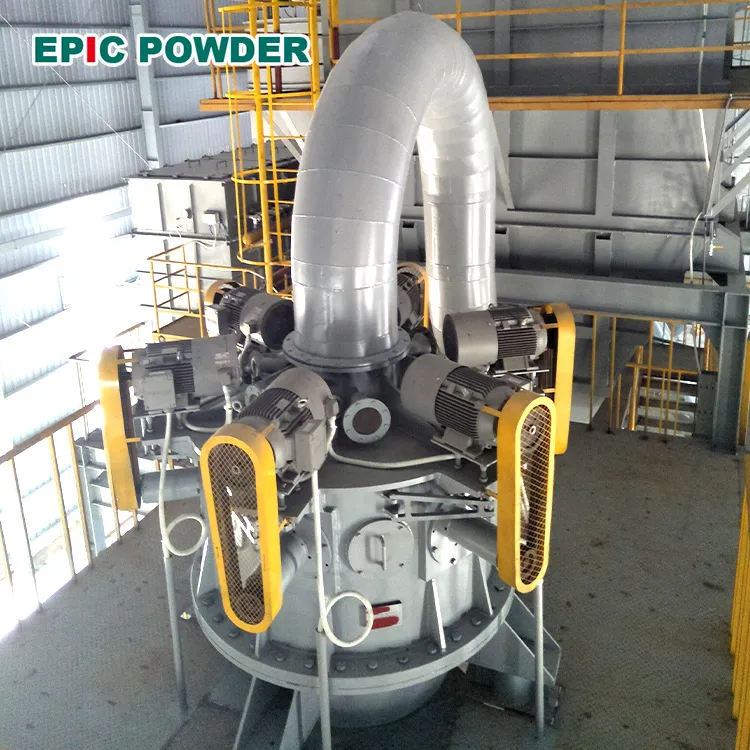
Epic Powder’s HTS series air classifiers are a vital part of the system, providing sharp particle size control. For example, the HTS100/4 classifier achieves impressive results with:
| Parameter | Value |
| Particle size D97 | ≤ 5 μm |
| Particle size D50 | 1.47 μm |
| Output capacity | 1500 kg/h |
This precise classification supports industries that need fine, high-purity kaolin powder.
Surface Modification Coating Machines
To enhance kaolin’s dispersion and add functionality, Epic Powder offers related equipment like:
- Pin-mill coating machines
- Turbo mill coating machines
- Three-roller coating machines
These machines apply surface treatments that improve compatibility in industries such as paper, plastics, and cosmetics. For more about enhancing mineral powders, see our detailed guide on surface modification.
In , Epic Powder’s integrated grinding and classification systems provide a complete solution for ultra-fine kaolin powder production with flexibility for surface processing.
Case Studies and Real-World Performance Data of Kaolin Grinding Machines
Many kaolin processing plants worldwide have successfully achieved ultra-fine kaolin powder production by using advanced grinding systems. For example, a major kaolin line equipped with Epic Powder’s ring roller mill and HTS series air classifier consistently delivers a D97 fineness of 5μm with an impressive output of 1500 kg/h. This setup not only meets the premium quality requirements but also improves energy efficiency compared to traditional equipment.
Another case involved replacing conventional ball mills with vertical roller mills, resulting in reduced power consumption by up to 30% while maintaining a high-purity kaolin powder ideal for paper coating and ceramics. Such systems demonstrate how careful selection of kaolin grinding machines can lead to better particle size distribution and minimized contamination risks.
These real-world examples underline the importance of integrating customizable grinding solutions with air classifiers and coating equipment to maximize output quality and reduce operational costs. This aligns closely with current industry trends focusing on ultra-fine kaolin grinding for high-value applications.
For more insights on advanced classifier technology that supports ultra-fine kaolin milling, refer to our detailed overview of the ultrafine air classifier systems.
Maintenance, Safety, and Best Practices for Kaolin Grinding Equipment
Keeping your kaolin grinding machine in top shape means routine checks and timely wear parts replacement. Regular inspections help spot issues before they escalate, reducing downtime. Focus on key components like grinding rollers, liners, and classifier blades—these parts wear faster and impact both product quality and machine efficiency.
Modern kaolin grinding equipment comes with advanced safety features, such as dust-free operation systems that minimize airborne particles, protecting workers and the environment. Proper dust collection not only improves safety but also prevents contamination, maintaining the high-purity kaolin powder your process demands.
To optimize longevity and performance:
- Follow manufacturer-recommended maintenance schedules.
- Keep the grinding chamber clean to avoid material build-up.
- Monitor vibration and noise levels for early signs of mechanical wear.
- Use genuine replacement parts to ensure compatibility and durability.
- Ensure operators receive adequate training on machine handling and emergency procedures.
These best practices help maximize output and energy efficiency while safeguarding your investment in high-quality kaolin processing equipment.
Epic Powdr
Epic Powder is specialized in fine powder processing technology for mineral industry, chemical industry, food industry, pharama industry, etc. Our team has more than 20 years experience in Various powders processing and had ever designed and installed the biggest Jet Mill Line for ultra-fine barite powder production line in China.
We are a professional supplier of powder processing projects, especially powder milling, powder classifying, powder dispersing, powder classifying, powder surface treatment and waste recycling. We supply consultancy, testing, project design, machines, commissioning and training.

“Thanks for reading. I hope my article helps. Please leave a comment down below. You may also contact EPIC Powder online customer representative Zelda for any further inquiries.”
— Jason Wang, Senior Engineer