
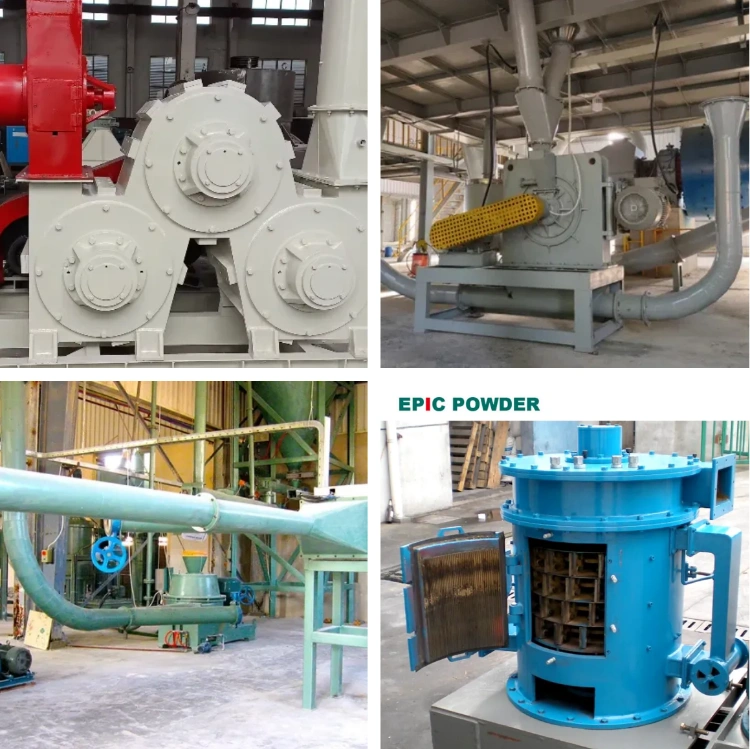
Inorganic particles offer a range of benefits including non-toxicity, excellent dimensional stability, high-temperature resistance, and large specific surface area. These properties help enhance the thermal stability, mechanical performance, and electrical conductivity of flame retardants while reducing water absorption. As a commonly used filler in polymer modification, calcium carbonate has lots of advantages. They include rigidity, hardness, wear resistance, heat resistance, and dimensional stability of composite materials. It can significantly reduces production costs. Epic Powder‘s advanced ball mills, roller mills, and air classifiers ensure that calcium carbonate powders are precisely engineered. They can meet the demanding needs of flame-retardant applications. With our pin mill coating machines and turbo mill coating machines, we also provide surface-modified calcium carbonate. It can enhance compatibility and performance in polymer systems.
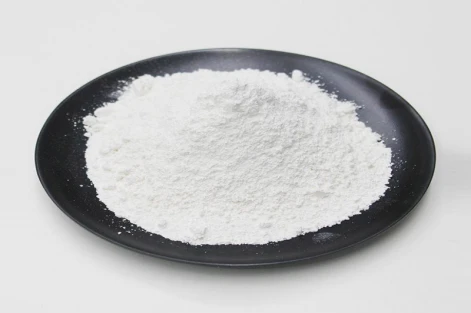
01 Flame Retardant Mechanism and Application Value of Calcium Carbonate
Calcium carbonate is primarily used in flame-retardant polymer composites, wood/fiber modification, and coating formulations. Its flame-retardant mechanism can be summarized in three main actions:
Endothermic Effect:
At high temperatures, calcium carbonate decomposes and absorbs a substantial amount of heat, lowering the surface temperature of the material and delaying combustion. The decomposition reaction is:
CaCO₃ → CaO + CO₂↑
This reaction helps suppress the temperature rise of the material, making it harder to reach the ignition point.
Dilution Effect:
Calcium carbonate disperses evenly throughout the material, diluting the concentration of combustible substances. When the flammable content is significantly diluted, combustion becomes harder to sustain.
Barrier Effect:
The calcium oxide (CaO) produced during decomposition forms a dense protective layer on the material’s surface, blocking oxygen from contacting the combustible material—cutting off one of the three essential elements of combustion. Meanwhile, the released CO₂ further dilutes the surrounding oxygen, contributing to flame suppression.
Moreover, modified calcium carbonate shows improved compatibility with polymers compared to many traditional flame retardants. They can be processed using Epic Powder’s pin mill coating or turbo mill coating technologies. When nano-sized calcium carbonate is used, additional nanomaterial characteristics can be observed, offering even greater potential in flame-retardant systems.
That said, some experts argue that calcium carbonate primarily acts as an extender filler with moderate reinforcing and flame-retardant effects, but its efficiency and high-temperature resistance may be limited compared to other additives.
So, how does calcium carbonate truly perform in flame-retardant materials?
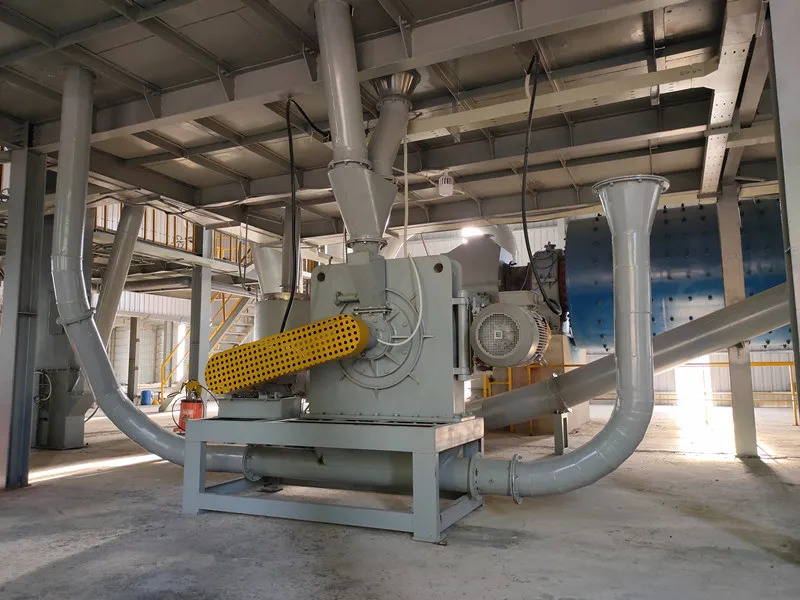
02 Key Applications of Calcium Carbonate in Flame-Retardant Materials
(1) Composite Flame Retardants
Magnesium hydroxide (MH) is a popular inorganic flame retardant due to its high decomposition temperature (340°C–450°C) and non-toxic decomposition products (MgO and H₂O). However, its poor compatibility with polymers and limited mechanical reinforcement restrict its use.
A study by Guo Yaxin et al. explored the effects of combining calcium carbonate with magnesium hydroxide in ethylene-vinyl acetate (EVA) copolymers. Results showed that adding an appropriate amount of CaCO₃ improved mechanical, electrical, and flame-retardant properties. With a total filler load of 120 phr, the formulation containing 10 phr CaCO₃ achieved optimal mechanical and flame-retardant performance—tensile strength of 11 MPa, elongation at break of 370%, and LOI of 30.5%. Meanwhile, 20 phr CaCO₃ delivered the best electrical insulation, with dielectric strength of 32.7 kV/mm and volume resistivity of 8×10¹² Ω·m.
At Epic Powder, our Air classifiers and roller mills ensure precise particle size distribution and high purity, enabling such high-performance formulations.
(2) Flame-Retardant Silicone Rubber
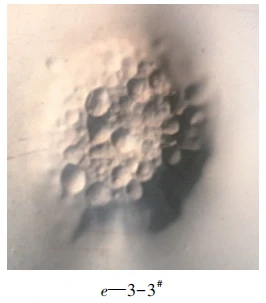
Aerospace-grade fire-resistant sealants must withstand 1100°C flames for at least 15 minutes without penetration. Wu Na et al. compared the effects of calcium carbonate and magnesium hydroxide on the mechanical, thermal, flame-retardant, and fire-resistant properties of addition-cured silicone rubber.
Interestingly, silicone rubber with 150 phr calcium carbonate still lacked self-extinguishing properties. However with just 50 phr CaCO₃, it exhibited excellent fire resistance and resisted flame penetration. In contrast, even 150 phr of magnesium hydroxide failed to prevent burn-through within 5 minutes.
The difference lies in the thermal decomposition behavior of the fillers and their compatibility with the combustion profile of silicone rubber. Combining both fillers yielded silicone rubber with balanced reinforcement, heat resistance, flame retardancy, and fire protection.
Backside photo of silicone rubber after 15 minutes of flame impingement
(3) Flame-Retardant Sealants
Improving the flame retardancy of silicone sealants often compromises their mechanical properties. Adding more flame-retardant fillers can reduce elasticity and elongation at break, but underdosing may fail to meet safety standards. Additionally, many flame-retardant fillers increase viscosity without imparting thixotropy, often resulting in thick, runny formulations.
Nano-calcium carbonate has emerged as a promising solution. Zhang Dandan et al. developed flame-retardant silicone sealants using nano-CaCO₃ and fumed silica as reinforcing fillers. When the nano-CaCO₃ content reached 50% and nitrogen-based flame retardant FS-480D was added at 18%, the sealant achieved FV-0 flame retardancy with excellent mechanical properties and thixotropic behavior. Compared to fumed silica, nano-CaCO₃ demonstrated better compatibility with the flame retardant.
At Epic Powder, our turbo mill coating machines enable precise surface modification of nano-calcium carbonate, improving dispersion and compatibility in such advanced formulations.
(4) Flame-Retardant Fibers
Wet coating technology using recycled polyamide fibers is a cost-effective and high-performance method for producing coated textiles like label webbing. Chen Zhijie et al. modified calcium carbonate with a silicon-phosphorus coupling agent to enhance dispersion and impart flame retardancy. The modified CaCO₃ showed excellent lipophilicity and enabled the formation of smooth, porous, thin polyamide coatings on fabric with notable flame-retardant properties.
(5) Flame-Retardant Coatings
Fire-retardant coatings play a critical role in slowing fire spread and buying time for firefighting efforts. Liang Yongtian et al. found that combining 60 parts each of calcium carbonate and mica powder delivered optimal intumescent and flame-retardant effects in powder coatings.
Effect of Different Filler Ratios on Coating Performance
| Functional fillers | |||||
| Item | 1 | 2 | 3 | 4 | 5 |
| Calcium carbonate/parts | 40 | 50 | 60 | 70 | 80 |
| Mica powder/parts | 80 | 70 | 60 | 50 | 40 |
| Expansion thermal insulation effect/℃ | 500 | 450 | 400 | 400 | 400 |
| Flame retardant effect | V0 | V0 | V0 | V1 | V1 |
| Expansion layer strength | Not prone to collapse | Not prone to collapse | Not prone to collapse | Prone to collapse | Prone to collapse |
Calcium carbonate and aluminum hydroxide release gases during combustion, creating an intumescent barrier with excellent thermal insulation. Meanwhile, silicate-based fillers like silica and mica offer superior heat resistance, with mica’s platelet structure enhancing carbon layer strength and hardness. Considering both performance and cost, the combination of calcium carbonate and mica powder proved most effective.
(6) Flame-Retardant Adhesives
Silane-modified polyether adhesives are widely used in construction and industrial applications due to their strong adhesion and balanced performance. Yuan Yinlun et al. studied the effects of varying ratios of ammonium polyphosphate (APP), ground calcium carbonate, and nano-calcium carbonate on flame retardancy, mechanical properties, and workability.
The optimal formulation—160 phr APP, 80 phr ground calcium carbonate, and 80 phr nano-calcium carbonate—achieved V-0 flame retardancy and met 25LM displacement requirements, demonstrating the synergistic potential of combining multiple filler types.
Conclusion
Calcium carbonate is far more than just a cost-reducing filler. When properly processed and modified—using technologies like Epic Powder’s ball mills, roller mills, Air classifiers, and surface coating systems—it becomes a versatile functional additive that enhances flame retardancy, mechanical strength, and processing efficiency across a wide range of materials.
Whether you’re formulating high-performance cables, sealants, coatings, or composites, Epic Powder provides the advanced mineral processing solutions you need to stay ahead in the flame-retardant materials market.
Epic Powder
At Epic Powder, we offer a wide range of equipment models and tailor solutions to meet your specific needs. Our team has more than 20 years experience in various powders processing. Epic Powder is specialized in fine powder processing technology for mineral industry, chemical industry, food industry, pharama industry, etc.
Contact us today for a free consultation and customized solutions!

“Thanks for reading. I hope my article helps. Please leave a comment down below. You may also contact EPIC Powder online customer representative Zelda for any further inquiries.”
— Jason Wang, Engineer