
Modified calcium carbonate has evolved from a simple filler into an essential functional additive across the plastics and rubber industries. From PVC pipes and PE agricultural films to automotive bumpers and electronic enclosures, surface‑modified, composite‑modified, and nano‑modified calcium carbonate grades deliver precisely tailored performance at a fraction of the cost of virgin polymers.
But formulation is only half the story. Achieving consistent, high‑quality modification at industrial scale requires reliable powder surface modification equipment. At Epic Powder Machinery, we combine deep process knowledge with robust engineering to help customers turn ordinary calcium carbonate into high‑value functional materials.
This article reviews the three mainstream modification technologies, their real‑world applications in plastics and rubber, and how Epic Powder’s continuous surface modification system helps make these results repeatable and cost‑effective.
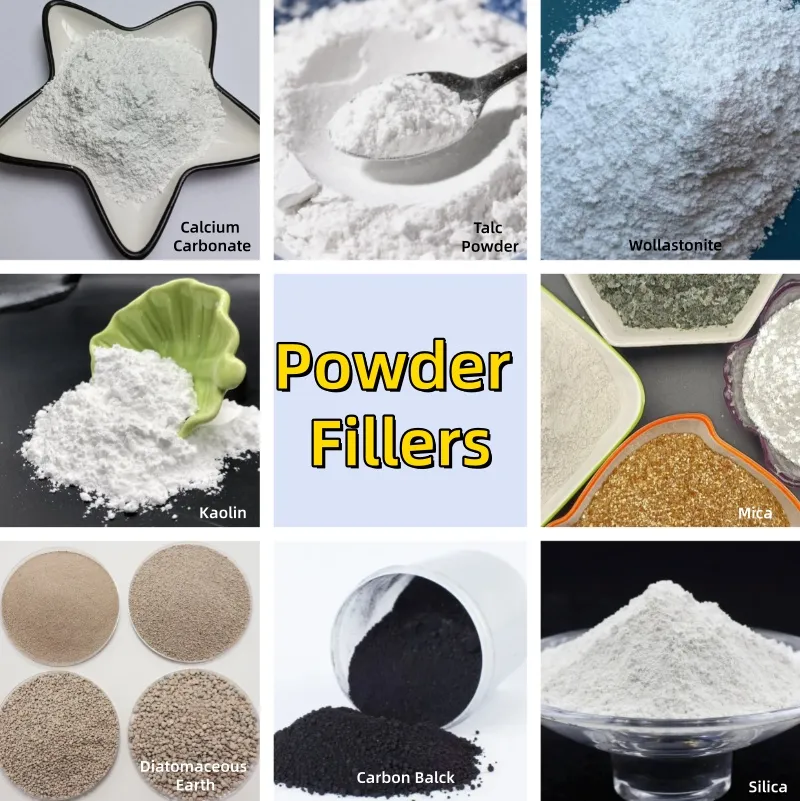
1. Three Mainstream Calcium Carbonate Modification Technologies
Currently, three major categories dominate the industrial modification of calcium carbonate:
| Technology | Principle | Typical Applications |
|---|---|---|
| Surface modification | Treatment with coupling agents (e.g., titanate, silane) or surfactants | Most widely used; improves dispersion and compatibility with polymers |
| Composite modification | Combining CaCO₃ with talc, glass fibers, or other fillers for synergistic effects | Automotive parts, structural components |
| Nano‑modification | Reducing CaCO₃ to nanoscale (typically <100 nm) to enhance reinforcement | High‑performance elastomers, impact‑resistant plastics |
Each technology is tailored to specific material requirements, enabling precise optimization across diverse application scenarios.
2. Real Performance in Plastics
Modified calcium carbonate plays a vital role in both commodity plastics and engineering grades. Here is what the data actually shows.
2.1 Automotive Bumpers (PP + CaCO₃ + Talc)
When polypropylene is hybrid‑filled with talc and calcium carbonate, the two fillers do not just add mass — they create a synergistic effect. Research shows that when the PP/talc/CaCO₃ weight ratio is 70:15:15, the composite achieves the highest flexural strength and impact strength among all hybrid formulations tested.
In automotive bumper applications, this hybrid approach helps reduce weight by 10–15% while maintaining or even improving stiffness — exactly what automakers need to meet fuel economy and emissions targets without switching to more expensive engineering plastics.
2.2 Children‘s Helmet Inner Liners
For safety-critical components like helmet liners, low-temperature impact resistance is non‑negotiable. Nano‑modified calcium carbonate — typically 20–80 nm in particle size — has been shown to significantly improve low‑temperature performance when properly dispersed in polymer matrices. With the right modification and dispersion, nano‑CaCO₃‑modified connectors can maintain their integrity even at -20°C, providing a critical margin of safety in cold climates.
2.3 Other Plastic Applications
- PVC pipes: Improved impact strength and smoother surface finish
- PE agricultural films: Better tear resistance and UV stability
- Plastic toys: Enhanced stiffness without sacrificing processability
3. Modified Calcium Carbonate in the Rubber Industry
In rubber, calcium carbonate ranks as the third largest inorganic filler — behind only carbon black and precipitated silica. Each grade serves a distinct purpose:
- Heavy (ground) calcium carbonate – cost efficiency and moderate reinforcement
- Light (precipitated) calcium carbonate – balanced properties
- Nano‑modified calcium carbonate – functional reinforcement for high‑performance rubber
3.1 Cost Reduction with Heavy Modified CaCO₃
Raw materials are the largest cost driver in rubber products. Heavy modified calcium carbonate is inexpensive and disperses easily, allowing high filler loadings without severely compromising elasticity or elongation.
Industry example: In general‑purpose rubber goods, adding 30–50 phr (parts per hundred rubber) of heavy modified CaCO₃ can reduce raw material costs by roughly 15–25% while maintaining processability and vulcanization efficiency — a meaningful saving for high‑volume production lines.
3.2 Enhanced Mechanical Properties
Coupling‑agent‑modified CaCO₃ forms strong chemical bonds with rubber molecules, improving tensile strength, tear strength, abrasion resistance, and aging resistance.
Case 1 – NBR for Oil‑Resistant Footwear
Nitrile Butadiene Rubber (NBR) is widely used in oil‑resistant footwear. A 2025 study found that when amorphous calcium sulfate and calcium carbonate are used together as hybrid fillers in NBR, the optimal mass ratio is 1:3 (CaSO₄:CaCO₃) . At this ratio, the composite achieves a tear strength of 15.39 kN/m and a density of 1.42 g/cm³ — a well‑balanced formulation for demanding footwear applications. The study systematically evaluated Mooney viscosity, tensile and tear strength, density, heat aging, oil resistance, and abrasion, confirming that this hybrid approach delivers real performance improvements.
Case 2 – Natural Rubber Composites
Surface‑modified calcium carbonate consistently outperforms untreated grades in natural rubber. A 2023 study reported that NR/treated CaCO₃ composites provided higher tensile strength than untreated CaCO₃ composites and pure NR across all filler loadings, with the optimal loading at 20 phr. In natural rubber latex films, adding 20 phr of treated CaCO₃ delivered a 44% increase in tensile strength after processing.
3.3 Dispersion and Surface Quality
Unmodified CaCO₃ tends to agglomerate inside rubber matrices, leading to rough surface finishes, inconsistent performance, and higher shrinkage during vulcanization — which can cause deformation or cracking.
Modified CaCO₃, in contrast, disperses uniformly. Benefits include smoother product surfaces, fewer defects, shorter vulcanization times, and higher production efficiency.
3.4 Special Morphologies for Extra Reinforcement
Some modified calcium carbonate grades feature chain‑like crystalline structures with low surface energy (resistant to agglomeration), large specific surface area, and superior rubber compatibility. These attributes help bridge the gap between calcium carbonate and higher‑cost reinforcing fillers like carbon black and silica, especially in applications where abrasion resistance and mechanical strength are critical.
4. Why Unmodified Calcium Carbonate Falls Short
Without proper surface treatment, calcium carbonate particles agglomerate easily, have poor interface compatibility with polymers, cause stress concentration points, and lead to rough surfaces. This is why industrial surface modification equipment is not an option — it is a necessity for any serious compounder or masterbatch producer.
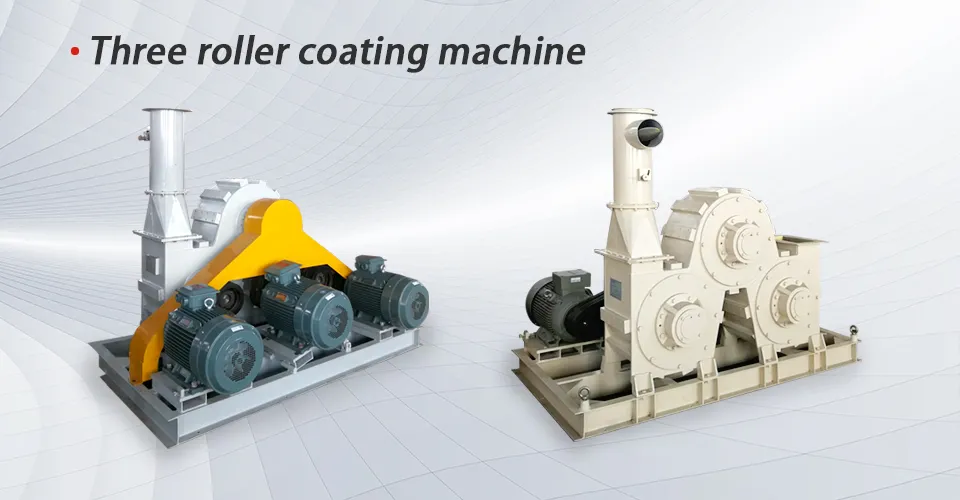
5. Epic Powder‘s Continuous Surface Modification Machine
At Epic Powder Machinery, we have developed a continuous powder surface modification system specifically designed for calcium carbonate processors — from 325 mesh ground calcium carbonate to nano‑ground products.
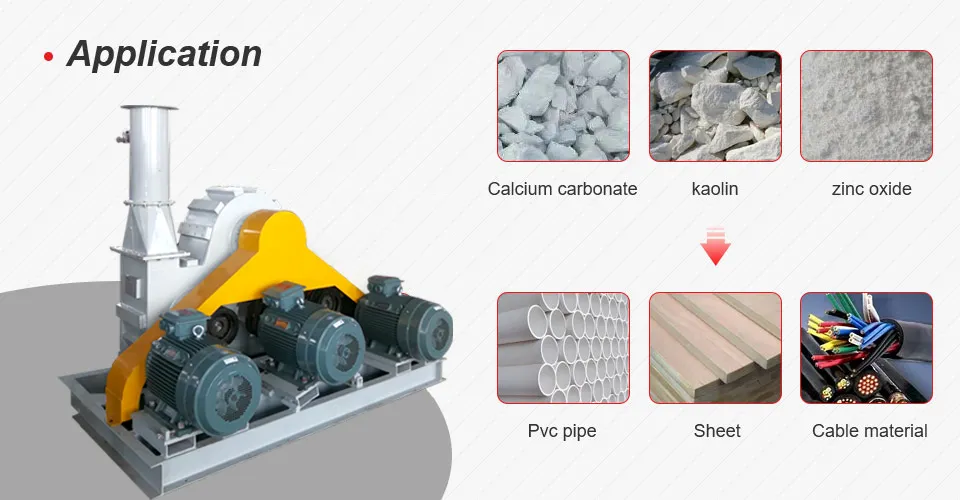
5.1 Key Features
| Feature | Benefit |
|---|---|
| Continuous production | High throughput; integrates seamlessly with ball mills or ultrafine mills for a grinding‑classifying‑modifying one‑line process |
| High coating rate & activation index | Uniform coverage with minimal coupling agent consumption; activation index can reach ≥98% |
| Self‑heating design | Uses frictional heat from high‑speed operation — no external heating required; energy consumption as low as ≤35 kWh/ton of product, and down to 30 kWh/ton under optimal conditions |
| Built‑in de‑agglomeration | Produces agglomerate‑free modified powder; no post‑screening needed |
| Negative‑pressure, dust‑free operation | Clean working environment that meets stringent emission standards |
| Flexible agent options | Compatible with stearic acid and various coupling agents (titanate, aluminate, phosphate, silane) |
5.2 Technical Specifications (Typical)
- Suitable particle size range: 325 mesh
- Capacity: From 0.5 t/h to 6+ t/h (customizable)
- Modification agents: Liquid or powder (stearic acid, silane, titanate, aluminate, etc.)
- Activation index: ≥98% for most ground calcium carbonate applications
- Power consumption: ≤35 kWh/ton standard; as low as 30 kWh/ton in optimized configurations
5.3 Poland Ground Calcium Carbonate Line
Epic Powder successfully delivered a complete ball mill + classifier + continuous modification line to a customer in Poland.
- Feed material: Ground calcium carbonate, D97 ≤ 10 μm
- Steady output: 750 kg/h
- Applications: High‑end plastics, sealants, and coatings
- Outcome: Consistent activation index, reduced additive consumption, smooth integration with existing drying and packing stages — proving that our equipment can achieve industrial‑scale surface, composite, and nano‑modification with repeatable quality.
6. Why Choose Epic Powder for Your Calcium Carbonate Modification Line?
| Your Need | Epic Powder Solution |
|---|---|
| High activation index | Advanced rotor‑stator mixing with precise temperature control |
| Low operating cost | Self‑heating design, low energy consumption, minimal agent waste |
| Scalability | From lab to pilot to full production (0.5 – 6+ t/h) |
| Process integration | Can be placed after grinding and classifying; direct connection to packing |
| Dust control | Fully enclosed, negative‑pressure system |
| Global support | 30‑minute response, 24‑hour technical solution, 72‑hour full proposal |
With installations in more than 160 countries, Epic Powder provides more than just machines — we offer complete process solutions, from material testing and equipment selection to line commissioning and operator training.
Conclusion
Modified calcium carbonate is a proven enabler of cost reduction and performance enhancement in plastics and rubber. Whether you need surface modification for PVC pipes, composite modification for automotive parts, or nano‑modification for high‑end elastomers, the quality of your modification equipment directly determines product consistency and profitability.
Epic Powder Machinery‘s continuous surface modification system delivers the reliability, efficiency, and flexibility to turn ordinary calcium carbonate into a high‑margin functional filler — at scale.
📞 Contact us via www.nonmetallic-ore.com or email our technical team to discuss your material, target activation index, and desired capacity. We can run lab tests on your calcium carbonate samples and propose a tailor‑made modification line within 72 hours.

“Thanks for reading. I hope my article helps. Please leave a comment down below. You may also contact EPIC Powder online customer representative Zelda for any further inquiries.”
— Jason Wang, Engineer